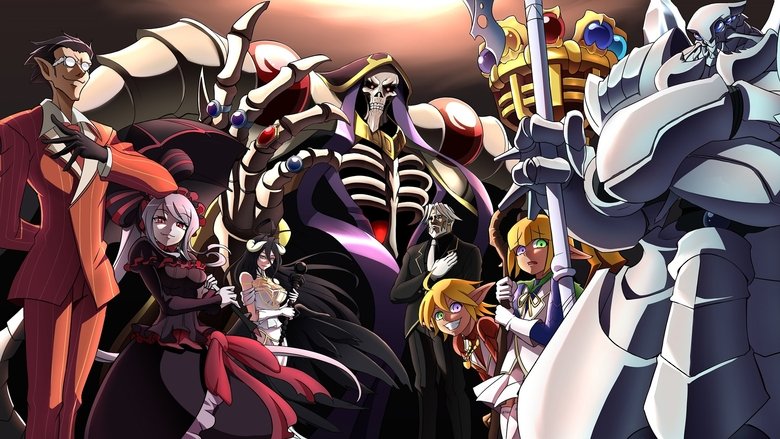
The central pillar of "Overlord's" narrative is the dramatic irony of Ainz's rule: he is an accidental conqueror. Almost every major strategic victory for Nazarick stems from his subordinates, primarily Demiurge and Albedo, wildly over-interpreting his mundane comments and offhand suggestions as parts of a keikaku (grand plan) that spans millennia. Ainz, in reality, is just trying to survive, find his friends, and not look like an idiot in front of his fanatically loyal followers. This fundamental misunderstanding drives the entire plot, from the creation of the Momon persona to the founding of the Sorcerer Kingdom.
Key plot twists across the seasons reveal the true extent of this dynamic. In Season 2, the entire demonic disturbance in the capital, led by 'Jaldabaoth', is revealed to be a meticulously staged event by Demiurge to gather information and build Momon's heroic reputation. In Season 3, the decision to annihilate the Re-Estize Kingdom's army at the Katze Plains is not an act of pure malice from Ainz, but a calculated demonstration of power suggested by his subordinates to swiftly establish his new nation. By Season 4, this culminates in the complete destruction of the Re-Estize Kingdom, a consequence set in motion by a minor noble's foolish actions, which Ainz uses as a pretext to solidify his rule and send a message to the world.
A major reveal from early in the series is that other players from Yggdrasil have arrived in this world in the past, with the Six Great Gods and the Eight Greed Kings being previous examples. This explains the existence of powerful human nations and widespread magic. A significant turning point in Season 1 is the revelation that Shalltear was brainwashed by a World Class Item, confirming the presence of a powerful, unknown enemy (later revealed to be the Slane Theocracy), which forces Ainz to shift from exploration to a more aggressive, defensive posture, ultimately leading to his path of conquest. The series finale, as of the end of Season 4, sees Ainz solidifying his rule over his conquered territories and turning his attention towards the Slane Theocracy, who are now aware that he is a player and the one responsible for Shalltear's mind control incident, setting up the next major conflict.