"As P.T. Barnum put it, "There's a sucker born every minute.""
Paper Moon - Symbolism & Philosophy
Symbols & Motifs
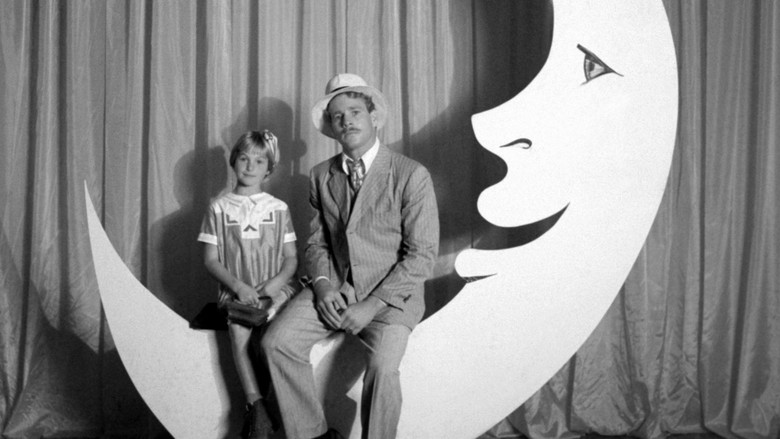
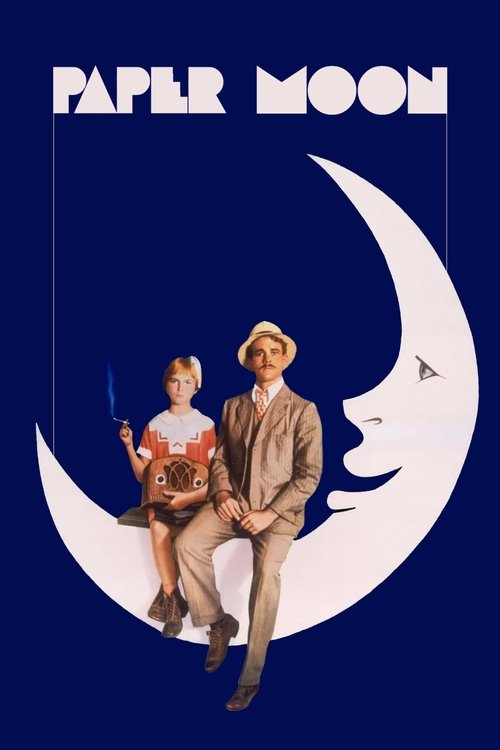
The Paper Moon
The titular "Paper Moon" symbolizes the film's core theme of illusion versus reality. Carnival photo backdrops featuring a paper moon were popular, offering a whimsical, manufactured reality. The song "It's Only a Paper Moon" reinforces this, suggesting that a make-believe world can become real through love and belief. It represents the fragile, constructed nature of Moses and Addie's life, which nonetheless becomes their authentic reality because they believe in each other.
The symbol is most explicitly referenced in the carnival scene where Addie wants her picture taken sitting on a paper moon backdrop. Moses is initially too distracted by Trixie Delight to join her, and Addie has her picture taken alone. This moment underscores her loneliness and her longing for a genuine connection with him. The title itself was chosen by director Peter Bogdanovich after hearing the song, and he added the carnival scene specifically to justify its use.
The Ford Model A/V8
The cars in the film represent both freedom and the precariousness of Moses and Addie's lifestyle. The open road is their home, offering escape and the promise of the next con. The constant breakdowns of Moses' old Model A reflect their hand-to-mouth existence. When Moses impulsively buys a new Ford V8 convertible to impress Trixie, it symbolizes a betrayal of his and Addie's partnership and a squandering of their hard-earned money on a fleeting, superficial desire.
The cars are a constant presence in the film, carrying the pair from town to town. The argument over the Bibles, a pivotal scene in their relationship, takes place in the car. The purchase of the new car is a major point of conflict, leading Addie to conspire with Imogene to get rid of Trixie. Their escape from the sheriff and final reunion also revolve around their vehicle.
Bibles
The Bibles are the primary tool of Moses's trade and a symbol of exploited faith and morality. He uses a sacred object, a symbol of truth and comfort, as a prop in his deceptive schemes, preying on the vulnerability of grieving widows. This highlights the moral ambiguity of their survival tactics. For Addie, however, the Bibles also become a tool to enact her own moral code, as seen when she insists on giving one to a poor family, suggesting a conflict between the cynical use of the object and an underlying sense of justice.
The Bible scam is introduced early and is a recurring element of their journey. Moses presents himself as a representative of the "Kansas Bible Company." We see them successfully pull off the con multiple times, with Addie becoming an integral part of the act. The scene where Addie forces Moses to give a Bible to the impoverished mother and her children is a key moment in her character development.
Philosophical Questions
What constitutes a family?
The film consistently challenges the viewer's preconceived notions of family. By leaving the paternity of Addie ambiguous, "Paper Moon" forces the audience to consider whether a biological link is a necessary component of a parent-child relationship. It presents a powerful argument for the concept of 'chosen family,' suggesting that the bonds forged through shared experience, loyalty, and love can be more significant than those of blood. The film explores whether the functions of a family—providing support, protection, and affection—can be fulfilled even in the most unconventional of structures.
Is morality situational?
Set during the Great Depression, the film places its characters in a context of extreme economic hardship, which serves as a crucible for their moral choices. Moses and Addie's cons, while illegal and deceptive, are framed as acts of survival. The film asks whether actions that are typically considered immoral can be justified when one's livelihood is at stake. Addie's own moral code—she is willing to con the well-off but shows compassion for the poor—suggests a nuanced, situational approach to ethics, where the morality of an act is judged by its consequences and the circumstances of those involved rather than by a rigid set of rules.
Where is the line between illusion and reality?
The film's very title alludes to the fluid boundary between what is real and what is make-believe. The characters live by creating illusions for others, yet through this shared life of deception, they find the most authentic relationship either has ever known. "Paper Moon" explores the philosophical idea that reality can be subjective, shaped by belief and perception. The love between Moses and Addie makes their precarious, 'phony' world real and meaningful for them, questioning whether an emotionally resonant 'lie' can be more valuable than a desolate 'truth'.
Core Meaning
At its heart, "Paper Moon" is an exploration of the idea that family and love are not necessarily defined by blood, but by shared experience and mutual belief. The film's title, taken from the song "It's Only a Paper Moon," encapsulates this central theme: the world can be a phony, make-believe place, but it becomes real if someone believes in you. This sentiment is mirrored in the relationship between Moses and Addie. Their bond, forged through deception and hardship, becomes the most authentic element in their otherwise illusory lives. Director Peter Bogdanovich uses the backdrop of the Great Depression not just for period authenticity, but to highlight how, in times of desperation, human connection becomes the most valuable currency.