The central twist of "Parasite" is the discovery of a secret, subterranean bunker built by the mansion's architect, where the former housekeeper, Moon-gwang, has been hiding her husband, Geun-sae, from loan sharks for years. This revelation shatters the Kims' control, pitting one desperate family against another in a vicious struggle for survival within the house. The climax occurs during a lavish garden party for the Parks' son. Geun-sae escapes the bunker and, in a mad frenzy, bludgeons Ki-woo with the scholar's rock and stabs Ki-jung. In the ensuing chaos, Ki-jung dies. When Mr. Park reacts with disgust to Geun-sae's 'poor smell' while retrieving his car keys from under his body, Ki-taek, triggered by this final, dehumanizing insult, snaps and fatally stabs Mr. Park. Ki-taek then flees and takes refuge in the now-empty bunker, becoming the new 'ghost' of the house. The film's ending reveals that Ki-woo, having survived with brain damage, can now see his father's Morse code messages from the house's flickering lights. He fantasizes about becoming rich enough to buy the house and free his father, but the final shot returns to him in his squalid semi-basement apartment, confirming this is an impossible dream. This ending underscores the inescapable, cyclical nature of poverty.
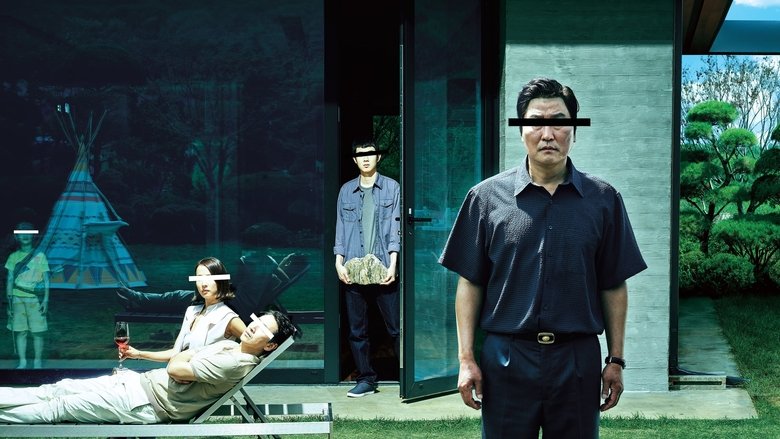
A darkly comedic thriller spirals into devastating tragedy, dissecting class struggle through the symbiotic yet destructive relationship between two families.
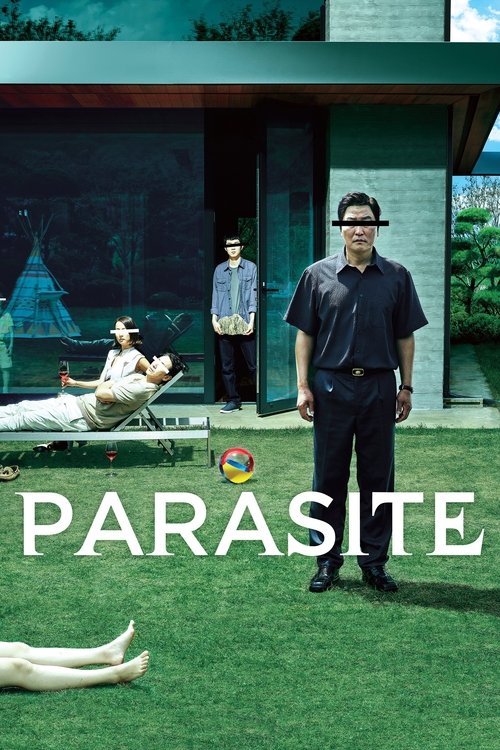
Parasite
기생충
"Act like you own the place."
30 May 2019
South Korea
133 min
8.5
(19,536)
Director: Bong Joon Ho
Cast: Song Kang-ho, Lee Sun-kyun, Cho Yeo-jeong, Choi Woo-shik, Park So-dam
Drama
Thriller
Comedy
Class Conflict and Social Inequality
Aspiration and the Illusion of Upward Mobility
Deception and Performance
Family and Survival
Budget:
$11,363,000
Box Office:
$257,591,776
Parasite — Ending Explained
⚠️ Spoiler Analysis
Alternative Interpretations
While the primary reading of "Parasite" focuses on class struggle, several alternative interpretations exist.
- A North/South Korea Allegory: Some critics interpret the secret basement and its inhabitants as a metaphor for North Korea. Geun-sae, living in a hidden bunker, revering his 'provider' Mr. Park, and emerging unexpectedly to cause chaos, can be seen as representing the unpredictable and often hidden threat the South perceives from the North.
- A Ghost Story: The film can be viewed as a modern ghost story, where the 'ghost' is not a supernatural entity but a living person, Geun-sae, haunting the house. His existence is spectral; he is unseen and unknown by the wealthy owners, representing the invisible and forgotten members of society who live in the shadows.
- Critique of Patriarchal Structures: The film also critiques the failures of patriarchs in both families. Ki-taek fails to provide for his family through legitimate means, leading to the con. Mr. Park, despite his wealth, is unable to truly connect with or protect his family, ultimately failing to see the danger within his own home. Both patriarchs lead their families to ruin in different ways.
Explore More About This Movie
Dive deeper into specific aspects of the movie with our detailed analysis pages