Parasite
A darkly comedic thriller spirals into devastating tragedy, dissecting class struggle through the symbiotic yet destructive relationship between two families.
Parasite

Parasite

기생충

"Act like you own the place."

30 May 2019 South Korea 133 min ⭐ 8.5 (19,536)
Director: Bong Joon Ho
Cast: Song Kang-ho, Lee Sun-kyun, Cho Yeo-jeong, Choi Woo-shik, Park So-dam
Drama Thriller Comedy
Class Conflict and Social Inequality Aspiration and the Illusion of Upward Mobility Deception and Performance Family and Survival
Budget: $11,363,000
Box Office: $257,591,776

Overview

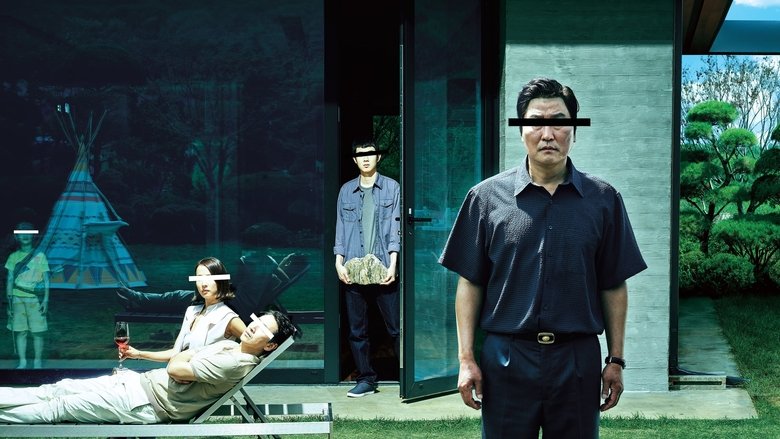
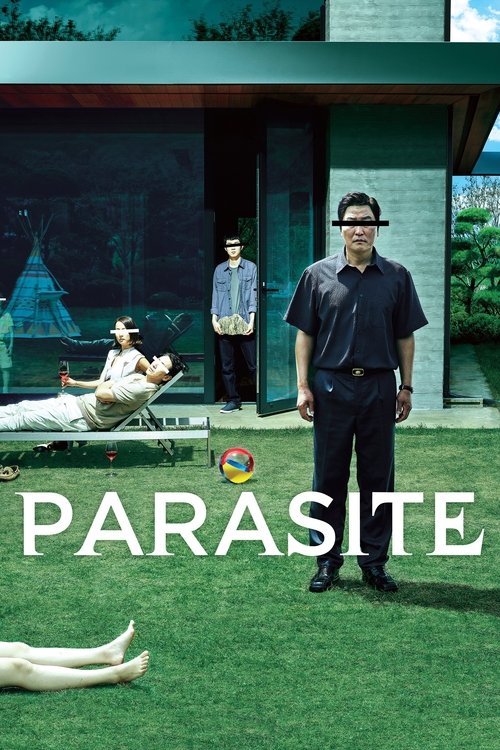
"Parasite" introduces the Kim family—father Ki-taek, mother Chung-sook, son Ki-woo, and daughter Ki-jung—residing in a cramped semi-basement apartment, struggling to make ends meet. Their bleak existence takes a turn when Ki-woo's friend suggests he take over his job as an English tutor for the wealthy Park family's daughter. Armed with a forged diploma, Ki-woo, now 'Kevin', successfully integrates himself into the lavish world of the Parks.

Seeing an opportunity, Ki-woo systematically schemes to get his entire family employed by the unsuspecting Parks. His sister becomes an 'art therapist' for the young son, his father the new driver, and his mother the housekeeper. As the Kims enjoy the spoils of their deception, their precarious new life is threatened by an unexpected discovery within the mansion, leading to a shocking and violent confrontation that irrevocably alters the lives of both families.
Core Meaning

At its core, "Parasite" is a searing indictment of late-stage capitalism and the insurmountable chasm between the rich and the poor. Director Bong Joon Ho masterfully illustrates how a fundamentally broken socioeconomic system forces the disadvantaged to prey on each other in a desperate fight for survival. The title is deliberately ambiguous; while the Kims are literal parasites infiltrating the Park household, the Parks are also parasitic, their luxurious lifestyle dependent on the exploitation of cheap labor. The film argues that in such a system, true symbiosis is impossible, and the parasitic relationship is ultimately doomed to consume both the host and the infiltrator, leading to a tragic, inescapable conclusion.

Thematic DNA

Class Conflict and Social Inequality 35%
Aspiration and the Illusion of Upward Mobility 30%
Deception and Performance 20%
Family and Survival 15%

Class Conflict and Social Inequality

This is the film's central theme, visualized through the stark contrast between the families' living spaces: the Kims' subterranean, flood-prone apartment versus the Parks' airy, hilltop mansion. The director uses recurring motifs, particularly the concept of 'smell,' to represent the invisible yet rigid line separating the classes. Mr. Park's repeated disgust at Ki-taek's smell is a sensory manifestation of his class prejudice, a line that cannot be crossed and which ultimately triggers the film's violent climax.

Aspiration and the Illusion of Upward Mobility

The Kim family is driven by a desperate desire to escape their poverty, symbolized by the scholar's rock meant to bring wealth. However, the film brutally dismantles the myth of social mobility, suggesting that class barriers are impenetrable. Ki-woo's final fantasy of one day buying the Park house is not a sign of hope but a poignant and heartbreaking admission of the impossibility of his dream, underscoring the systemic trap they are in.

Deception and Performance

The Kims are masters of deception, adopting new identities and performing their roles with precision to infiltrate the Park household. Their entire scheme is a performance, reflecting how individuals must often wear masks to navigate a hierarchical society. The Parks also perform a role of blissful ignorance, choosing to remain unaware of the struggles of those who serve them, maintaining a facade of carefree perfection.

Family and Survival

Despite their morally questionable actions, the Kims operate as a cohesive unit, driven by a powerful, collective instinct for survival. Their bond contrasts with the more superficial and fragmented interactions of the Park family. The film explores the extreme lengths people will go to in order to protect and provide for their loved ones when faced with a system designed to crush them.

Character Analysis

Kim Ki-taek

Song Kang-ho

Archetype: Anti-hero / Tragic Figure
Key Trait: Resentful

Motivation

His primary motivation is to provide for his family and regain a sense of purpose and dignity. He wants to escape the perpetual cycle of poverty and failure, but his attempts are ultimately futile against an indifferent system.

Character Arc

Ki-taek begins as a seemingly lazy but resourceful patriarch with a sliver of pride. As he infiltrates the Park house, his dignity is slowly eroded by casual slights and humiliations. His arc is a tragic descent from hopeful schemer to a man crushed by systemic oppression, culminating in a spontaneous act of violent rage that seals his fate as a permanent resident of the societal basement.

Kim Ki-woo

Choi Woo-shik

Archetype: The Aspirant / Naive Schemer
Key Trait: Ambitious

Motivation

He is motivated by a desire to rise above his station, not just for money but for social acceptance and a future with Da-hye. He believes in the plan and the possibility of a different life.

Character Arc

Ki-woo is the catalyst for the family's scheme, initially driven by ambition and a belief that he can forge his way into a better life. He is more idealistic than his family. His journey is one of disillusionment; after suffering a traumatic brain injury, he is left with a heartbreaking and impossible fantasy of success, representing the death of the dream of social mobility.

Park Dong-ik (Mr. Park)

Lee Sun-kyun

Archetype: The Unknowing Antagonist
Key Trait: Condescending

Motivation

His motivation is to maintain his family's perfect, orderly, and luxurious lifestyle. He values boundaries ('crossing the line') and expects subservience, all while maintaining a facade of being a fair and modern employer.

Character Arc

Mr. Park doesn't have a significant arc; he is a static character representing the insulated, polite-but-prejudiced upper class. He is not overtly malicious, but his casual cruelty and subconscious revulsion towards the lower class (symbolized by 'the smell') reveal the deep-seated nature of classism. His character remains unchanged until his sudden, violent death.

Kim Ki-jung

Park So-dam

Archetype: The Pragmatist / The Con Artist
Key Trait: Cynical

Motivation

Motivated by pragmatism and a desire for immediate material gain, she is less of a dreamer than her brother. She excels at the con and enjoys the performance, driven by a sharp intelligence and a need to survive.

Character Arc

Ki-jung is the most cynical, adaptable, and skilled member of the Kim family. She masters her role as 'Jessica' with effortless confidence. Her arc is tragically cut short. Her shocking death during the garden party signifies the brutal and indiscriminate consequences of the class war, destroying the most capable member of the Kim family and extinguishing their brightest spark of hope.

Symbols & Motifs

The Scholar's Rock (Suseok)

Meaning:

It initially symbolizes hope, aspiration, and the promise of wealth and social mobility. As the story unfolds, it transforms into a symbol of false hope, a heavy burden, and ultimately an instrument of violence, mirroring the tragic trajectory of the Kim family's ambitions.

Context:

Gifted to Ki-woo by his friend Min, the Kims believe it will bring them fortune. Ki-woo clings to it during the flood, it is used as a weapon against him, and he finally places it in a stream, relinquishing the false dream it represented.

Stairs

Meaning:

Stairs are a constant and powerful visual metaphor for the social hierarchy and the chasm between the classes. Characters are constantly ascending and descending, their movements physically representing their attempts to climb the social ladder and their subsequent falls from grace.

Context:

The film is filled with staircases: the steep steps leading down to the Kims' basement, the elegant staircase in the Park mansion, and the hidden stairs to the secret bunker. The Kims' frantic descent from the mansion in the rain is a literal and figurative fall.

Smell

Meaning:

Smell represents the inescapable and invisible marker of class. It is something the Kims cannot wash away or disguise, a constant reminder of their origins that betrays their performance. It symbolizes the unbridgeable gap between the rich and poor.

Context:

The Parks, particularly Mr. Park, repeatedly comment on the 'subway smell' or the 'smell of people who ride the subway' associated with the Kim family. This seemingly minor offense builds into a deep humiliation for Ki-taek, directly triggering his murderous rage at the climax.

Rain

Meaning:

Rain symbolizes how the same event can have drastically different consequences for the rich and the poor. It highlights the brutal inequality of their circumstances.

Context:

For the Parks, a torrential downpour is a minor inconvenience that cancels a camping trip but provides a 'picturesque' view from their window. For the Kims, the same storm results in a devastating flood that destroys their home and all their belongings, leaving them displaced.

Memorable Quotes

기택: 너는 계획이 다 있구나!

— Ki-taek

Context:

Said in their basement apartment after Ki-woo first outlines his plan to become the tutor for the Park family, setting the entire plot in motion.

Meaning:

English: "So you have a plan!" This is said with admiration to Ki-woo early on. The line becomes deeply ironic later when Ki-taek concludes the best plan is 'no plan,' signifying his complete loss of hope and agency.

기택: 최고의 계획이 뭔지 알아? 무계획이야. 계획을 하면 안 돼. 계획이 없으면 실패할 일도 없거든.

— Ki-taek

Context:

Spoken in a gymnasium where the family takes refuge after their home is destroyed by a flood, a moment when all their meticulous plans have literally been washed away.

Meaning:

English: "You know what kind of plan never fails? No plan at all. If you make a plan, life never works out that way." This quote encapsulates the film's fatalistic theme. It marks Ki-taek's profound disillusionment, realizing that for people in his position, planning is a futile exercise against the unpredictable and crushing forces of society.

충숙: 부자니까 착한 거야. 나도 돈 많으면 착해.

— Chung-sook

Context:

Said while the Kim family is secretly drinking and eating in the Park's living room, commenting on the seemingly kind but naive nature of Mrs. Park.

Meaning:

English: "She's nice because she's rich. If I had all this money, I'd be nice too." This line cynically deconstructs the idea of inherent goodness, linking morality directly to economic privilege. It suggests that 'niceness' is a luxury that the poor cannot afford, cutting to the core of the film's social critique.

Philosophical Questions

Is morality a luxury that only the wealthy can afford?

The film constantly challenges the audience's moral compass. The Kims are deceptive and manipulative, yet their actions are born from desperation. Chung-sook's line, 'I'd be nice too if I had all this money,' directly posits that virtues like kindness and generosity are easier to practice when one's basic survival is not at stake. The film suggests that the systemic pressures of poverty can force individuals into morally compromising positions, questioning whether it's fair to judge their actions by the same standards as those who live in comfort.

Who is the true parasite?

The title's ambiguity is central to its philosophical weight. The Kims are literal parasites, feeding off the wealth of the Parks. However, the film also presents the Parks as parasites who feed on the cheap labor of the working class, unable to function without their drivers, tutors, and housekeepers. The film argues that in a capitalist system, symbiotic relationships decay into parasitic ones, forcing the audience to consider that perhaps the system itself is the ultimate parasite, draining the humanity from everyone within it.

Is social mobility an illusion?

The film presents a deeply fatalistic view of social mobility. Despite the Kims' intelligence, skill, and ambition, they cannot escape their socioeconomic status. Every attempt to climb the ladder is temporary and ends in a more profound fall. The final scene, where Ki-woo's dream of buying the house is revealed to be a fantasy, serves as the film's bleak answer: the structural barriers of class are, for most, completely insurmountable.

Alternative Interpretations

While the primary reading of "Parasite" focuses on class struggle, several alternative interpretations exist.

  • A North/South Korea Allegory: Some critics interpret the secret basement and its inhabitants as a metaphor for North Korea. Geun-sae, living in a hidden bunker, revering his 'provider' Mr. Park, and emerging unexpectedly to cause chaos, can be seen as representing the unpredictable and often hidden threat the South perceives from the North.
  • A Ghost Story: The film can be viewed as a modern ghost story, where the 'ghost' is not a supernatural entity but a living person, Geun-sae, haunting the house. His existence is spectral; he is unseen and unknown by the wealthy owners, representing the invisible and forgotten members of society who live in the shadows.
  • Critique of Patriarchal Structures: The film also critiques the failures of patriarchs in both families. Ki-taek fails to provide for his family through legitimate means, leading to the con. Mr. Park, despite his wealth, is unable to truly connect with or protect his family, ultimately failing to see the danger within his own home. Both patriarchs lead their families to ruin in different ways.

Cultural Impact

"Parasite's" victory at the Academy Awards, where it won Best Picture, Best Director, Best Original Screenplay, and Best International Feature Film, was a watershed moment for international cinema. It shattered the 'one-inch tall barrier of subtitles,' as Bong Joon Ho stated in his Golden Globes speech, challenging Hollywood's traditional dominance and paving the way for more diverse stories to gain global recognition. The film's themes of class warfare and wealth inequality resonated universally, sparking widespread cultural conversations and becoming a touchstone for discussions on capitalism's failures. Its terminology, like 'parasite,' and visuals, such as the 'Jessica Jingle' and the stark contrast between the two homes, permeated pop culture, spawning countless memes and analyses. It has influenced a new wave of social thrillers and brought renewed international attention to South Korean cinema.

Audience Reception

Audience reception for "Parasite" was overwhelmingly positive, mirroring its critical acclaim. Viewers praised its masterful blend of dark comedy, suspenseful thriller elements, and devastating drama. The unpredictable plot, sharp writing, and powerful performances were frequently highlighted. Many found the film's social commentary on wealth inequality to be both timely and universally resonant. The main point of discussion, and for some, criticism, was the film's abrupt tonal shift in the third act from a heist-like comedy to a violent tragedy, which some found jarring. The ending was also widely debated; while most found it profound and heartbreakingly realistic, a minority felt it was overly bleak. Overall, audiences regarded it as an intelligent, thought-provoking, and unforgettable cinematic experience.

Interesting Facts

  • The entire lavish Park house was a set built from scratch. The ground floor and garden were built on an empty outdoor lot to utilize natural sunlight, while the basement and second floor were separate sets.
  • Director Bong Joon Ho co-wrote the screenplay and drew from his own experience as a university student when he worked as a tutor for a very wealthy family in Seoul.
  • The 'Jessica Jingle' that Ki-jung and Ki-woo create to remember her fake identity is set to the tune of a famous Korean patriotic song called 'Dokdo is Our Land' (독도는 우리땅).
  • Parasite was the first non-English language film in Academy Awards history to win Best Picture.
  • Bong Joon Ho created storyboards for every shot of the film himself before filming began, a common practice for him.
  • The original title of the film during development was 'The Décalcomanie,' a reference to the way the two families mirror each other.
  • The actor Choi Woo-shik (Ki-woo) had previously worked with Bong Joon Ho on the film 'Okja'.

Easter Eggs

The architect who designed the Park house is named Namgoong Hyeon-ja.

This is a nod to the actor Namgoong Min, who was the star of a film Bong Joon Ho greatly admires. It's also a reference to the character Namgoong Minsu from Bong's earlier film, 'Snowpiercer,' who was also an expert in structures and security.

In the final scene, when Ki-woo is looking at the house from the hill, the Morse code message from the house's lights is visible.

This is a direct visual callback to the Morse code messages his father sent from the bunker. It reinforces that his father is still trapped and that Ki-woo's vision of buying the house is purely a fantasy, as he is still trying to decipher a message that only he understands.

⚠️ Spoiler Analysis

Click to reveal detailed analysis with spoilers

Frequently Asked Questions

Explore More About This Movie

Dive deeper into specific aspects of the movie with our detailed analysis pages

Comments (0)

Leave a comment

No comments yet. Be the first to share your thoughts!