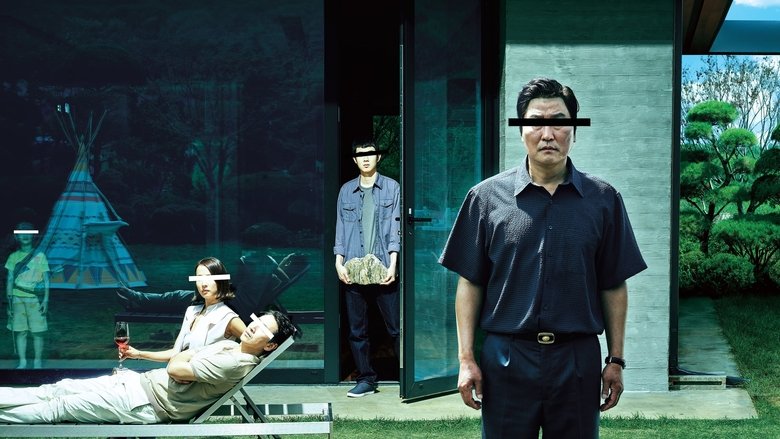
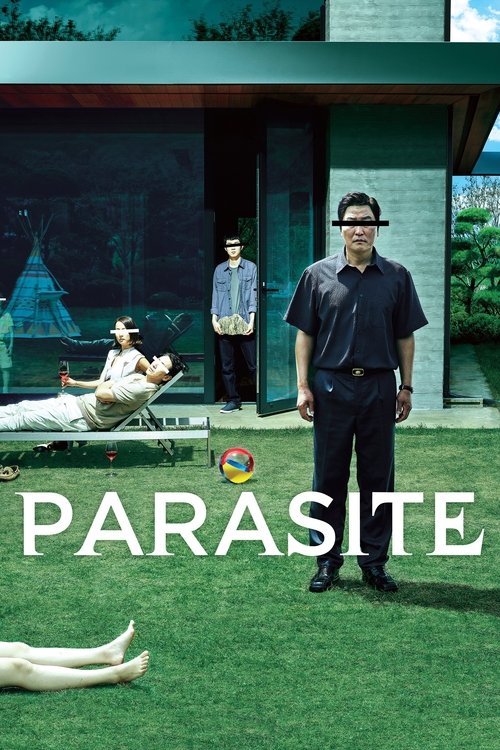
기생충
"Act like you own the place."
Parasite - Symbolism & Philosophy
Symbols & Motifs
The Scholar's Rock (Suseok)
It initially symbolizes hope, aspiration, and the promise of wealth and social mobility. As the story unfolds, it transforms into a symbol of false hope, a heavy burden, and ultimately an instrument of violence, mirroring the tragic trajectory of the Kim family's ambitions.
Gifted to Ki-woo by his friend Min, the Kims believe it will bring them fortune. Ki-woo clings to it during the flood, it is used as a weapon against him, and he finally places it in a stream, relinquishing the false dream it represented.
Stairs
Stairs are a constant and powerful visual metaphor for the social hierarchy and the chasm between the classes. Characters are constantly ascending and descending, their movements physically representing their attempts to climb the social ladder and their subsequent falls from grace.
The film is filled with staircases: the steep steps leading down to the Kims' basement, the elegant staircase in the Park mansion, and the hidden stairs to the secret bunker. The Kims' frantic descent from the mansion in the rain is a literal and figurative fall.
Smell
Smell represents the inescapable and invisible marker of class. It is something the Kims cannot wash away or disguise, a constant reminder of their origins that betrays their performance. It symbolizes the unbridgeable gap between the rich and poor.
The Parks, particularly Mr. Park, repeatedly comment on the 'subway smell' or the 'smell of people who ride the subway' associated with the Kim family. This seemingly minor offense builds into a deep humiliation for Ki-taek, directly triggering his murderous rage at the climax.
Rain
Rain symbolizes how the same event can have drastically different consequences for the rich and the poor. It highlights the brutal inequality of their circumstances.
For the Parks, a torrential downpour is a minor inconvenience that cancels a camping trip but provides a 'picturesque' view from their window. For the Kims, the same storm results in a devastating flood that destroys their home and all their belongings, leaving them displaced.
Philosophical Questions
Is morality a luxury that only the wealthy can afford?
The film constantly challenges the audience's moral compass. The Kims are deceptive and manipulative, yet their actions are born from desperation. Chung-sook's line, 'I'd be nice too if I had all this money,' directly posits that virtues like kindness and generosity are easier to practice when one's basic survival is not at stake. The film suggests that the systemic pressures of poverty can force individuals into morally compromising positions, questioning whether it's fair to judge their actions by the same standards as those who live in comfort.
Who is the true parasite?
The title's ambiguity is central to its philosophical weight. The Kims are literal parasites, feeding off the wealth of the Parks. However, the film also presents the Parks as parasites who feed on the cheap labor of the working class, unable to function without their drivers, tutors, and housekeepers. The film argues that in a capitalist system, symbiotic relationships decay into parasitic ones, forcing the audience to consider that perhaps the system itself is the ultimate parasite, draining the humanity from everyone within it.
Is social mobility an illusion?
The film presents a deeply fatalistic view of social mobility. Despite the Kims' intelligence, skill, and ambition, they cannot escape their socioeconomic status. Every attempt to climb the ladder is temporary and ends in a more profound fall. The final scene, where Ki-woo's dream of buying the house is revealed to be a fantasy, serves as the film's bleak answer: the structural barriers of class are, for most, completely insurmountable.
Core Meaning
At its core, "Parasite" is a searing indictment of late-stage capitalism and the insurmountable chasm between the rich and the poor. Director Bong Joon Ho masterfully illustrates how a fundamentally broken socioeconomic system forces the disadvantaged to prey on each other in a desperate fight for survival. The title is deliberately ambiguous; while the Kims are literal parasites infiltrating the Park household, the Parks are also parasitic, their luxurious lifestyle dependent on the exploitation of cheap labor. The film argues that in such a system, true symbiosis is impossible, and the parasitic relationship is ultimately doomed to consume both the host and the infiltrator, leading to a tragic, inescapable conclusion.