Past Lives - Symbolism & Philosophy
Symbols & Motifs
The Diverging Path (Stairs)
Represents the physical and metaphorical divergence of their life trajectories.
In childhood, Nora walks up a steep set of stairs towards her future (migration), while Hae Sung continues along a flat, straight path. This visual is mirrored in the ending composition.
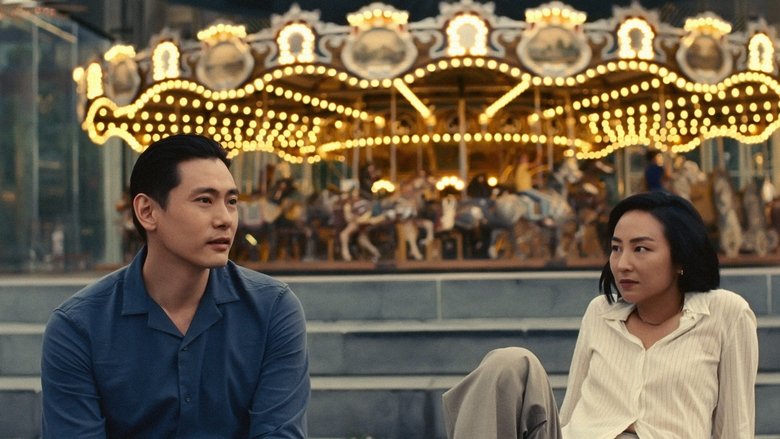
Jane's Carousel
Symbolizes the cyclical nature of time and a suspended moment of childhood joy amidst adult complexities.
Nora and Hae Sung sit on the carousel in Brooklyn. For a moment, they are rotating in a loop, cut off from the forward momentum of the real world, allowing them to briefly be children again.
The Statue of Liberty
Represents the immigrant dream but also indifference.
During their ferry ride, Hae Sung notes that the statue is looking away from them towards the open sea (or France), visually reinforcing that the "American Dream" Nora chased required turning her back on her past.
The Bar
A liminal space where past and present coexist.
The film opens and closes with a shot of the three characters at a bar. It frames them as specimens observed by outsiders, highlighting the unique, untranslatable nature of their triad.
Philosophical Questions
Do we have soulmates, or do we make them?
The film suggests that In-Yun (fate) brings people together, but commitment (Arthur and Nora's marriage) is an active, daily choice that builds 'layers' of connection over time.
Can you love two people at once?
It proposes that love is not a zero-sum game. Nora loves Hae Sung for the past they shared and Arthur for the life they built. The film asks if we can honor a past love without devaluing a present one.
What is the cost of ambition?
Nora's ambition required her to leave Korea. The film asks if the professional and personal gains of her NY life justify the 'death' of the girl she was in Seoul.
Core Meaning
Past Lives is a meditation on the closure necessary to fully inhabit one's current life. Director Celine Song uses the film to articulate that gaining a new identity inevitably requires the mourning of a former self. It posits that love is not just about possession or "ending up together," but about honoring the connection (In-Yun) that exists across time, even if it doesn't manifest in the present reality.