
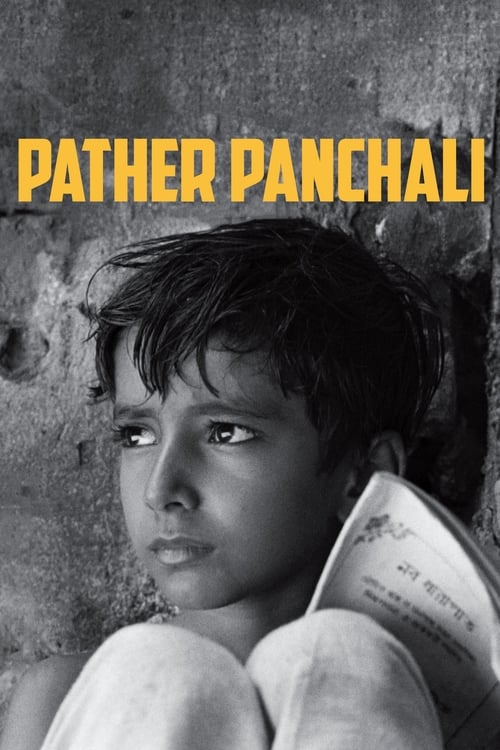
পথের পাঁচালী
Director: Satyajit Ray
Cast: Kanu Bannerjee, Karuna Banerjee, Chunibala Devi, Uma Das Gupta, Subir Banerjee
Pather Panchali — Characters & Cast
Character Analysis
Apu (Apurba Roy)
Subir Banerjee
Motivation
As a young child, Apu's motivations are simple and instinctual: curiosity, play, and his bond with his sister. He is motivated by a sense of wonder, fascinated by the candy seller, the traveling show, and especially the train.
Character Arc
Apu begins as a wide-eyed, curious child, mostly observing the world around him under the guidance of his older sister, Durga. His arc in this film is one of quiet awakening. He experiences the simple joys of childhood but is also a witness to death, first with his great-aunt Indir and then, devastatingly, with Durga. Her death marks the end of his pure innocence and forces him into a more somber understanding of the world, a maturation that continues throughout the trilogy.
Durga
Uma Das Gupta
Motivation
Durga is motivated by a desire for the small joys and beauties of life that are denied to her by poverty. She longs for simple things like sweets and fruits and feels a strong sense of familial love, especially for Apu and Indir. Her actions are driven by an impulsive, carefree nature.
Character Arc
Durga is a vibrant, free-spirited adolescent, full of life despite her family's poverty. She is deeply connected to nature and to her great-aunt Indir. Her arc is tragic; she represents the joyful persistence of life that is ultimately extinguished by hardship. She steals fruit not out of malice, but from a mix of childlike desire and a wish to provide small comforts for others, like Indir. Her dreams of marriage and a better life are cut short by her illness and death, which acts as the catalyst for the family's final disintegration and departure.
Sarbajaya
Karuna Banerjee
Motivation
Sarbajaya's primary motivation is the survival and well-being of her children. She is driven by the practical, daily needs of the household, a stark contrast to her husband's idealistic dreaming. Her frustration and anger stem from her powerlessness against their circumstances.
Character Arc
Sarbajaya's arc is one of hardening resilience in the face of relentless struggle. She begins with dreams of her own but must subsume them to the daily, thankless task of keeping her family afloat. The pressure of poverty makes her stern and sometimes harsh, particularly towards Indir. However, her actions are rooted in a fierce, protective love for her children. The loss of Durga breaks her spirit but also forces her to accept the necessity of leaving their ancestral home, completing her journey from a hopeful wife to a grief-stricken but enduring mother.
Harihar
Kanu Bannerjee
Motivation
Harihar is motivated by a desire to provide for his family, but on his own terms—through his intellectual and priestly pursuits rather than manual labor. He is driven by dreams of a better future and a belief in divine providence, which often renders him ineffective in dealing with their immediate problems.
Character Arc
Harihar is the gentle, scholarly patriarch who remains a hopeful dreamer throughout the film. He is often absent, seeking work, and returns with grand plans that rarely materialize. His arc is largely static; he maintains a passive optimism, believing that God's will is for the best, even as his family sinks deeper into poverty. He fails to grasp the severity of their situation until Durga's death. His return home with gifts for his children, unaware that Durga has died, is the film's most heartbreaking moment, shattering his detachment from reality.
Indir Thakrun
Chunibala Devi
Motivation
Indir's motivation is simple: to find a small measure of comfort, food, and affection in her final days. She seeks connection, which she finds with Durga, and wishes to die in her ancestral home, a final wish that is tragically denied.
Character Arc
Indir, the elderly cousin, represents the past and the burden of the elderly in a family struggling to survive. Her arc is a slow, sad decline. She is shown as mischievous and loving with the children but is a source of conflict with Sarbajaya. Kicked out of the house, she embodies loneliness and the harsh reality of aging in poverty. Her solitary death in the wilderness is a poignant and stark moment that introduces young Apu to the reality of mortality.
Cast
Explore More About This Movie
Dive deeper into specific aspects of the movie with our detailed analysis pages