
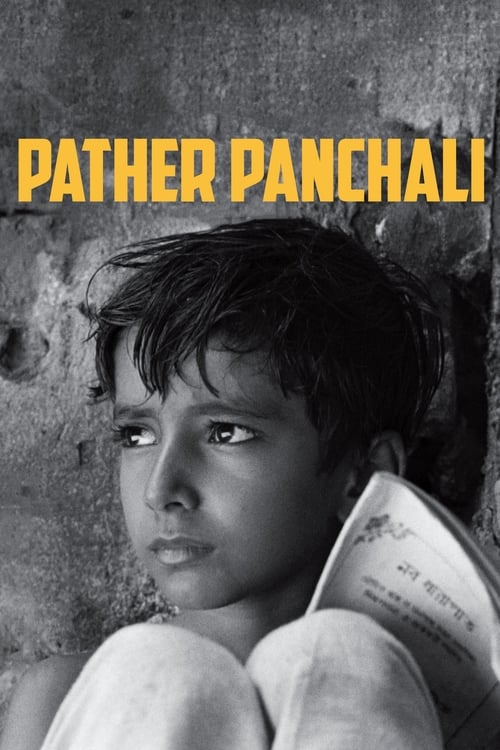
পথের পাঁচালী
Pather Panchali - Symbolism & Philosophy
Symbols & Motifs
The Train
The train symbolizes the allure and inevitability of modernity, progress, and the world outside the confines of the village. It represents a future of possibilities and escape from the stagnation of their current life. It is both a source of wonder for the children and a harbinger of the changes that will eventually force the family from their home.
Apu and Durga run through fields of kaash flowers to catch their first glimpse of a train. The sound of its distant whistle is a recurring motif. Its powerful, mechanical presence contrasts sharply with the quiet, natural rhythm of village life, highlighting the encroachment of the industrial world.
The Dilapidated Ancestral Home
The crumbling house symbolizes the family's declining fortunes and the decay of their traditional way of life. It is both a shelter and a prison, a repository of memories that is slowly being reclaimed by nature, just as the family's hopes are eroded by poverty. A snake found in the home at the end symbolizes the final ruin, forcing them to leave.
Throughout the film, the house is shown in a state of disrepair. A storm damages it further, leading to the leak that worsens Durga's illness. The family's final departure from the collapsing structure is a poignant admission that their past life is no longer sustainable.
The Stolen Necklace
The bead necklace that Durga is accused of stealing, and which Apu later discovers, symbolizes lost innocence, secret guilt, and the small, desperate desires born of poverty. For Durga, it represents a longing for the beauty and status she cannot have. For Apu, discovering it after her death represents a painful moment of disillusionment and a final, secret connection to his sister.
Durga is accused by a neighbor of stealing the necklace, which she denies. Sarbajaya is shamed by the accusation. Much later, after Durga's death, Apu finds the necklace hidden in a pot. In a moment of quiet maturity, understanding the implications, he throws it into a pond, erasing the last trace of his sister's transgression and childhood secret.
Philosophical Questions
Does poverty negate the capacity for joy and love?
The film consistently refutes this idea. Despite their constant struggle, the Roy family's life is filled with moments of profound love and simple joy. The bond between Apu and Durga, their wonder at the world, and even Sarbajaya's fierce, protective love for them demonstrate that emotional richness can thrive independently of material wealth. Ray carefully documents the small pleasures—a shared piece of fruit, the excitement of a festival—to show that the human spirit's capacity for happiness is not solely defined by economic circumstances.
What is the relationship between humanity, nature, and fate?
"Pather Panchali" portrays an intricate relationship between its characters and their environment. Nature is both a beautiful sanctuary and a destructive force. The family is at its mercy, as shown by the devastating monsoon. This raises questions about fate and human agency. Harihar believes their lives are ordained by God, a passive acceptance of fate. Sarbajaya, on the other hand, struggles against their circumstances. The film does not offer a clear answer, instead suggesting that life is a complex interplay of personal choices, social conditions, and the indifferent, powerful forces of the natural world.
How does one confront the transition from innocence to experience?
The film is a profound meditation on this universal journey, primarily through Apu. His childhood is a world of sensory wonder, largely unburdened by adult anxieties. The film explores how this innocence is irrevocably fractured by the experience of death. Apu's quiet observation of the deaths of Indir and Durga forces him to confront grief and impermanence. The final act of him throwing Durga's stolen necklace into the pond is a silent, mature acknowledgment of a painful truth, marking a significant step on his path to understanding the complexities and sorrows of the world.
Core Meaning
The core meaning of "Pather Panchali" lies in its profound humanism and its exploration of the human condition amidst persistent hardship. Director Satyajit Ray wanted to portray life's inherent duality: the coexistence of joy and sorrow, beauty and harshness, innocence and the inevitability of loss. The film isn't a simple story about poverty; it is a meditation on how life, in its most elemental form, continues with dignity and wonder even in the most challenging circumstances. Ray’s message is that poverty does not negate love or the small pleasures that make life meaningful. By focusing on the perspective of the children, Apu and Durga, he emphasizes that the capacity for wonder and connection is a resilient force. Ultimately, the "Song of the Little Road" is a lyrical and bittersweet ode to survival, the passage of time, and the painful, beautiful journey from innocence to experience.