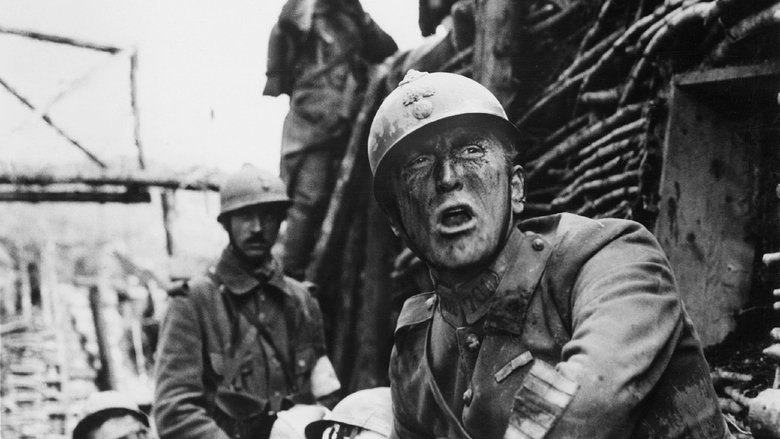
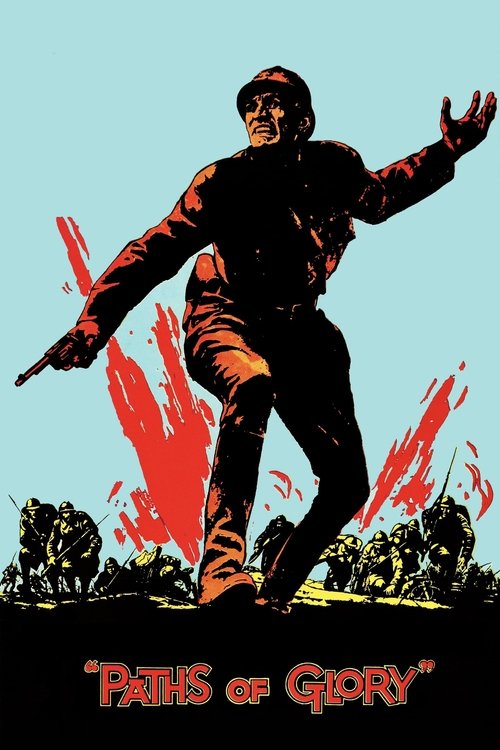
The central plot turn of "Paths of Glory" is that Colonel Dax's impassioned and logical defense of his men is utterly futile. Despite proving the impossibility of the attack and exposing the corrupt motives behind the trial, the court-martial is a sham, and the three soldiers—Corporal Paris, Private Arnaud, and Private Ferol—are found guilty and sentenced to death. The execution scene is unflinchingly brutal. One of the condemned men, Arnaud, suffers a skull fracture in a fight and is rendered unconscious; he is executed while tied to a stretcher to keep him upright. Another, Ferol, breaks down in terror and has to be dragged to the post. Only Paris faces his death with stoic dignity. The executions proceed, sealing the injustice.
The film's final twist occurs after the executions. Colonel Dax, armed with sworn statements from witnesses, confronts General Broulard with the fact that General Mireau ordered his own artillery to fire on the French trenches. Broulard, ever the pragmatist, coolly informs Dax that Mireau will be investigated, not out of a sense of justice, but to get rid of a public relations problem. Broulard then reveals his complete misunderstanding of Dax's character by offering him Mireau's now-vacant command, believing Dax's entire moral crusade was a cynical ploy for promotion. It is here that Dax's idealism is completely shattered. He rejects the offer, calls Broulard a "degenerate, sadistic old man," and is ordered back to the front. The hidden meaning is that the system is irredeemable; removing one corrupt general changes nothing, as the entire structure is built on a foundation of cynical self-interest. The film ends not with justice, but with the brief, tragic moment of shared humanity as Dax's men weep at a German girl's song, a final, heartbreaking reminder of all that has been lost.