Paths of Glory
A stark, anti-war drama offering a chilling descent into military madness, where the paths of glory are paved with hypocrisy and lead only to the grave.
Paths of Glory

Paths of Glory

"It explodes in the no-man's land no picture ever dared cross before!"

25 October 1957 United States of America 88 min ⭐ 8.3 (3,103)
Director: Stanley Kubrick
Cast: Kirk Douglas, Ralph Meeker, Adolphe Menjou, George Macready, Wayne Morris
Drama War
Hypocrisy and Corruption of Authority Injustice and the Farce of Military Justice Class Conflict The Absurdity and Futility of War
Budget: $935,000
Box Office: $1,200,000

Overview

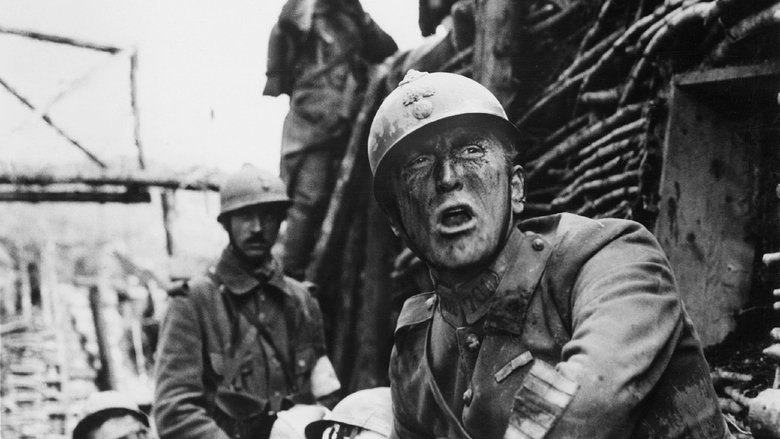
Set in the trenches of World War I in 1916, "Paths of Glory" follows the principled French Colonel Dax (Kirk Douglas). His superior, the ambitious General Mireau (George Macready), pressured by his own commander General Broulard (Adolphe Menjou), orders a suicidal attack on a heavily fortified German position known as the "Anthill." When the impossible mission inevitably fails, with many soldiers refusing to leave the trenches under overwhelming enemy fire, the enraged Mireau seeks to deflect blame.

Instead of admitting the strategic folly, Mireau decides to make an example of his men by court-martialing three randomly selected soldiers for cowardice. Colonel Dax, a respected criminal defense lawyer in his civilian life, is appalled by the injustice and steps up to defend the three scapegoats in a kangaroo court where their fate seems predetermined. The film then transforms into a tense courtroom drama, exposing the corrupt, class-based hierarchy of the military and questioning the very nature of honor, bravery, and justice in wartime.
Core Meaning

"Paths of Glory" is a powerful indictment of the hypocrisy, corruption, and inhumanity inherent in the structures of power, particularly within the military. Director Stanley Kubrick's central message is that the true enemy is not necessarily the opposing army, but the arrogant and ambitious commanders who, from the safety of their opulent chateaus, treat their soldiers as expendable pawns in their personal quests for promotion and glory. The film argues that patriotism can be, as Colonel Dax quotes, "the last refuge of a scoundrel," a tool used by the powerful to manipulate and sacrifice the common man. Ultimately, the film suggests that all "paths of glory lead but to the grave," a line from Thomas Gray's poem that inspired the title, highlighting the futility and tragic waste of war.

Thematic DNA

Hypocrisy and Corruption of Authority 35%
Injustice and the Farce of Military Justice 30%
Class Conflict 20%
The Absurdity and Futility of War 15%

Hypocrisy and Corruption of Authority

This is the film's central theme, embodied by Generals Mireau and Broulard. They speak of glory, honor, and patriotism while living in luxurious chateaus, far from the front lines. Mireau's ambition for a promotion drives him to order a suicidal attack, and his vanity compels him to sacrifice innocent men to cover his failure. Broulard, more cunning and detached, represents a deeper, more systemic corruption, viewing the entire affair as a matter of political maneuvering and offering Dax Mireau's command as a cynical reward.

Injustice and the Farce of Military Justice

The court-martial is a sham, a "mockery of all human justice" as Dax proclaims. The soldiers are chosen arbitrarily: one for being a "social undesirable," another because his cowardly superior wants to silence him, and the third by random lot. The trial itself lacks due process, with no written indictment, no stenographer, and the refusal to hear evidence that would prove the men's innocence. Kubrick uses this to expose how systems of power can pervert justice to serve their own ends.

Class Conflict

A stark visual and thematic contrast is drawn between the aristocratic, detached officer class and the common soldiers in the trenches. The generals reside in an opulent, baroque palace, planning battles on a polished floor that resembles a chessboard, while the soldiers live in mud and squalor. This chasm highlights a system where the elite sacrifice the working class for their own gain and prestige, viewing them as expendable commodities rather than human beings.

The Absurdity and Futility of War

Beyond being simply "anti-war," the film portrays war as an irrational and absurd endeavor. The mission to take the "Anthill" is pointless and suicidal from the start. The conflict that consumes the characters is not with the German enemy, who are barely seen, but within the French army itself. The final scene, where soldiers are moved to tears by a captured German girl's simple song, underscores their shared humanity and the tragic absurdity of their conflict.

Character Analysis

Colonel Dax

Kirk Douglas

Archetype: The Idealist Hero
Key Trait: Principled

Motivation

Dax is motivated by a powerful sense of justice, morality, and a genuine concern for the lives of his men. Having been a lawyer in civilian life, he is driven by principles of fairness and human dignity, which are in direct opposition to the cynical careerism of his superiors.

Character Arc

Colonel Dax begins as a dutiful, yet weary, officer who understands the horrors of war but still believes in the system. His arc is one of profound disillusionment. While he fights passionately for justice during the trial, his ultimate failure to save his men and his final confrontation with General Broulard shatter his remaining faith in the military's honor. He ends the film a broken but still deeply humane man, realizing the corruption is inescapable.

General Paul Mireau

George Macready

Archetype: The Vain Antagonist
Key Trait: Ambitious

Motivation

Mireau's sole motivation is personal glory and advancement within the military hierarchy. He is obsessed with his reputation and is willing to sacrifice hundreds of his soldiers to secure a promotion. His actions are driven by a fragile, yet enormous, ego.

Character Arc

General Mireau remains a static character, consumed by his own vanity and ambition from beginning to end. He starts by feigning concern for his men but is easily swayed by the promise of a promotion. His arrogance leads to the failed attack, and his cowardice makes him scapegoat his own soldiers. His arc concludes not with redemption, but with his own downfall, as Broulard announces he will be investigated for ordering artillery to fire on his own men.

General Georges Broulard

Adolphe Menjou

Archetype: The Cynical Manipulator
Key Trait: Cynical

Motivation

Broulard is motivated by the preservation and smooth functioning of the military power structure. He is a master of political maneuvering, using others as pawns to maintain stability and advance the army's interests as he sees them. His actions are not driven by personal ambition in the same way as Mireau's, but by a cold, cynical pragmatism.

Character Arc

General Broulard is also a static character, but a more complex and insidious one than Mireau. He is the embodiment of the detached, aristocratic officer class. He manipulates Mireau into the attack and observes the subsequent trial with a calculating, almost amused, detachment. His arc is non-existent; he remains the ultimate insider, effortlessly navigating the corrupt system. His final scene reveals his complete inability to comprehend Dax's genuine morality, assuming Dax's actions were just a clever play for Mireau's job.

Symbols & Motifs

The Chateau vs. The Trenches

Meaning:

This contrast symbolizes the vast chasm between the ruling class and the common soldier. The chateau, with its polished floors, lavish decorations, and baroque grandeur, represents the detached, corrupt, and inhuman world of the generals who wage war as a game. The trenches, in stark contrast, are a muddy, claustrophobic, and gruesome hell, representing the grim reality of war for the men who actually have to fight it.

Context:

The film constantly cuts between these two locations. The opening scenes establish the generals' world in the palace. Kubrick's famous tracking shots immerse the viewer in both environments: the elegant, sweeping movements in the chateau and the raw, forward-marching tracking shots that follow Dax through the trenches.

The "Anthill"

Meaning:

The German stronghold's nickname symbolizes the dehumanizing nature of the generals' perspective. To them, the soldiers they send to die are as insignificant and numerous as ants. It also represents a futile, impossible goal, an objective whose value is measured only in terms of a general's potential promotion, not in strategic importance or human life.

Context:

The "Anthill" is the catalyst for the entire plot. General Mireau is goaded into ordering the attack on this position by General Broulard's promise of a promotion. The disastrous failure of this attack sets in motion the subsequent trial and executions.

The Cockroach

Meaning:

The cockroach symbolizes the cruel indifference of existence and the dehumanization of the condemned men. Corporal Paris observes that the insect will outlive them, having more contact with his family than he ever will again, reducing his own life to something less significant than a pest's. Private Ferol crushing it is a small, final act of asserting control and dominance in a situation where he has none.

Context:

In the makeshift cell on the night before the execution, Corporal Paris points out a cockroach to his fellow prisoners. His observation prompts a brief, bleakly philosophical exchange before Private Ferol kills the insect.

The Singing German Girl

Meaning:

The final scene with the singing girl symbolizes a shared, universal humanity that transcends national borders and the brutality of war. The soldiers, initially rowdy and cruel, are silenced and moved to tears, reminded of the humanity they share with their supposed "enemy." It offers a fleeting moment of grace and empathy, but it is a profoundly sad one, as it comes too late for the executed men and highlights the tragedy of the entire situation.

Context:

In the film's final scene, after the executions, Colonel Dax observes his men in a tavern. They crudely catcall a captured German girl (played by Christiane Harlan, who would become Kubrick's wife) forced to sing for them. Her frightened but heartfelt performance of a German folk song, "The Faithful Hussar," emotionally disarms the soldiers, who begin to hum along, some with tears in their eyes.

Memorable Quotes

Gentlemen of the court, there are times when I'm ashamed to be a member of the human race, and this is one such occasion.

— Colonel Dax

Context:

Spoken during his passionate but futile closing statement at the court-martial, after the prosecutor has refused to let him present any meaningful evidence or witnesses to defend the three accused soldiers.

Meaning:

This line, from Dax's closing argument, encapsulates the film's profound disgust with the injustice on display. It elevates the sham trial from a mere military error to a crime against humanity itself, highlighting the moral bankruptcy of the proceedings.

I apologize... for not telling you sooner that you're a degenerate, sadistic old man. And you can go to hell before I apologize to you now or ever again.

— Colonel Dax

Context:

In their final confrontation, after the executions, Broulard offers Dax the disgraced General Mireau's command, assuming Dax's defense was a cynical career move. When Broulard demands an apology for Dax's insubordination, Dax delivers this scathing rebuke.

Meaning:

This is the climax of Dax's disillusionment. He finally casts off all military decorum and unleashes his righteous fury at General Broulard, revealing the depth of his contempt for the corrupt system Broulard represents. It is a moment of moral victory even in the face of absolute defeat.

See that cockroach? Tomorrow morning, we'll be dead and it'll be alive. It'll have more contact with my wife and child than I will. I'll be nothing, and it'll be alive.

— Corporal Paris

Context:

Said in the dark cell on the night before the execution, as the three condemned men await their fate. It's a quiet moment of despair shared between them.

Meaning:

This quote powerfully illustrates the sense of hopelessness and dehumanization felt by the condemned men. It's a moment of bleak philosophical clarity, where a man confronts the utter finality of his unjust death and his reduction to something less significant than an insect.

If those little sweethearts won't face German bullets, they'll face French ones!

— General Mireau

Context:

Shouted by General Mireau in the command post as he watches the suicidal attack fail and sees his troops refusing to advance from the trenches under withering fire.

Meaning:

This chilling line perfectly captures Mireau's tyrannical rage and his complete disregard for the lives of his men. It demonstrates that his true enemy is not the Germans, but any soldier who defies his ego-driven commands.

Philosophical Questions

What is the true nature of patriotism?

The film explores this question by contrasting two opposing views. The generals see patriotism as unquestioning obedience and a willingness to die for a commander's ambition, which they equate with the glory of the state. Colonel Dax, however, challenges this by quoting Samuel Johnson: "Patriotism is the last refuge of a scoundrel." For Dax, true patriotism lies in upholding justice and protecting the lives of his countrymen, even if it means defying a corrupt authority. The film forces the audience to consider whether blind loyalty or moral integrity is the higher form of patriotism.

Can an individual's morality survive within a corrupt system?

Colonel Dax is the embodiment of this question. He is a moral man operating within a deeply immoral system. He uses the system's own tools—logic, law, and appeals to honor—to fight it, but ultimately fails. The film seems to answer this question pessimistically, suggesting that while an individual can maintain their personal integrity, they are largely powerless to change a fundamentally corrupt structure. Broulard's final, cynical offer to Dax implies the system's only way of dealing with integrity is to try and absorb or corrupt it.

Where does true honor lie: in obedience or in defiance of injustice?

The film sets up a conflict between the military code of honor, which demands obedience to the chain of command, and a higher, humanistic honor that demands resistance to immoral orders. General Mireau believes the soldiers who refuse to attack are cowards devoid of honor. Colonel Dax argues that the true disgrace is not the failed attack, but the sham court-martial that follows. The film posits that true honor is not found in the superficial trappings of rank and medals but in the compassion and courage required to stand for justice, even at great personal cost.

Alternative Interpretations

While the film is widely seen as a straightforward anti-war and anti-authority statement, some alternative interpretations exist. One perspective questions the purity of Colonel Dax's heroism. Some critics argue that while he is undoubtedly a moral center, he is also an ultimately ineffectual idealist. His legal and moral arguments, however eloquent, are utterly powerless against the entrenched military hierarchy. This reading suggests a more pessimistic view that individual integrity is futile against a corrupt system. His final, tearful observation of his men could be interpreted not just as empathy, but as the despair of a man who has lost everything and achieved nothing tangible.

Another interpretation focuses on the ending as a sliver of ambiguous hope rather than pure tragedy. The soldiers' shared emotional response to the German girl's song is a powerful affirmation of a common humanity that transcends nationalism and war. While it doesn't erase the injustice that has occurred, it suggests that the human spirit and the capacity for empathy can survive even in the most brutalizing of circumstances. It leaves the audience to ponder whether this flicker of humanity is enough to offer any real hope, or if it merely serves to highlight the greater tragedy of the war that will continue the next day.

Cultural Impact

"Paths of Glory" cemented Stanley Kubrick's reputation as a major directorial talent and is considered one of the most powerful anti-war films ever made. Upon its release in 1957, its scathing critique of military leadership was so potent that it caused international incidents. The French government, deeply offended by the portrayal of its army, exerted pressure that led to the film being banned in France for nearly two decades and withdrawn from the Berlin Film Festival. This controversy underscored the film's provocative power.

Its influence on cinema is significant, particularly in the war genre. The film shifted the focus from battlefield heroics to the internal moral and political conflicts within the military. Its stark black-and-white cinematography, especially the famous tracking shots through the trenches, created a new visual language for depicting the realism of warfare that has been emulated by countless filmmakers. Philosophically, the film brought the ideas of injustice, the absurdity of existence, and the corruption of power to a mainstream audience, resonating with the growing counter-cultural sentiments of the following decades. Though not a box office hit initially, it has been preserved in the United States National Film Registry as "culturally, historically, or aesthetically significant," a testament to its enduring legacy and impact.

Audience Reception

Upon its initial release, "Paths of Glory" was a commercial failure but a critical success. Audiences at the time were reportedly stunned by its bleakness and unhappy ending, which defied Hollywood conventions. Over the decades, however, its reputation has grown immensely. Modern audiences, through aggregated reviews on sites like Rotten Tomatoes and IMDb, hold the film in extremely high regard, frequently citing it as one of the greatest war films ever made. Viewers consistently praise Kirk Douglas's powerful and impassioned performance as Colonel Dax, Stanley Kubrick's masterful direction, and the film's unflinching anti-war message. The primary points of praise focus on its intellectual and emotional honesty, its raw depiction of trench warfare, and its scathing critique of hypocrisy in power. There is very little modern criticism of the film; its compact runtime and focused narrative are often highlighted as strengths. The most controversial aspect remains its stark portrayal of the French military, though this is now viewed as a courageous and essential element of the film's powerful statement.

Interesting Facts

  • The film was based on Humphrey Cobb's 1935 novel of the same name, which was inspired by the true story of four French soldiers, known as the Souain Corporals, who were executed for mutiny in 1915 and posthumously exonerated in 1934.
  • Due to its negative depiction of the French military, the film was highly controversial and was banned in France until 1975. It was also banned in Spain under Franco until 1986 and on U.S. military bases in Europe for a time.
  • Kirk Douglas was instrumental in getting the film made. He reportedly told Stanley Kubrick, "Stanley, I don't think this picture will ever make a nickel, but we have to make it."
  • The film was shot entirely in Bavaria, Germany, with the Schleissheim Palace near Munich serving as the generals' opulent chateau.
  • The iconic tracking shots through the trenches required the trenches to be built six feet wide, instead of the authentic four feet, to accommodate the camera dollies.
  • Director Stanley Kubrick met his third wife, Christiane Harlan, on the set. She played the German girl who sings in the final scene. They remained married until his death in 1999.
  • Actor Timothy Carey, who played Private Ferol, was reportedly so difficult to work with that he faked his own kidnapping to get out of shooting, forcing Kubrick to use a double for his remaining scenes.
  • Winston Churchill was an admirer of the film, calling it a "highly accurate depiction of trench warfare and the sometimes misguided workings of the military mind."

⚠️ Spoiler Analysis

Click to reveal detailed analysis with spoilers

Frequently Asked Questions

Explore More About This Movie

Dive deeper into specific aspects of the movie with our detailed analysis pages

Comments (0)

Leave a comment

No comments yet. Be the first to share your thoughts!