"It explodes in the no-man's land no picture ever dared cross before!"
Paths of Glory - Symbolism & Philosophy
Symbols & Motifs
The Chateau vs. The Trenches
This contrast symbolizes the vast chasm between the ruling class and the common soldier. The chateau, with its polished floors, lavish decorations, and baroque grandeur, represents the detached, corrupt, and inhuman world of the generals who wage war as a game. The trenches, in stark contrast, are a muddy, claustrophobic, and gruesome hell, representing the grim reality of war for the men who actually have to fight it.
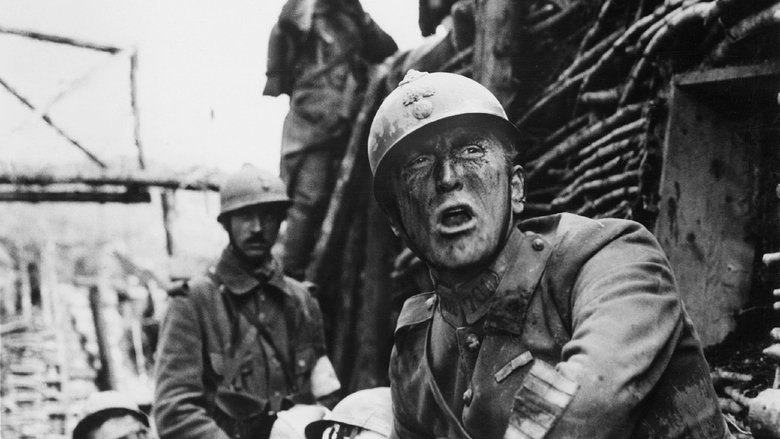
The film constantly cuts between these two locations. The opening scenes establish the generals' world in the palace. Kubrick's famous tracking shots immerse the viewer in both environments: the elegant, sweeping movements in the chateau and the raw, forward-marching tracking shots that follow Dax through the trenches.
The "Anthill"
The German stronghold's nickname symbolizes the dehumanizing nature of the generals' perspective. To them, the soldiers they send to die are as insignificant and numerous as ants. It also represents a futile, impossible goal, an objective whose value is measured only in terms of a general's potential promotion, not in strategic importance or human life.
The "Anthill" is the catalyst for the entire plot. General Mireau is goaded into ordering the attack on this position by General Broulard's promise of a promotion. The disastrous failure of this attack sets in motion the subsequent trial and executions.
The Cockroach
The cockroach symbolizes the cruel indifference of existence and the dehumanization of the condemned men. Corporal Paris observes that the insect will outlive them, having more contact with his family than he ever will again, reducing his own life to something less significant than a pest's. Private Ferol crushing it is a small, final act of asserting control and dominance in a situation where he has none.
In the makeshift cell on the night before the execution, Corporal Paris points out a cockroach to his fellow prisoners. His observation prompts a brief, bleakly philosophical exchange before Private Ferol kills the insect.
The Singing German Girl
The final scene with the singing girl symbolizes a shared, universal humanity that transcends national borders and the brutality of war. The soldiers, initially rowdy and cruel, are silenced and moved to tears, reminded of the humanity they share with their supposed "enemy." It offers a fleeting moment of grace and empathy, but it is a profoundly sad one, as it comes too late for the executed men and highlights the tragedy of the entire situation.
In the film's final scene, after the executions, Colonel Dax observes his men in a tavern. They crudely catcall a captured German girl (played by Christiane Harlan, who would become Kubrick's wife) forced to sing for them. Her frightened but heartfelt performance of a German folk song, "The Faithful Hussar," emotionally disarms the soldiers, who begin to hum along, some with tears in their eyes.
Philosophical Questions
What is the true nature of patriotism?
The film explores this question by contrasting two opposing views. The generals see patriotism as unquestioning obedience and a willingness to die for a commander's ambition, which they equate with the glory of the state. Colonel Dax, however, challenges this by quoting Samuel Johnson: "Patriotism is the last refuge of a scoundrel." For Dax, true patriotism lies in upholding justice and protecting the lives of his countrymen, even if it means defying a corrupt authority. The film forces the audience to consider whether blind loyalty or moral integrity is the higher form of patriotism.
Can an individual's morality survive within a corrupt system?
Colonel Dax is the embodiment of this question. He is a moral man operating within a deeply immoral system. He uses the system's own tools—logic, law, and appeals to honor—to fight it, but ultimately fails. The film seems to answer this question pessimistically, suggesting that while an individual can maintain their personal integrity, they are largely powerless to change a fundamentally corrupt structure. Broulard's final, cynical offer to Dax implies the system's only way of dealing with integrity is to try and absorb or corrupt it.
Where does true honor lie: in obedience or in defiance of injustice?
The film sets up a conflict between the military code of honor, which demands obedience to the chain of command, and a higher, humanistic honor that demands resistance to immoral orders. General Mireau believes the soldiers who refuse to attack are cowards devoid of honor. Colonel Dax argues that the true disgrace is not the failed attack, but the sham court-martial that follows. The film posits that true honor is not found in the superficial trappings of rank and medals but in the compassion and courage required to stand for justice, even at great personal cost.
Core Meaning
"Paths of Glory" is a powerful indictment of the hypocrisy, corruption, and inhumanity inherent in the structures of power, particularly within the military. Director Stanley Kubrick's central message is that the true enemy is not necessarily the opposing army, but the arrogant and ambitious commanders who, from the safety of their opulent chateaus, treat their soldiers as expendable pawns in their personal quests for promotion and glory. The film argues that patriotism can be, as Colonel Dax quotes, "the last refuge of a scoundrel," a tool used by the powerful to manipulate and sacrifice the common man. Ultimately, the film suggests that all "paths of glory lead but to the grave," a line from Thomas Gray's poem that inspired the title, highlighting the futility and tragic waste of war.