
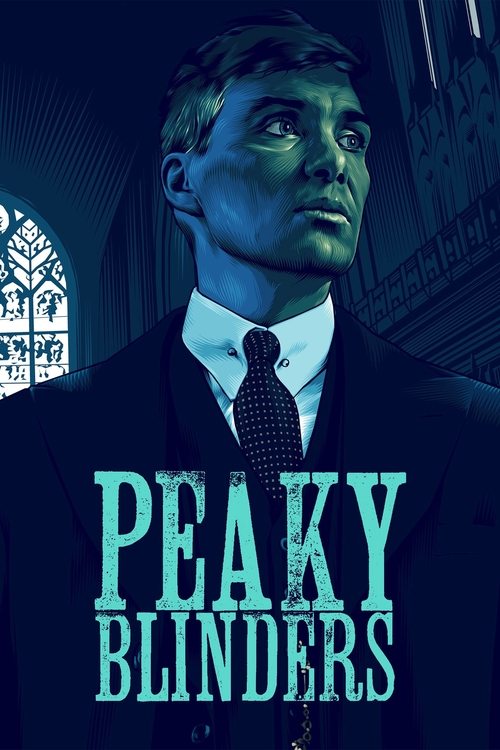
"London's for the taking."
Peaky Blinders - Symbolism & Philosophy
Symbols & Motifs
Horses
Horses symbolize both Tommy's past and his aspirations, representing a connection to his Romani heritage, a desire for legitimacy, and a rare source of peace and vulnerability. They are a link to a purer, more natural world away from the industrial grime and violence of his life.
From the moment Tommy rides into Birmingham on a black horse in the first episode, his connection to these animals is central. He builds a legitimate business around racehorses, which serves as a front for his criminal activities but also as a genuine passion. Some of his most introspective and vulnerable moments occur in the stables. The shooting of his horse, Dangerous, after Grace's death signifies his profound grief, while his final appearance on a white horse symbolizes a potential rebirth and a break from his dark past.
Cigarettes and Whiskey
Cigarettes and whiskey are ever-present symbols of the characters' inner turmoil, self-destruction, and attempts to cope with trauma. They function as a social ritual, a tool for contemplation, and a marker of the characters' psychological state.
Nearly every character is constantly smoking or drinking, particularly Tommy. The act of lighting a cigarette often precedes a crucial decision or a moment of intense stress, externalizing his internal thought process. Cillian Murphy reportedly smoked thousands of herbal cigarettes per season to maintain this visual motif. Whiskey is used to broker deals, mourn losses, and numb the pain of their violent lives, becoming a symbol of both camaraderie and addiction.
The Bleak Midwinter
The phrase "In the Bleak Midwinter," from an English carol, becomes a recurring motif symbolizing impending doom, the memory of wartime trauma, and a moment of ultimate despair before a potential, often violent, resolution.
Tommy explains in Season 4 that during WWI, he and his fellow soldiers, trapped and out of ammunition, believed they were about to be killed and recited the line. It becomes a code for a moment of hopeless finality. The phrase is uttered by various characters throughout the series, often when they are facing what they believe to be their certain death, connecting their present dangers back to the foundational trauma of the war.
Fire and Industry
The industrial landscape of Birmingham, with its constant fire, smoke, and machinery, symbolizes both the hellish, oppressive world the Shelbys inhabit and the raw power they seek to control. It is the crucible in which their ambition is forged.
The opening credits and much of the series' cinematography are dominated by images of industrial furnaces, sparks, and smoke stacks. This imagery grounds the series in its historical setting and serves as a visual metaphor for the violent, dangerous, and transformative world of the Peaky Blinders. The fire represents destruction, power, and the constant heat of conflict that defines their lives.
Philosophical Questions
Can a person ever truly escape their past and their nature?
This is the central question of Tommy Shelby's existence. Throughout the series, he attempts to legitimize his family and outrun his violent, criminal past. He accumulates wealth, power, and political status, yet he is continually dragged back into the underworld by new threats and old habits. The series explores whether his violent nature is a result of his trauma and upbringing or an inherent part of who he is. The finale suggests a potential for change and rebirth, but the announced movie and follow-up series leave this question open, implying that the battle between Tommy's ambition and his desire for peace is ongoing.
What is the true cost of ambition?
"Peaky Blinders" serves as an extended cautionary tale about the price of ambition. For every step the Shelbys take up the ladder, they suffer immense personal losses: family members are killed, relationships are destroyed, and their souls are corroded. The series meticulously tracks the psychological toll on each character, particularly Tommy, who achieves immense power but loses his capacity for happiness, love, and peace. It forces the audience to question whether the success, wealth, and status he gains are worth the trail of bodies and broken lives left in his wake.
How does trauma shape identity and morality?
The series is deeply invested in exploring the psychological aftermath of World War I. The male characters, particularly Tommy and Arthur, are defined by their experiences in the trenches. Their ruthlessness, emotional detachment, and propensity for violence are presented as direct consequences of their wartime trauma. The show raises questions about moral culpability, suggesting that their actions, while often monstrous, are rooted in a profound psychological brokenness. It challenges the audience to see them not just as gangsters, but as damaged men trying to navigate a world that has no understanding of or remedy for their invisible wounds.
Core Meaning
At its heart, "Peaky Blinders" is an exploration of ambition, trauma, and the complex nature of family loyalty in a world ravaged by war and defined by class struggle. The creators delve into the psyche of a generation of men who returned from the trenches of World War I broken and haunted, forced to forge a new identity in a society that had no place for them. The series posits that the violent, calculated rise of the Shelby family is a direct consequence of the psychological scars of war; their ambition is a way to reclaim control in a chaotic world. It examines the corrupting influence of power and wealth, questioning whether a man like Tommy Shelby can ever truly escape his violent origins, no matter how high he climbs. Ultimately, the series is a meditation on the cyclical nature of violence and the idea that true peace is not found in power or riches, but in confronting one's inner demons.