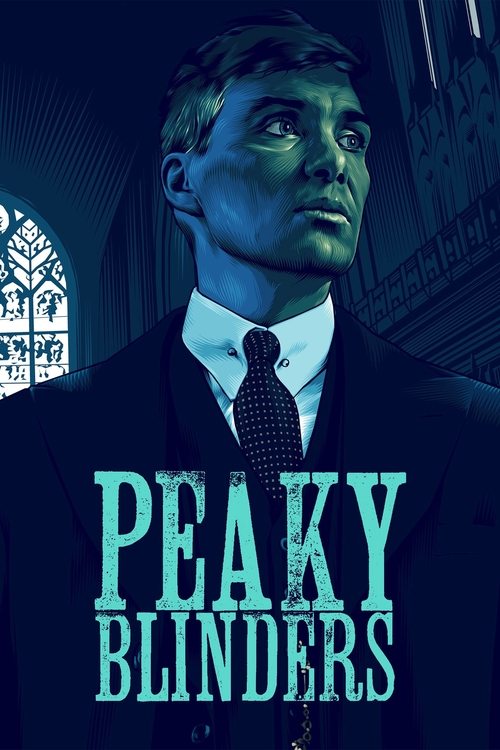
Peaky Blinders
"London's for the taking."
Overview
Set in the lawless streets of Birmingham, England, in the aftermath of World War I, "Peaky Blinders" chronicles the rise of the Shelby family, a gang of Romani-Irish heritage known for sewing razor blades into the peaks of their caps. Led by the ambitious and deeply traumatized Thomas "Tommy" Shelby, the series follows the family's transformation from a local betting operation into a formidable criminal empire with national and international reach. Across six seasons, Tommy navigates a treacherous landscape of rival gangs, political intrigue, family betrayals, and personal demons stemming from his wartime experiences.
The narrative arc sees the Shelby clan relentlessly expanding their power, moving from illegal bookmaking to legitimate business ventures, all while battling formidable adversaries ranging from ruthless police inspectors and Italian mafiosi to British fascists and American mobsters. The series is not just a crime story but a complex family drama, exploring the psychological cost of violence and power on Tommy, his volatile brother Arthur, his steadfast Aunt Polly, and the rest of the Shelby family as their ambitions force them onto an ever more dangerous and glamorous stage.
Core Meaning
At its heart, "Peaky Blinders" is an exploration of ambition, trauma, and the complex nature of family loyalty in a world ravaged by war and defined by class struggle. The creators delve into the psyche of a generation of men who returned from the trenches of World War I broken and haunted, forced to forge a new identity in a society that had no place for them. The series posits that the violent, calculated rise of the Shelby family is a direct consequence of the psychological scars of war; their ambition is a way to reclaim control in a chaotic world. It examines the corrupting influence of power and wealth, questioning whether a man like Tommy Shelby can ever truly escape his violent origins, no matter how high he climbs. Ultimately, the series is a meditation on the cyclical nature of violence and the idea that true peace is not found in power or riches, but in confronting one's inner demons.
Thematic DNA
Ambition and the Corruption of Power
The central driving force of the series is Tommy Shelby's relentless ambition to elevate his family's status from backstreet bookmakers to a legitimate and powerful dynasty. Each season presents a new rung on the ladder of power, from conquering local territories to influencing national politics. However, this ascent comes at a great cost. The series meticulously documents how the pursuit of power corrupts not only Tommy but his entire family, forcing them into increasingly brutal and morally compromising situations. Their wealth grows, but so does their isolation, paranoia, and the number of their enemies, illustrating the classic theme that with great power comes great danger and moral decay.
Family and Loyalty
"By order of the Peaky Blinders" is more than a catchphrase; it's a declaration of unwavering family loyalty that serves as both the Shelbys' greatest strength and their most profound weakness. The bonds between Tommy, Arthur, John, Ada, and Polly are the emotional core of the show. They will do anything to protect one another, but their criminal enterprise constantly tests these bonds through betrayal, internal conflict, and the psychological toll of their violent lives. The series explores the complexities of loyalty, questioning whether it is to the family name, to each other, or to Tommy's singular vision, and dramatizes the tragic consequences when these loyalties fracture.
Trauma and PTSD
The shadow of World War I hangs over the entire series, particularly in the character of Tommy Shelby. His experiences as a tunneler in France have left him with severe post-traumatic stress disorder, manifesting in nightmares, emotional detachment, and a nihilistic worldview. The show is a powerful depiction of how trauma shapes a person's identity and motivations. Tommy's calculated ruthlessness and emotional unavailability are presented not as inherent villainy, but as coping mechanisms for the horrors he endured. His journey is a constant battle with his inner demons, a theme that grounds the epic crime story in a deeply personal and psychological reality.
Class Struggle
Set against the backdrop of industrial Birmingham, the series vividly portrays the rigid class structures of early 20th-century Britain. The Shelbys are perpetually outsiders, their Romani heritage and working-class roots making them despised by the upper echelons of society they seek to infiltrate. Tommy's ambition is fueled by a desire to transcend his class and beat the establishment at its own game. The show contrasts the grit and grime of working-class life with the opulent, yet often hypocritical, world of the aristocracy and political elite, highlighting themes of social mobility, prejudice, and rebellion against an unjust system.
Character Analysis
Thomas 'Tommy' Shelby
Cillian Murphy
Motivation
His primary motivation is ambition, rooted in the trauma of war and a deep-seated desire to rise above his working-class, Romani origins. He is driven to protect his family and build a legacy, but also by a personal need to control his environment and prove he is smarter than the establishment. As the series progresses, his motivations become more existential, grappling with the meaning of his actions and seeking redemption for his sins.
Character Arc
Tommy begins as a haunted war veteran and small-time gang leader, emotionally crippled by PTSD. His arc across six seasons is a relentless, calculated climb up the social and criminal ladder. Initially driven by a desire for wealth and security for his family, his motivations evolve into a complex quest for power, legitimacy, and ultimately, an escape from his own demons. He transforms from a street-level gangster into a sophisticated businessman, a Member of Parliament, and an international power broker. His journey is marked by profound loss and moral compromise, leading to a final confrontation not with an external enemy, but with his own mortality and identity, culminating in a symbolic rebirth where he chooses to live rather than succumb to a manipulated death.
Elizabeth 'Polly' Gray
Helen McCrory
Motivation
Her core motivation is the protection and preservation of the Shelby family. She is driven by a fierce love for her nephews and a desire to see them succeed, but also by a need to keep their ambition from destroying them. She also seeks to heal her own past traumas, particularly the loss of her children, which informs many of her decisions and vulnerabilities.
Character Arc
Polly is the formidable matriarch and treasurer of the Shelby family, who ran the business while the men were at war. Her arc is one of maintaining control and seeking personal happiness amidst the chaos of the family's criminal enterprise. She is often Tommy's closest confidante and sharpest critic, serving as the family's moral, and often spiritual, compass. Over the series, she grapples with the loss of her children, finds love, and asserts her independence, refusing to be defined solely by her role in the family. Polly's journey is about balancing her fierce loyalty to the Shelbys with her own needs and identity as a powerful woman in a man's world.
Arthur Shelby
Paul Anderson
Motivation
Arthur is motivated by a deep-seated loyalty to Tommy and the family. He craves his brother's approval and a sense of purpose, which he finds in being the muscle of the operation. He is also motivated by a desperate search for redemption and an escape from the violence that defines and consumes him.
Character Arc
Arthur, the eldest Shelby brother, begins as the supposed head of the family but is quickly shown to be too volatile and traumatized to lead effectively. His arc is a tragic struggle with his own violent nature, PTSD, and addiction. He serves as Tommy's loyal and brutal enforcer, but yearns for peace and a normal life, which he briefly finds through his religious wife, Linda. Throughout the series, Arthur is caught in a devastating cycle of violence, remorse, and relapse. He never fully escapes the horrors of war or the demands of the family business, representing the raw, untamed id of the Peaky Blinders and the most visible casualty of their lifestyle.
Symbols & Motifs
Horses
Horses symbolize both Tommy's past and his aspirations, representing a connection to his Romani heritage, a desire for legitimacy, and a rare source of peace and vulnerability. They are a link to a purer, more natural world away from the industrial grime and violence of his life.
From the moment Tommy rides into Birmingham on a black horse in the first episode, his connection to these animals is central. He builds a legitimate business around racehorses, which serves as a front for his criminal activities but also as a genuine passion. Some of his most introspective and vulnerable moments occur in the stables. The shooting of his horse, Dangerous, after Grace's death signifies his profound grief, while his final appearance on a white horse symbolizes a potential rebirth and a break from his dark past.
Cigarettes and Whiskey
Cigarettes and whiskey are ever-present symbols of the characters' inner turmoil, self-destruction, and attempts to cope with trauma. They function as a social ritual, a tool for contemplation, and a marker of the characters' psychological state.
Nearly every character is constantly smoking or drinking, particularly Tommy. The act of lighting a cigarette often precedes a crucial decision or a moment of intense stress, externalizing his internal thought process. Cillian Murphy reportedly smoked thousands of herbal cigarettes per season to maintain this visual motif. Whiskey is used to broker deals, mourn losses, and numb the pain of their violent lives, becoming a symbol of both camaraderie and addiction.
The Bleak Midwinter
The phrase "In the Bleak Midwinter," from an English carol, becomes a recurring motif symbolizing impending doom, the memory of wartime trauma, and a moment of ultimate despair before a potential, often violent, resolution.
Tommy explains in Season 4 that during WWI, he and his fellow soldiers, trapped and out of ammunition, believed they were about to be killed and recited the line. It becomes a code for a moment of hopeless finality. The phrase is uttered by various characters throughout the series, often when they are facing what they believe to be their certain death, connecting their present dangers back to the foundational trauma of the war.
Fire and Industry
The industrial landscape of Birmingham, with its constant fire, smoke, and machinery, symbolizes both the hellish, oppressive world the Shelbys inhabit and the raw power they seek to control. It is the crucible in which their ambition is forged.
The opening credits and much of the series' cinematography are dominated by images of industrial furnaces, sparks, and smoke stacks. This imagery grounds the series in its historical setting and serves as a visual metaphor for the violent, dangerous, and transformative world of the Peaky Blinders. The fire represents destruction, power, and the constant heat of conflict that defines their lives.
Memorable Quotes
I don't pay for suits. My suits are on the house or the house burns down.
— Thomas Shelby
Context:
In Season 1, Episode 3, Tommy states this to establish his newfound authority in Birmingham. It's a clear, concise declaration of the gang's power and his refusal to be seen as just another customer or citizen.
Meaning:
This quote perfectly encapsulates Tommy's ruthless ambition and his assertion of power. It's not about the suit; it's about establishing dominance and making it clear that the Peaky Blinders operate by their own rules, taking what they want through intimidation and the threat of violence.
Don't f*** with the Peaky Blinders.
— Polly Gray
Context:
Polly delivers this iconic line multiple times, but one of the most memorable instances is in Season 2 as a direct threat to Inspector Campbell, solidifying her role as the formidable matriarch who will stop at nothing to protect her family.
Meaning:
This is the ultimate mission statement of the Shelby family. Delivered by Polly, it's a fierce, protective warning that encapsulates the family's unity, dangerous reputation, and the severe consequences of crossing them. It is both a threat and a declaration of identity.
Everyone's a w****, Grace. We just sell different parts of ourselves.
— Thomas Shelby
Context:
In Season 1, Tommy says this to Grace in the Garrison pub while they are getting to know each other. It's a moment of raw honesty that gives Grace—and the audience—a glimpse into the bleak worldview that shapes his actions.
Meaning:
This cynical yet insightful line reveals Tommy's core philosophy about the world. He sees everyone as compromised and transactional, believing that all people, regardless of class or profession, sell some part of themselves—be it their bodies, their labor, or their morals—to survive or get ahead.
He'll be in hell in a little while. He'll be there on time. May you be in heaven a full half-hour before the devil knows you're dead.
— Grace Shelby
Context:
Grace says this to Tommy in Season 3, reflecting her deep understanding of his nature and the violent world they are both a part of. It's a moment of dark affection that acknowledges their shared, compromised morality.
Meaning:
Originating from an old Irish drinking toast, this quote is a dark, witty blessing that reflects the show's blend of charm and violence. It wishes someone a brief, sneaky moment of peace in the afterlife before they inevitably face damnation, a fitting sentiment for the world the characters inhabit.
Whisky's good proofing water. Tells you who's real and who isn't.
— Thomas Shelby
Context:
A sentiment expressed by Tommy early in the series, it establishes his method of vetting people. Business deals and crucial conversations are often conducted over whiskey, as he observes how others handle their drink and their words.
Meaning:
This quote illustrates Tommy's shrewd and cautious nature. He uses alcohol not just for pleasure or escape, but as a tool to disarm others and reveal their true character and intentions. It's a testament to his strategic mind, where every interaction is a potential source of intelligence.
Episode Highlights
Episode 1
The premiere masterfully establishes the post-WWI Birmingham setting and introduces the key members of the Shelby family. We meet the haunted, ambitious Tommy Shelby as he navigates the family business and deals with the arrival of the relentless Inspector Campbell, who is sent by Winston Churchill to retrieve a stolen cache of government weapons.
This episode sets the entire tone of the series: stylish, gritty, and character-driven. It establishes the central conflict between Tommy's ambition and Campbell's crusade, introduces the core family dynamics, and lays the groundwork for the show's exploration of trauma, class, and power.
Episode 6
The season finale culminates on Derby Day at Epsom racecourse, where Tommy's elaborate plans to defeat his enemies, Sabini and Inspector Campbell, come to a head. The episode is a masterclass in tension, featuring Polly's chilling revenge on Campbell, a brutal confrontation, and Tommy being captured and led to a field to be executed, only to be saved at the last second by an agent of Churchill.
Widely regarded as one of the series' best episodes, it represents a major turning point for the Shelbys, elevating their status and power significantly. Tommy's near-death experience solidifies his mythic status, and Grace's revelation that she is pregnant with his child sets up the central emotional storyline for the next season.
Episode 2
This episode begins with the apparent happiness of Tommy's marriage to Grace, but quickly descends into one of the show's most shocking and tragic moments. During a lavish party, Grace is assassinated by an agent of the Changretta family, dying in Tommy's arms.
Grace's death is a pivotal moment that irrevocably changes Tommy. It extinguishes his hope for a peaceful, legitimate life and sends him into a spiral of grief and vengeance. This event hardens him, fueling his ambition with a newfound nihilism that reverberates through the rest of the series.
Episode 1
Picking up from the Season 3 cliffhanger, this episode opens with Arthur, John, Michael, and Polly facing the gallows. In a nail-biting sequence, Tommy uses his political leverage to secure their pardons at the very last second. A year later, the estranged family is forced to reunite when they each receive a 'Black Hand' from the Sicilian mafia, led by Luca Changretta, marking them for death.
This episode resets the stakes for the series. It shatters the family's sense of invincibility and introduces their most formidable foe yet. The subsequent shocking death of John Shelby establishes that no character is safe and forces the fractured family to put aside their differences to survive.
Episode 6
The finale of Season 5 sees Tommy's intricate plan to assassinate the fascist leader Oswald Mosley go disastrously wrong. Betrayed by an unknown party, his key operatives are killed before they can act, leaving Mosley unharmed and Tommy utterly defeated. The episode ends with a haunting shot of a tormented Tommy walking into a misty field, holding a gun to his own head.
This episode marks Tommy's most significant failure, a humbling and psychologically devastating blow. It demonstrates that he is playing in a league where his usual tactics are insufficient and sets up the central conflict of the final season: his battle against a powerful, unseen political conspiracy and his own suicidal despair.
Episode 6
In the series finale, Tommy, believing he is dying from tuberculoma, sets his final affairs in order. After a tense and final confrontation with Michael Gray, Tommy prepares to take his own life. However, a vision of his late daughter Ruby leads him to discover that his diagnosis was a lie, orchestrated by Oswald Mosley to make Tommy kill himself.
The finale brings Tommy's journey full circle. Instead of ending in death, it concludes with his liberation and rebirth. Realizing he has been given a second chance, he spares his doctor's life and rides away on a white horse, leaving his old life behind. It provides a satisfying end to his arc while setting the stage for the announced feature film.
Philosophical Questions
Can a person ever truly escape their past and their nature?
This is the central question of Tommy Shelby's existence. Throughout the series, he attempts to legitimize his family and outrun his violent, criminal past. He accumulates wealth, power, and political status, yet he is continually dragged back into the underworld by new threats and old habits. The series explores whether his violent nature is a result of his trauma and upbringing or an inherent part of who he is. The finale suggests a potential for change and rebirth, but the announced movie and follow-up series leave this question open, implying that the battle between Tommy's ambition and his desire for peace is ongoing.
What is the true cost of ambition?
"Peaky Blinders" serves as an extended cautionary tale about the price of ambition. For every step the Shelbys take up the ladder, they suffer immense personal losses: family members are killed, relationships are destroyed, and their souls are corroded. The series meticulously tracks the psychological toll on each character, particularly Tommy, who achieves immense power but loses his capacity for happiness, love, and peace. It forces the audience to question whether the success, wealth, and status he gains are worth the trail of bodies and broken lives left in his wake.
How does trauma shape identity and morality?
The series is deeply invested in exploring the psychological aftermath of World War I. The male characters, particularly Tommy and Arthur, are defined by their experiences in the trenches. Their ruthlessness, emotional detachment, and propensity for violence are presented as direct consequences of their wartime trauma. The show raises questions about moral culpability, suggesting that their actions, while often monstrous, are rooted in a profound psychological brokenness. It challenges the audience to see them not just as gangsters, but as damaged men trying to navigate a world that has no understanding of or remedy for their invisible wounds.
Alternative Interpretations
While the finale is largely seen as Tommy Shelby's rebirth and liberation, an alternative interpretation suggests it is not an escape but a different kind of damnation. Having lived by violence and calculation, Tommy's ultimate fate is not death, but to be left alone with himself, forever a man apart, unable to truly rejoin the world. His ride into the distance isn't a ride to a new life, but an acceptance of his perpetual state as a haunted outsider. Some viewers also interpret the show's treatment of violence more critically. Instead of a cautionary tale, they argue the series overly romanticizes and glamorizes gangster life, making antiheroes like Tommy aspirational figures, which can obscure the real-world brutality and negative impact of such criminal organizations. Furthermore, the supernatural elements, especially in the final season, can be interpreted in two ways: either as literal ghostly interventions in a world where Romani mysticism is real, or as manifestations of Tommy's severe PTSD and deteriorating mental state, with his daughter's 'vision' being a moment of psychological clarity rather than a paranormal event.
Cultural Impact
"Peaky Blinders" evolved from a British crime drama into a global cultural phenomenon. Its most visible impact has been on men's fashion, sparking a worldwide resurgence in the popularity of 1920s-style clothing, particularly flat caps and three-piece suits. The distinctive undercut hairstyle, known as the "Peaky cut," became a widespread trend. The series subverted the traditional British period drama by focusing on and mythologizing the working class, rather than the aristocracy, which resonated with a modern audience and may have influenced subsequent historical dramas.
The show's anachronistic use of a modern rock soundtrack, featuring artists like Nick Cave, The White Stripes, and Arctic Monkeys, became an iconic element, influencing how other period pieces use music. The series has also had a significant impact on tourism and local pride in Birmingham, with theme bars, festivals, and tours celebrating the show's gritty depiction of the city. Despite being based on a real gang, the show created a romanticized, fictional mythology that has deeply penetrated pop culture, leading to everything from themed weddings to a rise in babies being named after the characters. The legacy of "Peaky Blinders" is that of a stylized, atmospheric series that created an entire aesthetic and elevated the gangster genre on television.
Audience Reception
"Peaky Blinders" received widespread critical acclaim throughout its run, praised for its compelling storytelling, strong performances (particularly by Cillian Murphy), and distinctive visual style. Initially a modest hit on BBC Two, its popularity exploded internationally after it was acquired by Netflix, transforming it into a global phenomenon. Audiences were drawn to its gritty atmosphere, complex antihero protagonist, and stylized aesthetic. The show developed a passionate, cult-like following. While the first four seasons were almost universally praised for their tight plotting and character development, some viewers and critics found the pace of the final two seasons, especially Season 6, to be slower and more contemplative, which drew some criticism. However, the series finale was largely lauded for providing a clever and satisfying conclusion to Tommy Shelby's arc, successfully subverting audience expectations of a tragic end. Overall, the series maintained a high level of positive reception from both critics and audiences, cementing its status as one of the most popular and influential British dramas of its time.
Interesting Facts
- The show's creator, Steven Knight, also co-created the popular game show 'Who Wants to Be a Millionaire?'.
- Cillian Murphy revealed that he smoked around 3,000 herbal cigarettes per season to portray Tommy Shelby's chain-smoking habit. The cigarettes contained no tobacco or nicotine.
- The real Peaky Blinders gang was most prominent in the 1890s, not after World War I as depicted in the show. The series creators transplanted them to the 1920s for dramatic effect.
- Jason Statham was reportedly creator Steven Knight's initial choice for the role of Tommy Shelby, but Cillian Murphy convinced him he could transform into the character with a simple text message: "Remember, I am an actor."
- The distinctive "Peaky Blinders" haircut was based on the styles of soldiers in WWI, who shaved parts of their head to prevent lice. Cillian Murphy initially disliked the haircut.
- Helen McCrory (Polly Gray) based her character's distinctive Birmingham accent on conversations with Black Sabbath frontman Ozzy Osbourne.
- Actors Joe Cole (John Shelby) and Finn Cole (Michael Gray), who play cousins in the series, are brothers in real life.
- The series was inspired by stories Knight's father told him about his own uncles, who were gangsters in Birmingham known as the 'Peaky Blinders'.
- Despite being set in Birmingham, much of the series was actually filmed in Liverpool, as well as other locations like Leeds and Manchester.
Easter Eggs
Charlie Chaplin makes a cameo appearance in Season 2.
In Season 2, the Shelbys meet a silent film star who is revealed to be Charlie Chaplin. This is a nod to the real historical figure, who was of Romani heritage and was born in Birmingham, grounding the fictional Shelby family in a tangible, real-world context. It adds a layer of glamour and historical texture to the Shelbys' rising influence.
⚠️ Spoiler Analysis
Click to reveal detailed analysis with spoilers
Frequently Asked Questions
Explore More About This Movie
Dive deeper into specific aspects of the movie with our detailed analysis pages
Comments (0)
No comments yet. Be the first to share your thoughts!