Perfect Blue
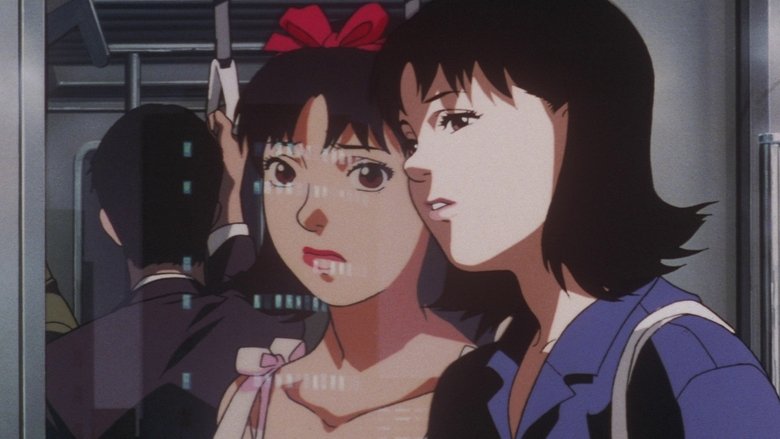
A psychological thriller's descent into madness, where the glamorous sheen of pop stardom shatters like a broken mirror, reflecting a terrifying fragmentation of identity.
Perfect Blue
Perfect Blue

PERFECT BLUE

""excuse me... who are you?""

28 February 1998 Japan 82 min ⭐ 8.3 (2,934)
Director: Satoshi Kon
Cast: Junko Iwao, Rica Matsumoto, Shiho Niiyama, Masaaki Okura, Shinpachi Tsuji
Animation Thriller
Identity vs. Persona The Dangers of Fandom and Voyeurism Reality vs. Illusion Critique of Media and Objectification
Budget: $3,000,000
Box Office: $683,666

Perfect Blue - Ending Explained

⚠️ Spoiler Analysis

The central twist of "Perfect Blue" is the revelation that Mima's manager, Rumi Hidaka, is the true antagonist. Rumi, a failed pop idol from a previous generation, suffers from Dissociative Identity Disorder (DID) and has developed a persona that believes it is the 'real' Mima—specifically, the pure, innocent pop idol Mima used to be. Mima's decision to become an actress and shed her idol image triggers a violent psychological break in Rumi.

It was Rumi who created the website "Mima's Room," using her intimate access as Mima's manager to post diary entries that would gaslight Mima into questioning her own sanity. Rumi also manipulated the obsessive stalker, Me-Mania, by sending him emails posing as the 'Idol Mima,' inciting him to act as her enforcer to punish those 'tarnishing' Mima's image. Rumi herself is responsible for several of the murders, including killing the photographer, the scriptwriter, and eventually Me-Mania after his failed attempt to assault Mima.

The climax reveals this truth when Rumi, dressed in a replica of Mima's idol costume, confronts Mima in a perfect recreation of her bedroom that Rumi had built in her own apartment. The ensuing chase through the city is not between Mima and her hallucination, but between Mima and the dangerously unhinged Rumi. Mima survives after pushing Rumi in front of an oncoming truck to save her from being run over, which leads to Rumi's institutionalization. The final scene confirms Mima has recovered from her trauma, while Rumi remains trapped in her delusion, forever believing she is the pop idol Mima. All the moments where Mima suspected she might be the killer were the result of Rumi's elaborate and cruel manipulation combined with Mima's own stress-induced psychosis.

Alternative Interpretations

While the most accepted interpretation is that Rumi is the killer suffering from DID, some viewers have proposed alternative theories that challenge the finality of the film's ending.

  • Mima Is Still Unwell: One interpretation suggests that Mima never truly recovered. The happy, confident ending is simply another, more stable delusion she has constructed to cope with the trauma. In this reading, she may have been responsible for some or all of the events and projected the guilt onto Rumi. The final line, "No, I'm the real thing," can be seen as tragically ironic—someone who is truly sane wouldn't need to declare it. She has not conquered her psychosis but has become fully consumed by a more functional version of it.
  • Supernatural/Metaphysical Reading: A less common but intriguing theory posits that the 'Idol Mima' is not just a hallucination but a separate, malevolent entity (a tulpa or doppelgänger) willed into existence by the collective obsession of Mima's fans, Rumi, and Me-Mania. This entity possesses Rumi and is the true antagonist. This explains some of the more surreal moments, like 'Idol Mima' seemingly having a physical presence and supernatural grace during the final chase, which seems physically impossible for Rumi. The film then becomes a fantasy about warring realities rather than just a psychological thriller.
  • The Entire Film is Mima's Psychosis: Another theory posits that the "fake plot twist" within the film—where Mima is revealed to be a patient in a mental hospital who imagined her entire idol/actress career—is actually the truth. The final sequence of her becoming a successful actress is the ultimate fantasy she has retreated into, with Rumi simply being a doctor or fellow patient. This interpretation views the entire narrative as an elaborate delusion from the very beginning.