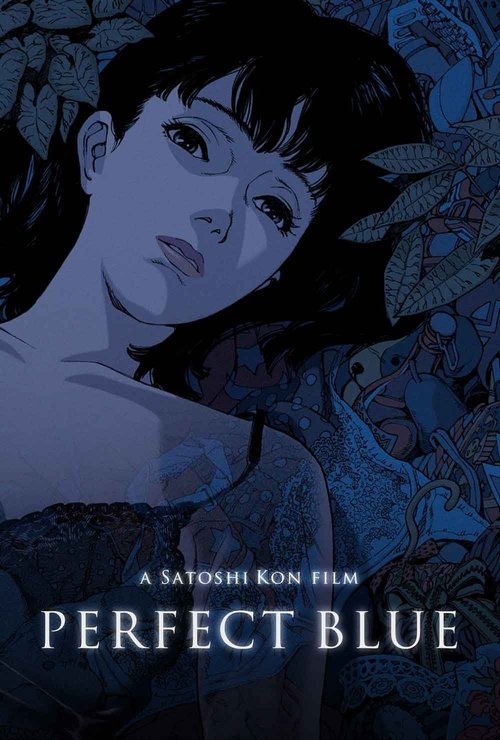
Perfect Blue
PERFECT BLUE
""excuse me... who are you?""
Overview
"Perfect Blue" chronicles the harrowing journey of Mima Kirigoe, a popular J-pop idol who decides to leave her successful music group, CHAM!, to pursue a career as a serious actress. Her decision is met with disapproval from some of her most devoted fans, particularly an obsessive and menacing stalker known as Me-Mania. As Mima takes on more mature and controversial roles, including a graphic rape scene for a television drama, her sense of self begins to fracture.
Mima's psychological state deteriorates as she discovers a website called "Mima's Room," which details her innermost thoughts and daily activities with unnerving accuracy. She begins to be haunted by a hallucinatory version of her former pop-idol self, a cheerful and innocent specter who claims to be the "real Mima" and chastises her for tarnishing her pure image. The lines between her reality, her acting role, and her paranoid delusions blur into a terrifying nightmare, especially as people involved in her new career begin to turn up brutally murdered. This forces both Mima and the audience to question her sanity and her innocence in the unfolding horror.
Core Meaning
The core message of "Perfect Blue" is a profound critique of celebrity culture, the objectification of women in media, and the perilous nature of identity in the digital age. Director Satoshi Kon explores the parasitic relationship between a performer and their audience, where a public persona can be consumed and distorted by fan obsession to the point that it eclipses the individual's true self. The film posits that in a world of manufactured images and parasocial relationships, the line between the authentic self and the projected persona can become dangerously blurred, leading to a complete loss of identity and sanity. It's a dark exploration of what happens when one's identity is treated as a commodity, subject to the desires and fantasies of others, ultimately questioning who has ownership over a person's image and soul.
Thematic DNA
Identity vs. Persona
The central theme is Mima's struggle to reconcile her past identity as a pure pop idol with her new, more adult persona as an actress. The film masterfully visualizes this internal conflict through the haunting specter of 'Idol Mima,' a hallucination representing the public's and her own idealized version of herself. This schism is exacerbated by her acting role in "Double Bind," where her character also suffers from dissociative identity disorder, creating a dizzying meta-narrative that blurs the lines between Mima the person, Mima the actress, and Mima the character she plays, forcing the audience to constantly question what is real.
The Dangers of Fandom and Voyeurism
"Perfect Blue" was remarkably prescient in its depiction of toxic fandom and online obsession. The website "Mima's Room" and the stalker Me-Mania represent the dangerous entitlement fans can feel, believing they have ownership over an idol's identity. The film critiques the voyeuristic nature of celebrity culture, where a person's life is consumed as entertainment. The internet is portrayed as a new, terrifying tool for stalking that dissolves privacy and allows for the complete fabrication of a person's life, leading to devastating psychological consequences.
Reality vs. Illusion
Satoshi Kon is renowned for his ability to blend reality and illusion, and "Perfect Blue" is a prime example. Mima's psychological breakdown is mirrored in the film's very structure, with seamless, disorienting transitions between her real life, her dreams, her hallucinations, and scenes from the TV show she's filming. This technique immerses the viewer in her fragmented psyche, making it impossible to be a passive observer. We are forced to share in her paranoia and confusion, constantly questioning the reality of what is being presented on screen.
Critique of Media and Objectification
The film serves as a harsh critique of the entertainment industry's exploitation of young women. Mima's transition to acting is marked by her being pressured into roles that sexualize and victimize her, such as the brutal rape scene and nude photoshoots. Her handlers and the industry at large see her body and image as commodities to be repackaged and sold, disregarding the immense psychological toll it takes on her. Her struggle highlights the theme of female autonomy in an industry that often seeks to control and define women based on public appetite.
Character Analysis
Mima Kirigoe
Junko Iwao
Motivation
Her primary motivation is to shed her 'pure' pop-idol image and establish herself as a serious, respected actress. This desire for professional evolution and personal autonomy drives all her decisions, including accepting controversial roles, which in turn fuels the central conflict of the film as it puts her at odds with her obsessive fans and her own internalized persona.
Character Arc
Mima begins as a sweet, somewhat timid, and eager-to-please young woman trying to navigate a challenging career change. As she is subjected to psychological torment, stalking, and industry exploitation, her personality begins to fragment. She becomes paranoid, isolated, and unsure of her own actions, descending into a state of psychosis where she cannot distinguish reality from hallucination. By the end, having survived the trauma and confronted her tormentor, she emerges changed but stronger, having integrated the fractured parts of her identity and asserted control over her own life, famously declaring, "No, I'm the real thing."
Rumi Hidaka
Rica Matsumoto
Motivation
Rumi is motivated by a desperate, pathological need to preserve the pure, innocent pop-idol version of Mima, an identity she wishes she could have maintained for herself. Her actions are driven by a refusal to accept the passage of time and the death of her own dreams, which she projects onto Mima. She seeks to punish anyone who 'corrupts' Mima's idol image, ultimately trying to replace Mima to become the idol herself.
Character Arc
Rumi is initially presented as Mima's caring, protective manager who seems concerned about Mima's new career path. It is gradually revealed that her concern is a manipulative obsession. As a failed former pop idol herself, Rumi lived vicariously through Mima. When Mima decides to 'tarnish' the idol persona Rumi cherishes, Rumi's psyche fractures. She develops a dissociative identity, believing she is the 'real Mima.' She orchestrates the murders and the gaslighting campaign to 'purify' Mima's image, becoming the film's main antagonist in a shocking twist. Her arc ends in a psychiatric institution, completely lost to her delusion.
Me-Mania (Mamoru Uchida)
Masaaki Okura
Motivation
His motivation is to protect the 'innocent' pop-idol Mima he fell in love with. He feels betrayed by her decision to become an actress and take on mature roles, seeing it as a corruption of his fantasy. He is easily manipulated by Rumi's emails, believing he is carrying out the will of the 'real Mima' by eliminating those who are forcing her to change.
Character Arc
Me-Mania is a grotesque and obsessive fan who is initially just a background presence, but his stalking becomes more overt and threatening as Mima's career changes. He is the physical embodiment of toxic fandom, viewing Mima not as a person but as an object of pure worship. Manipulated by Rumi (posing as 'Idol Mima' via email), he acts as an enforcer, targeting those who 'defile' his idol. His arc culminates in a direct, violent assault on Mima before he is killed by Rumi, revealing him to be a pawn in a larger, more twisted game.
Symbols & Motifs
Mirrors and Reflections
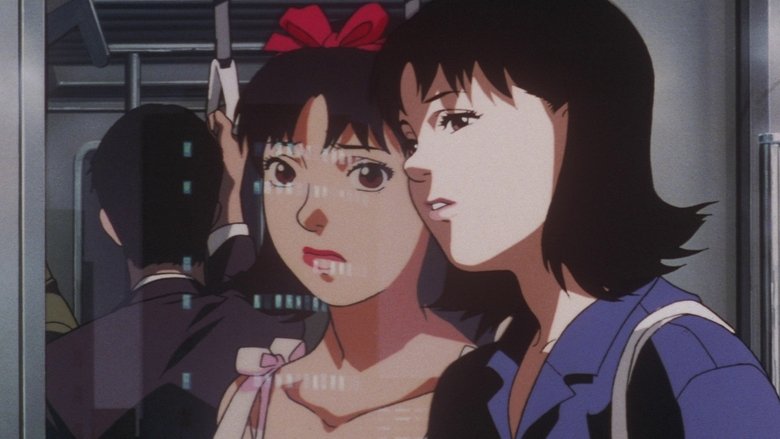
Mirrors and reflections are the primary visual motif, symbolizing Mima's fractured identity and her disconnect from reality. They represent the conflict between her true self and her public persona, often showing the 'Idol Mima' hallucination instead of her actual reflection, signifying her loss of self. Distorted or broken reflections visually represent her shattering psyche.
Reflections are used constantly throughout the film: in windows, on computer screens, and in literal mirrors. In key moments, Mima's reflection moves independently or is replaced by her idol self, creating intense psychological horror. The climax involves Rumi's own delusion, where she sees her reflection as the pure Idol Mima, even as her real body is bloodied and broken, cementing the mirror as a liar that reflects idealized fantasies rather than reality.
The Color Red
Red is heavily associated with Mima's past idol life, violence, and the encroaching madness. It symbolizes the powerful, often violent emotions tied to her pop persona and the danger it represents to her new identity. Her idol costume is red, and the color often appears before moments of violence or psychological distress, visually linking her past 'purity' with the brutal reality of her present.
The color red is present in Mima's original CHAM! costume, the decor of her apartment, and most notably, scenes of murder. As the film progresses, red becomes more dominant in the color palette, signifying that Mima is being consumed by her trauma and the violence orchestrated by Rumi in the name of the 'Idol Mima'.
Mima's Pet Fish
The tropical fish in Mima's apartment act as a barometer for her mental state. They represent her fragile grip on reality and her own life, trapped in a glass box for others to observe, much like herself.
Early in the film, Mima diligently cares for her fish. During a period of intense psychological distress after filming the rape scene, she hallucinates that her fish have died, symbolizing her feeling that she has died inside. When she later sees they are alive, it offers a brief moment of clarity, but the recurring threat to the fish mirrors the constant threat to her own sanity and survival.
Mima's Room (Website)
The website symbolizes the loss of privacy and the fabrication of identity in the digital age. It represents the ultimate violation, where Mima's most private thoughts and actions are stolen, curated, and presented back to her as a public diary written by a phantom version of herself. It is the tool through which her identity is stolen and manipulated.
Mima discovers the website early on and becomes obsessed with it. It's presented as a fan page but is actually written by Rumi. The blog posts detail events only Mima would know, causing her to doubt her own memories and sanity, believing she might be posting in a fugue state. It's a central element of the gaslighting that drives her to the brink.
Memorable Quotes
Excuse me... who are you? (あなた、誰なの…?)
— Mima Kirigoe (and her hallucination)
Context:
The line is first spoken by Mima's ghostly idol persona in a reflection. It appears again in faxes sent to her, and she speaks it herself during moments of extreme distress. It's also a line from her TV show "Double Bind," further blurring the lines between fiction and her reality.
Meaning:
This is the film's most iconic line, repeated throughout. It encapsulates the central theme of identity loss. Initially, the 'Idol Mima' hallucination asks this of the 'actress Mima,' questioning her authenticity. Later, Mima asks it of her own reflection and of Rumi, signifying her complete psychological unraveling and inability to recognize herself or others. It is the ultimate question of the film: who is the 'real' Mima?
No, I'm the real thing. (ううん、私は本物だよ。)
— Mima Kirigoe
Context:
In the final scene, after visiting Rumi in the psychiatric hospital, Mima gets into her car. She looks at her own reflection in the rearview mirror, adjusts her sunglasses, smiles, and says the line directly to herself (and the audience), showing she is now in control of her life and identity.
Meaning:
This is Mima's final line in the film, delivered with a confident smile. It signifies her victory over her psychosis and her integration of her past and present selves. After surviving the traumatic events and seeing Rumi confined by her delusion, Mima has finally found and accepted her true, singular identity. It's a powerful statement of self-affirmation and a rejection of the fragmented personas that nearly destroyed her.
Philosophical Questions
What constitutes the 'self' in an age of manufactured public personas?
The film relentlessly questions the nature of identity. Is the 'self' an innate, stable core, or is it a fluid collection of roles we perform for others? Mima's identity crisis is triggered when her public persona (the innocent idol) clashes with the new one she is trying to build (the serious actress). The film suggests that when a persona is intensely projected and consumed by the public, it can take on a life of its own, threatening to overwrite the individual behind it. The existence of "Mima's Room"—a perfectly curated, yet completely false, diary—raises the question of whether an externally perceived identity can become more 'real' than one's own lived experience.
To whom does a celebrity's image belong: the individual or the audience?
"Perfect Blue" explores the dangerous sense of ownership that fans can develop over a celebrity. Me-Mania and Rumi both act on the belief that they have the right to control Mima's identity and punish her for deviating from the image they worship. The film presents this as a form of psychological cannibalism. It poses the unsettling question of whether an artist, by entering the public eye, forfeits the right to personal evolution and autonomy, becoming public property whose identity is subject to the whims and fantasies of consumers.
How does technology mediate and distort our perception of reality?
Released in the nascent era of the public internet, the film was prophetic about technology's power to blur reality and illusion. The website "Mima's Room" acts as an alternate, more compelling reality for both Mima and her stalkers. The film explores how online platforms can create echo chambers for obsession and allow for the complete fabrication of a person's life. It questions whether a digitally constructed reality, if believed by enough people, can have a more tangible and destructive impact than objective truth itself.
Alternative Interpretations
While the most accepted interpretation is that Rumi is the killer suffering from DID, some viewers have proposed alternative theories that challenge the finality of the film's ending.
- Mima Is Still Unwell: One interpretation suggests that Mima never truly recovered. The happy, confident ending is simply another, more stable delusion she has constructed to cope with the trauma. In this reading, she may have been responsible for some or all of the events and projected the guilt onto Rumi. The final line, "No, I'm the real thing," can be seen as tragically ironic—someone who is truly sane wouldn't need to declare it. She has not conquered her psychosis but has become fully consumed by a more functional version of it.
- Supernatural/Metaphysical Reading: A less common but intriguing theory posits that the 'Idol Mima' is not just a hallucination but a separate, malevolent entity (a tulpa or doppelgänger) willed into existence by the collective obsession of Mima's fans, Rumi, and Me-Mania. This entity possesses Rumi and is the true antagonist. This explains some of the more surreal moments, like 'Idol Mima' seemingly having a physical presence and supernatural grace during the final chase, which seems physically impossible for Rumi. The film then becomes a fantasy about warring realities rather than just a psychological thriller.
- The Entire Film is Mima's Psychosis: Another theory posits that the "fake plot twist" within the film—where Mima is revealed to be a patient in a mental hospital who imagined her entire idol/actress career—is actually the truth. The final sequence of her becoming a successful actress is the ultimate fantasy she has retreated into, with Rumi simply being a doctor or fellow patient. This interpretation views the entire narrative as an elaborate delusion from the very beginning.
Cultural Impact
"Perfect Blue" is regarded as a landmark in animation and psychological horror, proving that animated films could tackle mature, complex, and disturbing themes with the sophistication of live-action cinema. Upon its release, it was hailed for its innovative narrative that masterfully blended reality and delusion, influencing a generation of filmmakers both in and out of animation.
Its most recognized influence is on the work of American director Darren Aronofsky, who famously acquired the rights to remake "Perfect Blue" to replicate a specific scene in "Requiem for a Dream" and whose later film, "Black Swan," bears striking resemblances in plot, theme, and visuals. The film's prescient commentary on internet culture, toxic fandom, and parasocial relationships was years ahead of its time. Released when the internet was still in its infancy, it accurately predicted how the digital world could be used to harass, stalk, and ultimately erode a person's sense of self and privacy, making it more relevant today in the age of social media than it was in 1998.
Critically, the film was well-received on the festival circuit and has since garnered a massive cult following, frequently cited as one of the greatest animated films of all time. It challenged the Western perception of anime as content for children and helped pave the way for other adult-oriented animated features. Its exploration of identity, fame, and mental health continues to be analyzed by critics and academics, solidifying its legacy as a prophetic and timeless masterpiece.
Audience Reception
Audience reception for "Perfect Blue" has evolved since its release. Initially, some viewers were taken aback by its graphic content, including scenes of sexual violence and brutal murder, and its complex, often confusing psychological narrative. However, it quickly garnered a strong cult following, particularly among anime fans and cinephiles who appreciated its mature themes and groundbreaking storytelling.
Today, it is overwhelmingly praised by audiences, who frequently commend its tight pacing, mind-bending plot, and unsettling atmosphere. Many viewers highlight its lasting relevance, noting how its critique of fandom and celebrity culture feels even more potent in the current era of social media. The primary point of praise is Satoshi Kon's masterful direction, especially the seamless editing that merges fantasy and reality, which viewers find both disorienting and brilliant. Criticisms are rare but sometimes point to the discomfort of the graphic scenes. Overall, the audience verdict is that it is a chilling, intelligent, and unforgettable psychological thriller that requires multiple viewings to fully unpack.
Interesting Facts
- The film was originally planned as a live-action feature but was changed to an animation project due to budget issues.
- Director Satoshi Kon was given the project and asked to keep three core elements from the original novel: the protagonist is an idol, she has a stalker, and it's a horror story. He then significantly rewrote the rest of the script to focus more on psychological themes rather than being a straightforward slasher.
- Darren Aronofsky is a noted admirer of the film. He bought the remake rights to "Perfect Blue" primarily to be able to recreate the iconic bathtub scream scene shot-for-shot in his film "Requiem for a Dream" (2000). Many critics and viewers also note the strong thematic and visual parallels between "Perfect Blue" and Aronofsky's "Black Swan" (2010), though Aronofsky has been circumspect about the direct influence.
- The dance choreography for Mima's idol group, CHAM!, was purposefully animated to be slightly out of sync to give it a more realistic feel, as real-life performers are never perfectly synchronized.
- The creator of "Akira," Katsuhiro Otomo, was credited as a "Special Supervisor" on the film. His famous name was used to help secure funding and generate interest in the project, which was Satoshi Kon's directorial debut.
- To achieve a sense of realism, the animation team based many of the film's environments on real photographs of Tokyo.
- Pop superstar Madonna used clips from "Perfect Blue" as a video interlude during her Drowned World Tour in 2001.
⚠️ Spoiler Analysis
Click to reveal detailed analysis with spoilers
Frequently Asked Questions
Explore More About This Movie
Dive deeper into specific aspects of the movie with our detailed analysis pages
Comments (0)
No comments yet. Be the first to share your thoughts!