The core message of "Perfect Blue" is a profound critique of celebrity culture, the objectification of women in media, and the perilous nature of identity in the digital age. Director Satoshi Kon explores the parasitic relationship between a performer and their audience, where a public persona can be consumed and distorted by fan obsession to the point that it eclipses the individual's true self. The film posits that in a world of manufactured images and parasocial relationships, the line between the authentic self and the projected persona can become dangerously blurred, leading to a complete loss of identity and sanity. It's a dark exploration of what happens when one's identity is treated as a commodity, subject to the desires and fantasies of others, ultimately questioning who has ownership over a person's image and soul.
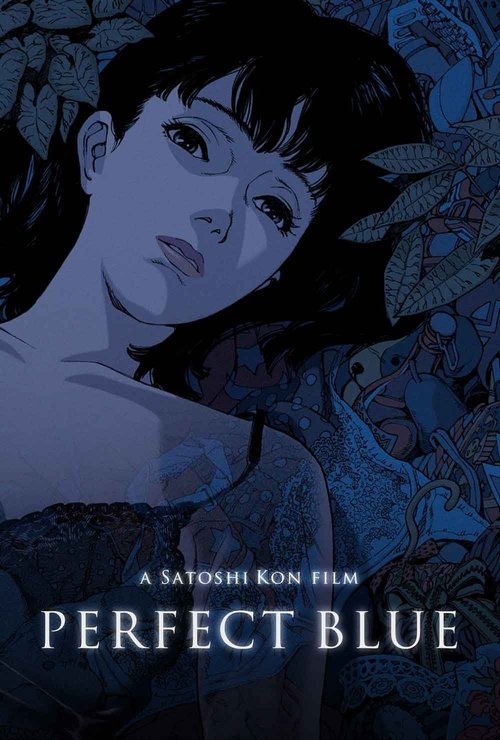
PERFECT BLUE
""excuse me... who are you?""
Director: Satoshi Kon
Cast: Junko Iwao, Rica Matsumoto, Shiho Niiyama, Masaaki Okura, Shinpachi Tsuji
Perfect Blue — Symbolism & Philosophy
Symbols & Motifs
Mirrors and Reflections
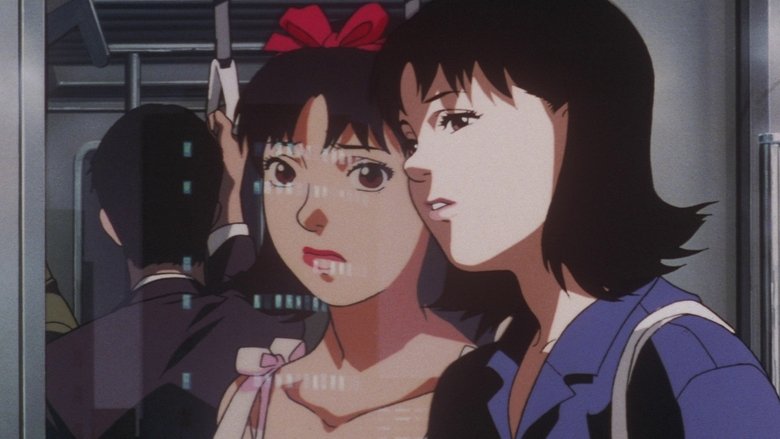
Mirrors and reflections are the primary visual motif, symbolizing Mima's fractured identity and her disconnect from reality. They represent the conflict between her true self and her public persona, often showing the 'Idol Mima' hallucination instead of her actual reflection, signifying her loss of self. Distorted or broken reflections visually represent her shattering psyche.
Reflections are used constantly throughout the film: in windows, on computer screens, and in literal mirrors. In key moments, Mima's reflection moves independently or is replaced by her idol self, creating intense psychological horror. The climax involves Rumi's own delusion, where she sees her reflection as the pure Idol Mima, even as her real body is bloodied and broken, cementing the mirror as a liar that reflects idealized fantasies rather than reality.
The Color Red
Red is heavily associated with Mima's past idol life, violence, and the encroaching madness. It symbolizes the powerful, often violent emotions tied to her pop persona and the danger it represents to her new identity. Her idol costume is red, and the color often appears before moments of violence or psychological distress, visually linking her past 'purity' with the brutal reality of her present.
The color red is present in Mima's original CHAM! costume, the decor of her apartment, and most notably, scenes of murder. As the film progresses, red becomes more dominant in the color palette, signifying that Mima is being consumed by her trauma and the violence orchestrated by Rumi in the name of the 'Idol Mima'.
Mima's Pet Fish
The tropical fish in Mima's apartment act as a barometer for her mental state. They represent her fragile grip on reality and her own life, trapped in a glass box for others to observe, much like herself.
Early in the film, Mima diligently cares for her fish. During a period of intense psychological distress after filming the rape scene, she hallucinates that her fish have died, symbolizing her feeling that she has died inside. When she later sees they are alive, it offers a brief moment of clarity, but the recurring threat to the fish mirrors the constant threat to her own sanity and survival.
Mima's Room (Website)
The website symbolizes the loss of privacy and the fabrication of identity in the digital age. It represents the ultimate violation, where Mima's most private thoughts and actions are stolen, curated, and presented back to her as a public diary written by a phantom version of herself. It is the tool through which her identity is stolen and manipulated.
Mima discovers the website early on and becomes obsessed with it. It's presented as a fan page but is actually written by Rumi. The blog posts detail events only Mima would know, causing her to doubt her own memories and sanity, believing she might be posting in a fugue state. It's a central element of the gaslighting that drives her to the brink.
Philosophical Questions
What constitutes the 'self' in an age of manufactured public personas?
The film relentlessly questions the nature of identity. Is the 'self' an innate, stable core, or is it a fluid collection of roles we perform for others? Mima's identity crisis is triggered when her public persona (the innocent idol) clashes with the new one she is trying to build (the serious actress). The film suggests that when a persona is intensely projected and consumed by the public, it can take on a life of its own, threatening to overwrite the individual behind it. The existence of "Mima's Room"—a perfectly curated, yet completely false, diary—raises the question of whether an externally perceived identity can become more 'real' than one's own lived experience.
To whom does a celebrity's image belong: the individual or the audience?
"Perfect Blue" explores the dangerous sense of ownership that fans can develop over a celebrity. Me-Mania and Rumi both act on the belief that they have the right to control Mima's identity and punish her for deviating from the image they worship. The film presents this as a form of psychological cannibalism. It poses the unsettling question of whether an artist, by entering the public eye, forfeits the right to personal evolution and autonomy, becoming public property whose identity is subject to the whims and fantasies of consumers.
How does technology mediate and distort our perception of reality?
Released in the nascent era of the public internet, the film was prophetic about technology's power to blur reality and illusion. The website "Mima's Room" acts as an alternate, more compelling reality for both Mima and her stalkers. The film explores how online platforms can create echo chambers for obsession and allow for the complete fabrication of a person's life. It questions whether a digitally constructed reality, if believed by enough people, can have a more tangible and destructive impact than objective truth itself.
Core Meaning
Explore More About This Movie
Dive deeper into specific aspects of the movie with our detailed analysis pages