The film concludes with a bittersweet victory. Andrew Beckett collapses in the courtroom but wins his case; the jury awards him substantial damages, vindicating his claim of discrimination. However, the victory is purely symbolic for his future, as he dies shortly after the verdict. In the final scenes, Joe Miller visits Andrew in the hospital, finally overcoming his fear to touch Andrew's face, symbolizing his complete transformation. The film ends with a wake at Andrew's home, where home movies of him as a happy, healthy child play, emphasizing the loss of potential and the tragedy of a life cut short, leaving the audience with a sense of melancholic hope.
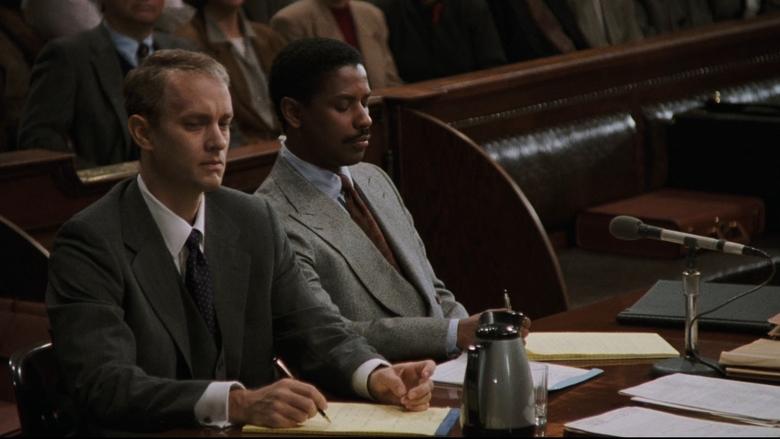
A harrowing yet hopeful courtroom drama that pierces the veil of prejudice through the lens of a dying man's dignity. Amidst the sterile coldness of the law, a red-lit opera aria becomes a transcendent metaphor for life, love, and the agony of mortality.
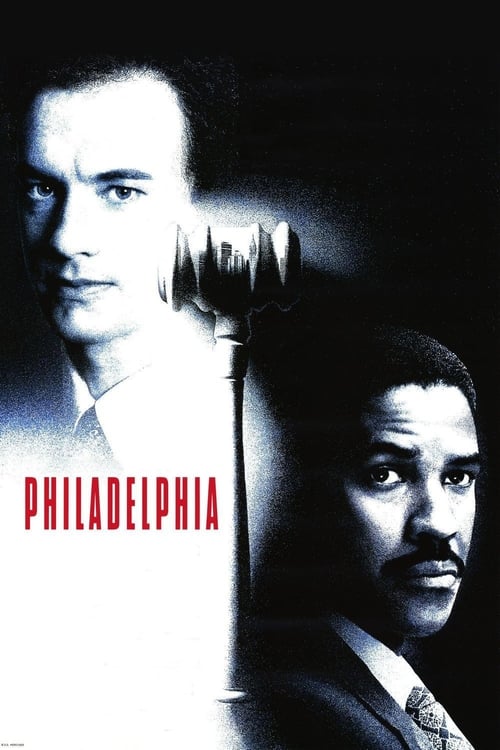
Philadelphia
"No one would take on his case... until one man was willing to take on the system."
22 December 1993
United States of America
126 min
7.7
(4,520)
Director: Jonathan Demme
Cast: Tom Hanks, Denzel Washington, Jason Robards, Mary Steenburgen, Antonio Banderas
Drama
Prejudice and Homophobia
The Law vs. Justice
Physical Mortality vs. Spiritual Transcendence
Transformation through Proximity
Budget:
$26,000,000
Box Office:
$206,678,440
Philadelphia — Ending Explained
⚠️ Spoiler Analysis
Alternative Interpretations
A common critical reading of the film suggests that Joe Miller is the true protagonist, not Andrew. In this view, Andrew serves as a saintly, static martyr figure designed to teach Joe (and the straight audience) a lesson in tolerance, rather than a fully realized character with flaws. This interpretation posits that the film was calculated to comfort straight viewers about their own potential for redemption rather than to radically challenge the system. Another interpretation focuses on the silence of sexuality; by cutting the bedroom scene and focusing on the "innocent" transmission (Andrew is rarely shown as a sexual being), the film suggests that empathy was conditional on the "respectability" of the victim.
Explore More About This Movie
Dive deeper into specific aspects of the movie with our detailed analysis pages