
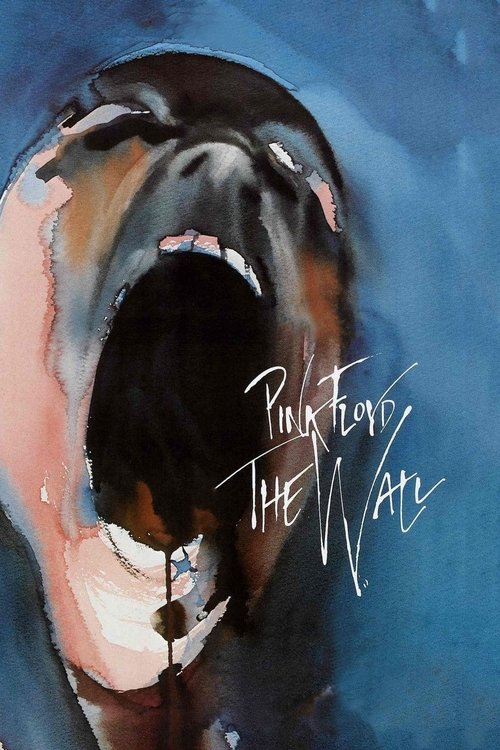
Pink Floyd: The Wall
A surrealist musical odyssey charting a rock star's descent into madness, where personal trauma builds a suffocating metaphorical wall, rendered in haunting live-action and grotesque animation.
Pink Floyd: The Wall

"The memories. The madness. The music... The movie."

14 July 1982 United Kingdom 95 min ⭐ 7.9 (1,573)
Director: Alan Parker
Cast: Bob Geldof, Christine Hargreaves, James Laurenson, Eleanor David, Kevin McKeon
Drama Music
Alienation and Isolation The Horrors of War and Loss Critique of Authority and Conformity The Descent into Fascism
Budget: $12,000,000
Box Office: $22,244,207

Pink Floyd: The Wall - Ending Explained

⚠️ Spoiler Analysis

The narrative of "Pink Floyd: The Wall" culminates in a complete psychological breakdown and a surreal internal trial. After fully enclosing himself behind his metaphorical wall, Pink, now a catatonic rock star, is discovered by his manager and injected with drugs to be able to perform. This triggers a powerful hallucination where Pink sees himself as a fascist dictator, and his concert transforms into a neo-Nazi rally. He incites his followers to violence against minorities, and in a striking animated sequence, marching hammers, his new insignia, goose-step across a ravaged landscape.

This descent into fascism represents the ultimate consequence of his emotional isolation; his internal pain and hatred have been projected outward as a desire for violent control. The hallucination ends with Pink screaming "Stop!", at which point he retreats into his own mind and puts himself on trial. The trial is an animated sequence where the key figures from his past—his teacher, his wife, and his mother—testify against him. The judge, a giant, grotesque pair of buttocks, sentences him "to be exposed before [his] peers" and orders the wall to be torn down.

The wall explodes, and Pink is left screaming amidst the rubble. The final scene shows children cleaning up the debris, with one boy pouring out the contents of a Molotov cocktail. This ending is ambiguous. On one hand, the destruction of the wall signifies a breakthrough for Pink, a painful but necessary shattering of his self-imposed prison, offering a chance at reconnection. On the other hand, the presence of the children in the ruins, and the album's cyclical nature, suggests that the cycle of trauma and building walls will continue with a new generation.

Alternative Interpretations

While the primary interpretation of "The Wall" is a story of personal trauma leading to isolation, there are several alternative readings:

  • A Cyclical Theory of History: The film's ending, where children are seen picking up rubble from the destroyed wall, and the album's looping structure, suggest a cyclical nature of history. This interpretation posits that each generation is doomed to repeat the mistakes of the past, with the children gathering the "bricks" to build their own walls. Pink's story is not just his own but a universal human experience that will be repeated.
  • A Political Allegory: The film can be read as a broader political allegory. The wall represents not just personal barriers but also the political and ideological walls that divide nations and peoples. Pink's descent into fascism is a warning about how easily societies can slip into totalitarianism when communication breaks down and fear takes over.
  • The Ending as Hopeful vs. Bleak: The tearing down of the wall is open to interpretation. Roger Waters has stated that he intended the ending to be hopeful, signifying a breakthrough and the possibility of reconnection. However, many viewers interpret the final scene, with the children in the rubble, as bleak, suggesting that nothing has really changed and the cycle will continue.
  • Pink as a Representation of Syd Barrett: While the story is largely autobiographical for Roger Waters, many elements of Pink's character, particularly his mental breakdown and withdrawal from the world, are seen as a reflection of Pink Floyd's original frontman, Syd Barrett. This reading sees the film as a tribute and an exploration of the pressures of fame that contributed to Barrett's decline.