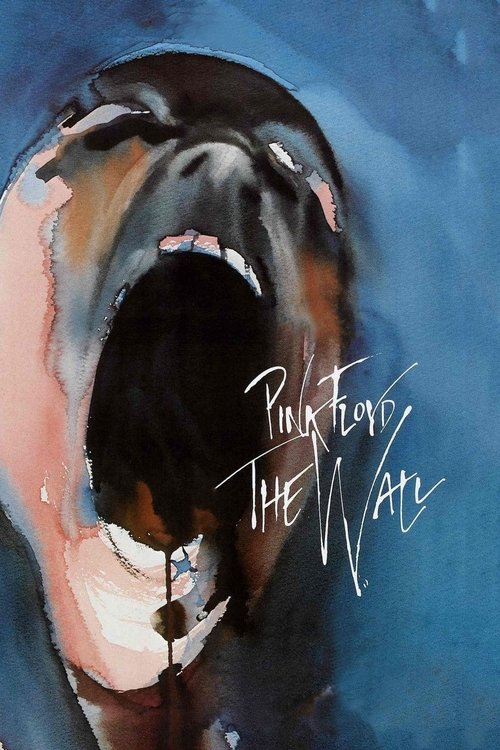
Pink Floyd: The Wall
A surrealist musical odyssey charting a rock star's descent into madness, where personal trauma builds a suffocating metaphorical wall, rendered in haunting live-action and grotesque animation.
Pink Floyd: The Wall

Pink Floyd: The Wall

"The memories. The madness. The music... The movie."

14 July 1982 United Kingdom 95 min ⭐ 7.9 (1,573)
Director: Alan Parker
Cast: Bob Geldof, Christine Hargreaves, James Laurenson, Eleanor David, Kevin McKeon
Drama Music
Alienation and Isolation The Horrors of War and Loss Critique of Authority and Conformity The Descent into Fascism
Budget: $12,000,000
Box Office: $22,244,207

Overview

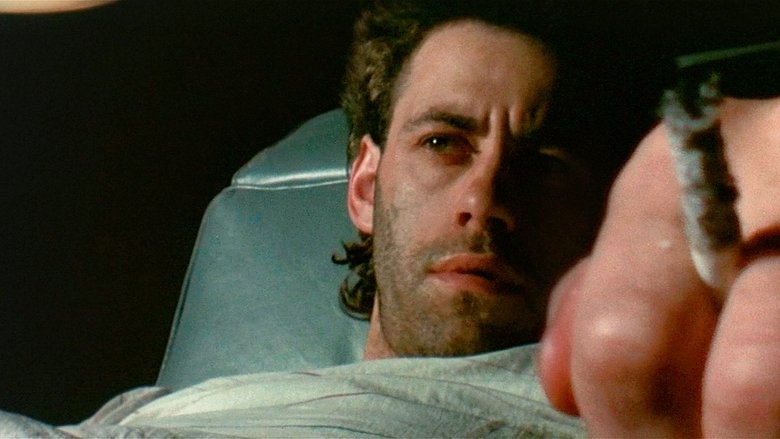
"Pink Floyd: The Wall" is a cinematic interpretation of Pink Floyd's 1979 album of the same name. The film centers on Pink, a rock star who has become emotionally detached and is on the verge of a mental breakdown in his Los Angeles hotel room. Through a series of flashbacks and surreal, often animated, sequences, the film explores the traumatic events that have become the "bricks" in the emotional wall he has built around himself. These include the death of his father in World War II, the overbearing love of his mother, the oppressive nature of his schooling, and the breakdown of his marriage.

With very little dialogue, the narrative is propelled by the music of Pink Floyd's album. As Pink's isolation intensifies, his grip on reality loosens, leading to terrifying hallucinations. He imagines himself as a fascist dictator, and his concert as a neo-Nazi rally, turning his anger and alienation outwards. The film is a dark and introspective journey into the mind of its protagonist, examining themes of isolation, trauma, and the corrupting nature of fame.

Core Meaning

The core meaning of "Pink Floyd: The Wall" revolves around the dangers of emotional isolation and the way personal traumas can lead to self-destruction. The film posits that society, through institutions like family and education, can inflict wounds that cause individuals to build protective walls around themselves. However, this self-imposed isolation does not lead to safety but to madness, hatred, and a transformation into the very thing one despises. Roger Waters, the film's writer, explores how personal pain can curdle into a fascistic mindset, where the individual projects their inner turmoil onto the world as a desire for control and purity. Ultimately, the film suggests that liberation can only come from confronting one's own demons and tearing down the wall, exposing oneself to others and to the world, however painful that may be.

Thematic DNA

Alienation and Isolation 40%
The Horrors of War and Loss 25%
Critique of Authority and Conformity 20%
The Descent into Fascism 15%

Alienation and Isolation

The central theme of the film is Pink's profound alienation from society and his subsequent self-imposed isolation. Each traumatic event in his life—his father's death, his mother's smothering affection, his teacher's cruelty, and his wife's infidelity—becomes a 'brick in the wall' he constructs around his emotions. This wall, initially a defense mechanism, becomes a prison, leading to a complete mental breakdown and detachment from reality. The film visually represents this with Pink confined to his hotel room, physically and emotionally cut off from the world.

The Horrors of War and Loss

The film is deeply rooted in the trauma of war, specifically World War II. Pink's father's death in the war is the foundational trauma of his life, creating a void that can never be filled. This personal loss is expanded to a broader commentary on the senselessness and destructive legacy of war, which is depicted in harrowing animated sequences. The war is not just a past event but a lingering presence that has shaped Pink's psyche and, by extension, an entire generation.

Critique of Authority and Conformity

"The Wall" presents a scathing critique of societal institutions that crush individuality and enforce conformity. This is most vividly portrayed in the scenes of Pink's oppressive schooling, where teachers ridicule creativity and students are processed like products on an assembly line, ultimately falling into a meat grinder. This theme extends to a critique of the music industry and the nature of fame, which further isolates Pink and turns his art into a commodity.

The Descent into Fascism

As Pink's isolation intensifies, his personal pain transforms into a fascistic rage. In a powerful and disturbing sequence, he hallucinates himself as a dictator, with his concert audience becoming a neo-Nazi mob. This illustrates Roger Waters' theory that extreme isolation and the inability to communicate can lead to a dangerous, xenophobic mindset, where one lashes out at those perceived as different. The film suggests a link between personal psychological breakdown and political monstrosity.

Character Analysis

Pink

Bob Geldof

Archetype: Antihero
Key Trait: Alienated

Motivation

Pink's primary motivation is to protect himself from emotional pain. Having experienced loss, neglect, and betrayal, he systematically builds a wall around his feelings. This defensive motivation, however, curdles into a desire for isolation and, eventually, a need to exert control, as seen in his fascist fantasy.

Character Arc

Pink's arc is a descent into madness followed by a potential for rebirth. He begins as a catatonic rock star, and through flashbacks, we see the accumulation of trauma that leads to his emotional detachment. His journey takes him from a victim of circumstance to a perpetrator of hate in his fascist hallucination. The climax of his arc is the internal trial where he confronts his past and is sentenced to "tear down the wall," suggesting a painful but necessary step towards reconnecting with the world.

Pink's Mother

Christine Hargreaves

Archetype: The Devouring Mother
Key Trait: Overprotective

Motivation

Her motivation is a desperate need to protect her son from the world that took her husband. This fear-driven motivation leads her to control every aspect of Pink's life, preventing him from developing into an independent adult and contributing significantly to his neurosis.

Character Arc

Pink's Mother is a static character, primarily seen through Pink's distorted memories. She is defined by her overprotective, smothering love for her son, born out of the trauma of losing her husband in the war. Her actions, intended to shield Pink from the world, are shown to be another brick in his wall, stifling his growth and fostering his dependence and fear of the outside world.

The Teacher

Alex McAvoy

Archetype: The Tyrant
Key Trait: Sadistic

Motivation

The Teacher's motivation appears to be a desire for absolute control and the enforcement of conformity. He is a product of a rigid system and perpetuates its cruelty, crushing any spark of individuality or creativity in his students. The film hints that his own unhappy marriage contributes to his bitterness and sadism.

Character Arc

The Teacher is another character viewed through the lens of Pink's traumatic memories. He is a cruel and sadistic authority figure who takes pleasure in humiliating his students, particularly Pink for his creative inclinations. He represents the oppressive nature of the education system and societal authority in general. He does not have a developmental arc but serves as a key contributor to Pink's wall.

Symbols & Motifs

The Wall

Meaning:

The wall is the central metaphor for the emotional and psychological barriers Pink builds to protect himself from the pain and trauma of his life. Each traumatic experience is a "brick" that adds to its construction. While it is intended as a defense, it ultimately becomes a self-made prison, leading to complete isolation, madness, and the loss of his identity.

Context:

The wall is a recurring motif throughout the film, both literally in the concert footage it was based on, and metaphorically. We see the bricks being laid with each flashback to a traumatic event. In the end, Pink puts himself on trial and is sentenced to tear down the wall, signifying the need to break down these barriers to achieve freedom.

Marching Hammers

Meaning:

The marching hammers are a powerful and terrifying symbol of fascism and totalitarian oppression. They represent both creative and destructive forces: the hammer that builds can also be the hammer that destroys. In Pink's hallucination, they become the insignia of his neo-Nazi regime, a relentless and violent force that crushes all individuality.

Context:

The marching hammers appear in one of the most famous animated sequences, goose-stepping across a desolate landscape. They are the emblem of Pink's dictatorial persona, representing the culmination of his repressed anger and hatred turned outward.

The Teacher's Meat Grinder

Meaning:

The meat grinder symbolizes the dehumanizing and soul-crushing nature of the rigid and oppressive education system. Students are shown marching in unison, wearing identical masks, before being fed into a grinder that churns them out as mindless clones. It represents the destruction of creativity, individuality, and childhood innocence at the hands of authoritarian education.

Context:

This symbol appears in the animated sequence for "Another Brick in the Wall, Part 2." The children's rebellion against this system, where they destroy the school, is a fantasy of liberation from this oppressive force.

Faceless Masks

Meaning:

The faceless masks worn by the schoolchildren symbolize the loss of individuality and the enforced conformity imposed by the education system. They represent how authority figures attempt to erase personal identity and create a homogenous, compliant populace. Pink's own emotional numbness is also a form of a mask he wears to hide his true feelings.

Context:

The masks are a prominent feature in the school sequences, particularly during the song "Another Brick in the Wall, Part 2." The children marching in unison with these blank faces is a stark visual representation of their oppressed state.

Memorable Quotes

We don't need no education. We don't need no thought control.

— Pink and a choir of children

Context:

This line is the chorus of "Another Brick in the Wall, Part 2." It accompanies a fantasy sequence where schoolchildren rise up against their tyrannical teachers, destroy their school, and throw their teacher onto a bonfire, symbolizing their liberation from conformity.

Meaning:

This iconic lyric serves as an anthem of rebellion against a rigid and oppressive education system that stifles creativity and individuality. It's a cry for freedom from indoctrination and a demand for a more humane approach to learning.

If you don't eat your meat, you can't have any pudding! How can you have any pudding if you don't eat your meat?!

— The Teacher

Context:

The Teacher shouts this line at a young Pink during a classroom scene, enforcing rigid discipline. The phrase is repeated as part of the oppressive atmosphere of the school that crushes the students' spirits.

Meaning:

On the surface, it's a simple, authoritarian command from a teacher. However, it's been interpreted metaphorically. One interpretation is that one must endure the hardships of life ('the meat') to enjoy its rewards ('the pudding'). Another, more cynical interpretation suggests it's about forced conformity and submitting to the unpleasant demands of the establishment to receive any kind of societal 'reward'.

Mother, do you think they'll drop the bomb?

— Young Pink

Context:

This is one of several anxious questions Pink asks his mother in the song "Mother." The song is a dialogue between a fearful child and a mother who, instead of reassuring him, reinforces his fears as a way of keeping him dependent on her.

Meaning:

This question encapsulates the pervasive fear and anxiety of a generation growing up in the shadow of World War II and the Cold War. It reflects Pink's deep-seated anxieties, which are nurtured by his overprotective mother, who projects her own fears onto him.

All in all, you're just another brick in the wall.

— Pink

Context:

This lyric is repeated throughout the three parts of "Another Brick in the Wall." It is directed at his absent father, his overprotective mother, and his cruel teachers, identifying them as the architects of his isolation.

Meaning:

This phrase is the central thesis of the film. It signifies how individuals and events that cause pain and trauma contribute to the construction of Pink's emotional defenses. Each person who has wronged him is dismissed as just another component of the wall that isolates him.

Philosophical Questions

To what extent are we shaped by our trauma, and can we ever truly escape its influence?

The film delves deep into this question by illustrating how every significant traumatic event in Pink's life becomes a fundamental part of his identity, a "brick" in his wall. His entire personality is a defense mechanism against his past. The film questions whether tearing down the wall erases the trauma or simply allows for a new way of living with it. The cyclical nature of the ending suggests that the scars of trauma may be permanent, and the struggle against them is ongoing.

What is the relationship between individual madness and collective political evil?

"The Wall" explores the idea that personal psychological breakdown is not just an isolated event but can have broader social and political implications. Pink's inner turmoil, born of isolation and pain, manifests as a fascistic fantasy where he becomes a dictator. The film suggests that the roots of political evils like fascism lie in the unresolved psychological wounds of individuals, and that a society that fosters alienation and conformity is fertile ground for such ideologies to take root.

Is true individuality possible in a society that demands conformity?

The film critiques the institutions of society—family, school, government—for their role in crushing individuality. The school sequences, in particular, portray a system designed to produce compliant, identical citizens. Pink's rebellion is ultimately self-destructive, as he retreats into a wall of his own making. The film poses the difficult question of whether it is possible to maintain one's individuality without becoming completely alienated, or if the pressures of society inevitably lead to either conformity or self-destruction.

Alternative Interpretations

While the primary interpretation of "The Wall" is a story of personal trauma leading to isolation, there are several alternative readings:

  • A Cyclical Theory of History: The film's ending, where children are seen picking up rubble from the destroyed wall, and the album's looping structure, suggest a cyclical nature of history. This interpretation posits that each generation is doomed to repeat the mistakes of the past, with the children gathering the "bricks" to build their own walls. Pink's story is not just his own but a universal human experience that will be repeated.
  • A Political Allegory: The film can be read as a broader political allegory. The wall represents not just personal barriers but also the political and ideological walls that divide nations and peoples. Pink's descent into fascism is a warning about how easily societies can slip into totalitarianism when communication breaks down and fear takes over.
  • The Ending as Hopeful vs. Bleak: The tearing down of the wall is open to interpretation. Roger Waters has stated that he intended the ending to be hopeful, signifying a breakthrough and the possibility of reconnection. However, many viewers interpret the final scene, with the children in the rubble, as bleak, suggesting that nothing has really changed and the cycle will continue.
  • Pink as a Representation of Syd Barrett: While the story is largely autobiographical for Roger Waters, many elements of Pink's character, particularly his mental breakdown and withdrawal from the world, are seen as a reflection of Pink Floyd's original frontman, Syd Barrett. This reading sees the film as a tribute and an exploration of the pressures of fame that contributed to Barrett's decline.

Cultural Impact

"Pink Floyd: The Wall" had a significant cultural impact upon its release and continues to resonate with audiences. Released in 1982, the film tapped into the post-war anxieties and the disillusionment of a generation. It pushed the boundaries of the musical film genre, essentially creating what can be considered one of the first feature-length music videos. Its blend of live-action and surreal, often disturbing, animation by Gerald Scarfe was groundbreaking and has influenced countless music videos and films since.

Critically, the film received a mixed reception, with some praising its visual originality and ambition, while others found it to be pretentious and overly bleak. However, it quickly gained a cult following and is now considered a landmark of rock cinema. The film's imagery, particularly the marching hammers and the faceless schoolchildren, have become iconic and are often referenced in popular culture as symbols of conformity and rebellion.

The themes of alienation, mental illness, and the critique of authority remain incredibly relevant. The film's exploration of how personal trauma can lead to a fascistic mindset has been seen as prescient. "The Wall" has influenced numerous artists and filmmakers and continues to be analyzed for its complex symbolism and psychological depth, solidifying its place as a powerful and enduring piece of cinematic art.

Audience Reception

Audience reception for "Pink Floyd: The Wall" has been largely positive over the years, solidifying its status as a cult classic. Many viewers praise the film for its stunning and often disturbing visuals, particularly the animated sequences by Gerald Scarfe, which are frequently cited as a highlight. The powerful music of the Pink Floyd album, which drives the narrative, is also a key aspect of its appeal. Fans of the band, in particular, often appreciate the film as a visual companion that deepens the meaning of the album.

The main points of criticism from audiences tend to focus on the film's bleak and depressing tone, as well as its narrative ambiguity. Some viewers find the relentless negativity and lack of a clear, hopeful resolution to be emotionally draining. The abstract and surreal nature of the film can also be a barrier for some, who may find the plot difficult to follow without prior knowledge of the album's concept. Despite these criticisms, the film's ambition, originality, and powerful themes have earned it a dedicated following who consider it a masterpiece of musical cinema.

Interesting Facts

  • Roger Waters, the writer of The Wall, initially intended to play the lead role of Pink but was deemed unsuitable after screen tests.
  • Bob Geldof, who was cast as Pink, was initially reluctant to take the role because he disliked Pink Floyd's music.
  • Director Alan Parker has described the making of the film as "the most miserable experience of my creative life" due to conflicts with Roger Waters.
  • During the scene where Pink trashes his hotel room, Bob Geldof genuinely cut his hand but continued acting until the director called 'cut.'
  • Bob Geldof could not swim, so for the scene where he is floating in a pool, he had to be placed on a clear plastic body mold.
  • The actress who played the groupie, Jenny Wright, was not told that Bob Geldof would be throwing a bottle in her direction, so her reaction is genuine.
  • The war film that Pink watches in his hotel room is the 1955 British classic "The Dam Busters."
  • Keyboardist Richard Wright had been fired from Pink Floyd before the film but was hired as a session musician for the tour. Due to the high costs of the tour, he was the only band member to make a profit from it.
  • The famous children's choir on "Another Brick in the Wall, Part 2" was recorded with students from a school near the studio, who were not paid royalties, leading to some controversy.

Easter Eggs

The album and film are designed as a loop. The album ends with the line "Isn't this where..." and begins with "...we came in?" creating a cycle.

This cyclical structure suggests that Pink's story is a never-ending loop of trauma, isolation, and self-destruction. It implies that even after tearing down the wall, the potential to rebuild it remains, and the cycle of human suffering and alienation is continuous.

In the background of the song "Empty Spaces," there is a reversed message.

When played backwards, the message says, "Congratulations. You have just discovered the secret message. Please send your answer to Old Pink, care of the Funny Farm, Chalfont." This is a hidden message from Roger Waters, adding to the themes of madness and institutionalization present in the film. "Old Pink" refers to the protagonist, and the "Funny Farm" is a colloquialism for a psychiatric hospital.

⚠️ Spoiler Analysis

Click to reveal detailed analysis with spoilers

Frequently Asked Questions

Explore More About This Movie

Dive deeper into specific aspects of the movie with our detailed analysis pages

Comments (0)

Leave a comment

No comments yet. Be the first to share your thoughts!