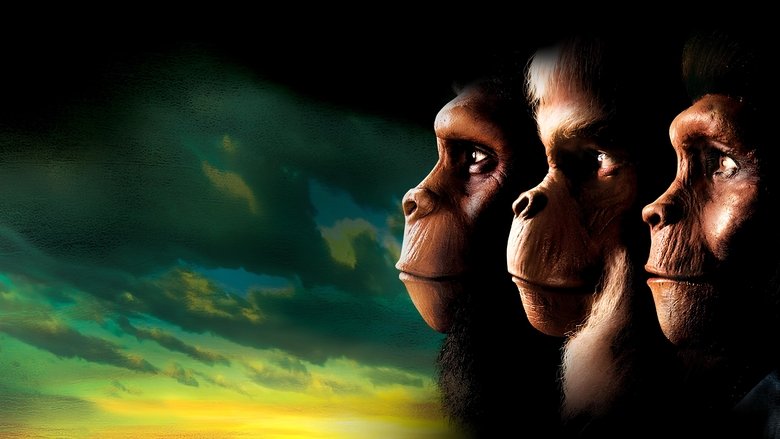
"Somewhere in the Universe, there must be something better than man!"
Planet of the Apes - Symbolism & Philosophy
Symbols & Motifs
The Statue of Liberty
The ultimate symbol of American ideals, civilization, and hope, completely destroyed and reduced to ruins. It symbolizes the tragic end of human history and the irreversible consequences of nuclear war.
Discovered by Taylor in the final, iconic shot of the film, half-buried on the shoreline of the Forbidden Zone.
The Talking Human Doll
Proof of humanity's past dominance and intelligence. It symbolizes the buried truth that the ape authorities desperately want to keep hidden.
Found in an archaeological dig in a cave in the Forbidden Zone by Cornelius, and later activated by Taylor to prove humans once had the power of speech.
Clothing and Nakedness
Clothing signifies civilization, intellect, and status in the film's world, while nakedness represents savagery and vulnerability.
The apes are fully clothed in tailored garments, whereas the primitive humans wear simple rags. Taylor is stripped naked during his tribunal, an act designed to humiliate him and symbolically strip him of his humanity and rights.
The Paper Airplane
A representation of human ingenuity, aerodynamic science, and the power of flight—concepts alien to the ape society.
Taylor folds a piece of paper and flies it across the room to prove his intelligence to Zira and Cornelius. Dr. Zaius immediately crumples it, symbolizing his active suppression of human progress.
Philosophical Questions
Does humanity's inherent nature inevitably lead to self-destruction?
The film explores this by showing that even after achieving the technological marvel of deep space travel, humanity ultimately used its advancements to bomb itself back into the Stone Age. It questions whether intelligence and civilization can ever outpace aggression.
What defines a person's humanity and rights?
By completely stripping Taylor of his clothes, his voice, and his dignity, the apes view him merely as a beast. The film asks the audience to consider the arbitrary boundaries we draw to justify the subjugation of other creatures and the denial of fundamental rights.
Is it justifiable to suppress scientific truth to preserve social order?
Dr. Zaius hides the history of human dominance because he knows human nature is destructive. The film poses a complex moral dilemma: is the deliberate ignorance of the apes an evil act of censorship, or a necessary measure to prevent a second apocalypse?
Core Meaning
The director, Franklin J. Schaffner, along with screenwriters Rod Serling and Michael Wilson, crafted a potent cautionary tale about humanity's inherent capacity for self-destruction. The film serves as a harsh mirror held up to the anxieties of the 1960s, specifically the Cold War, the threat of nuclear annihilation, and deep-seated racial prejudices.
By presenting an "upside-down" world where mankind has fallen from grace due to its own hubris, the film strips away human arrogance. It suggests that unless humanity can overcome its violent, discriminatory, and dogmatic tendencies, it is doomed to engineer its own extinction.