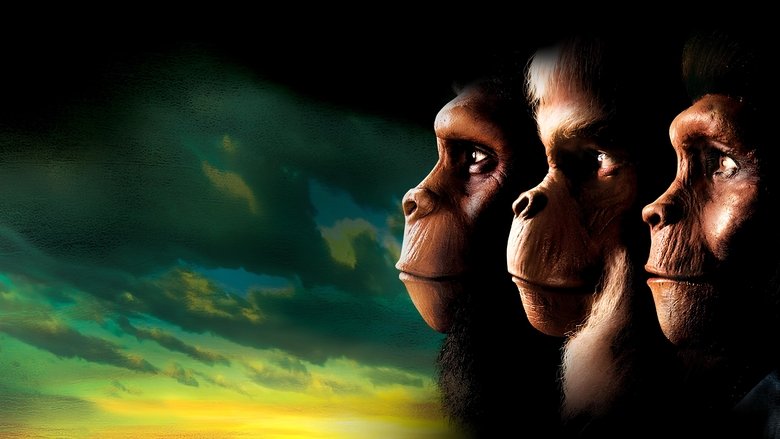
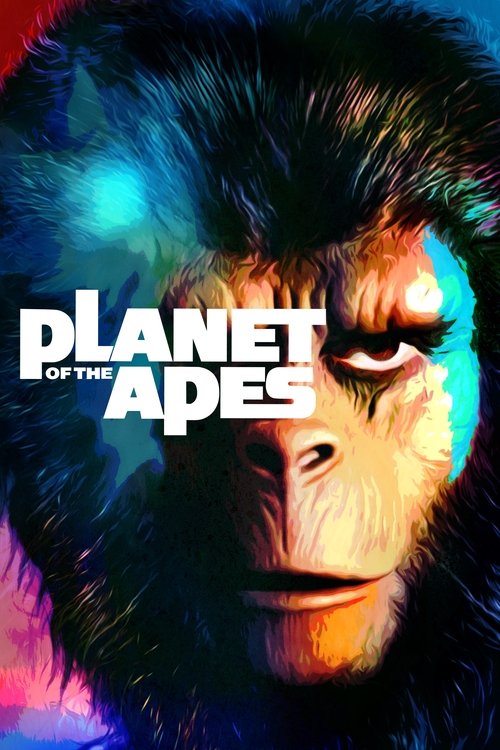
Planet of the Apes
A dystopian sci-fi masterpiece that plunges the viewer into a chilling upside-down world where humanity is mute and subjugated, ending with a gut-wrenching realization and the haunting visual of a shattered monument half-buried in the sand.
Planet of the Apes

Planet of the Apes

"Somewhere in the Universe, there must be something better than man!"

07 February 1968 United States of America 112 min ⭐ 7.6 (3,856)
Director: Franklin J. Schaffner
Cast: Charlton Heston, Roddy McDowall, Kim Hunter, Maurice Evans, James Whitmore
Drama Action Adventure Science Fiction
Human Self-Destruction and Hubris Social Hierarchy and Prejudice Religion vs. Science Animal Rights and Dehumanization
Budget: $5,800,000
Box Office: $32,589,624

Overview

Astronaut George Taylor and his crew crash-land on a mysterious, desolate planet in the distant future after a long space voyage. Exploring the arid terrain, they discover a shocking societal reversal: intelligent, talking apes are the dominant species, while primitive, mute humans are hunted, enslaved, and treated as mindless animals.

Captured by gorillas and temporarily stripped of his voice due to a throat injury, Taylor struggles to survive the brutal conditions of Ape City. He eventually befriends two compassionate chimpanzee scientists, Dr. Zira and Cornelius, who are fascinated by his intellect and behavior. However, Taylor faces fierce opposition from the dogmatic orangutan leader, Dr. Zaius.

As Taylor desperately attempts to prove his sentience and escape his captors, he becomes a profound threat to the apes' sacred religious beliefs and their established social hierarchy, leading to a thrilling journey into the planet's perilous Forbidden Zone.


Core Meaning

The director, Franklin J. Schaffner, along with screenwriters Rod Serling and Michael Wilson, crafted a potent cautionary tale about humanity's inherent capacity for self-destruction. The film serves as a harsh mirror held up to the anxieties of the 1960s, specifically the Cold War, the threat of nuclear annihilation, and deep-seated racial prejudices.

By presenting an "upside-down" world where mankind has fallen from grace due to its own hubris, the film strips away human arrogance. It suggests that unless humanity can overcome its violent, discriminatory, and dogmatic tendencies, it is doomed to engineer its own extinction.

Thematic DNA

Human Self-Destruction and Hubris 35%
Social Hierarchy and Prejudice 30%
Religion vs. Science 20%
Animal Rights and Dehumanization 15%

Human Self-Destruction and Hubris

The film explores the cynical idea that humanity's greatest enemy is itself. Taylor begins the film misanthropic, hoping to find "something better than man." The apes constantly echo this sentiment, viewing humans as a violent, warlike plague. The ultimate revelation is that the apes are correct: humanity's own technological arrogance and aggression destroyed their civilization.

Social Hierarchy and Prejudice

Ape City is strictly divided by a rigid caste system: gorillas are the military, orangutans are the political and religious leaders, and chimpanzees are the scientists. By placing a privileged human astronaut at the very bottom of this hierarchy, the film delivers a searing critique of racism, institutional prejudice, and the arbitrary nature of social class.

Religion vs. Science

The tension between dogmatic faith and empirical evidence is central to the plot. Dr. Zaius embodies the suppression of scientific truth to maintain religious order, actively destroying Cornelius's archaeological findings to protect the Sacred Scrolls. The film critiques anti-intellectualism and the weaponization of religion for political control.

Animal Rights and Dehumanization

By completely reversing the roles of humans and animals, the film forces the audience to confront the ethics of animal testing, captivity, zoos, and hunting. Humans are shot for sport, hosed down in cages, and subjected to lobotomies, evoking a profound sense of empathy for the mistreatment of the natural world.

Character Analysis

George Taylor

Charlton Heston

Archetype: Cynical Antihero
Key Trait: Defiant and cynical

Motivation

Initially driven by a desire to find a superior civilization, his motivation shifts to pure survival, regaining his voice, and escaping his captors.

Character Arc

Taylor starts as a misanthropic astronaut who leaves Earth behind because he is disgusted by mankind's warmongering. Ironically, upon landing on the ape planet, he is forced to become the sole defender and representative of human intelligence. His arc ends in devastating tragedy when he realizes the world he fled and the world he crashed on are the same.

Dr. Zaius

Maurice Evans

Archetype: Dogmatic Antagonist
Key Trait: Authoritative and fearful

Motivation

To protect ape society from the destructive, violent nature of humanity, even if it means suppressing the truth.

Character Arc

Zaius appears as a close-minded religious zealot who blindly hates humans. However, his arc reveals that he is actually deeply knowledgeable and terrified. He knows the true history of the planet and maintains his rigid stance throughout, choosing to destroy evidence rather than risk an ape apocalypse at the hands of intelligent humans.

Dr. Zira

Kim Hunter

Archetype: Compassionate Scientist
Key Trait: Open-minded and stubborn

Motivation

Driven by scientific curiosity, intellectual honesty, and deep empathy.

Character Arc

Zira begins as an animal psychologist studying humans, treating them kindly but as lesser beings. As she interacts with Taylor, her worldview is shattered. She risks her career, her freedom, and her life to help him escape, choosing empirical truth over the dogmatic laws of her society.

Cornelius

Roddy McDowall

Archetype: Rational Academic
Key Trait: Intellectual and cautious

Motivation

To uncover the true evolutionary history of his world.

Character Arc

Initially hesitant and fearful of committing heresy against the state, Cornelius is reluctant to accept Taylor's intelligence. Over time, he finds the courage to stand by his own archaeological discoveries, ultimately defying Dr. Zaius to uncover the truth about the Forbidden Zone.

Symbols & Motifs

The Statue of Liberty

Meaning:

The ultimate symbol of American ideals, civilization, and hope, completely destroyed and reduced to ruins. It symbolizes the tragic end of human history and the irreversible consequences of nuclear war.

Context:

Discovered by Taylor in the final, iconic shot of the film, half-buried on the shoreline of the Forbidden Zone.

The Talking Human Doll

Meaning:

Proof of humanity's past dominance and intelligence. It symbolizes the buried truth that the ape authorities desperately want to keep hidden.

Context:

Found in an archaeological dig in a cave in the Forbidden Zone by Cornelius, and later activated by Taylor to prove humans once had the power of speech.

Clothing and Nakedness

Meaning:

Clothing signifies civilization, intellect, and status in the film's world, while nakedness represents savagery and vulnerability.

Context:

The apes are fully clothed in tailored garments, whereas the primitive humans wear simple rags. Taylor is stripped naked during his tribunal, an act designed to humiliate him and symbolically strip him of his humanity and rights.

The Paper Airplane

Meaning:

A representation of human ingenuity, aerodynamic science, and the power of flight—concepts alien to the ape society.

Context:

Taylor folds a piece of paper and flies it across the room to prove his intelligence to Zira and Cornelius. Dr. Zaius immediately crumples it, symbolizing his active suppression of human progress.

Memorable Quotes

Take your stinking paws off me, you damn dirty ape!

— George Taylor

Context:

Spoken when Taylor is caught in a net by gorillas, struggling to escape. It marks the first time he speaks after regaining his voice.

Meaning:

This is the moment Taylor violently asserts his humanity and sentience. It shatters the apes' worldview and establishes him not as a beast, but as an equal.

You maniacs! You blew it up! Ah, damn you! God damn you all to hell!

— George Taylor

Context:

Screamed by Taylor in the film's final scene as he falls to his knees before the ruined Statue of Liberty.

Meaning:

The ultimate realization of humanity's failure. It is a powerful condemnation of nuclear war and the self-destructive tendencies of mankind.

I can't help thinking that somewhere in the universe there has to be something better than man. Has to be.

— George Taylor

Context:

Spoken by Taylor in his opening monologue while recording a log aboard his spaceship before going into hypersleep.

Meaning:

Sets up Taylor's misanthropic worldview and the film's central irony: he traveled through space and time hoping to escape humanity's flaws, only to find the terrifying end result of them.

Beware the beast Man, for he is the Devil's pawn. Alone among God's primates, he kills for sport or lust or greed.

— Cornelius

Context:

Read by Cornelius from the 29th scroll during Taylor's tribunal.

Meaning:

Highlights the apes' religious justification for oppressing humans, while also serving as a stark, accurate warning about human nature that foreshadows the film's ending.

Doctor, I'd like to kiss you goodbye. / All right, but you're so damned ugly.

— George Taylor and Dr. Zira

Context:

Exchanged just before Taylor and Nova ride off into the Forbidden Zone.

Meaning:

A touching, humorous moment that shows a genuine cross-species connection and mutual respect, while playing on the relative nature of physical beauty.

Philosophical Questions

Does humanity's inherent nature inevitably lead to self-destruction?

The film explores this by showing that even after achieving the technological marvel of deep space travel, humanity ultimately used its advancements to bomb itself back into the Stone Age. It questions whether intelligence and civilization can ever outpace aggression.

What defines a person's humanity and rights?

By completely stripping Taylor of his clothes, his voice, and his dignity, the apes view him merely as a beast. The film asks the audience to consider the arbitrary boundaries we draw to justify the subjugation of other creatures and the denial of fundamental rights.

Is it justifiable to suppress scientific truth to preserve social order?

Dr. Zaius hides the history of human dominance because he knows human nature is destructive. The film poses a complex moral dilemma: is the deliberate ignorance of the apes an evil act of censorship, or a necessary measure to prevent a second apocalypse?

Alternative Interpretations

While the most prominent interpretation of Planet of the Apes is as a Cold War-era warning about nuclear annihilation, critics and audiences have explored several other valid perspectives:

  • Civil Rights Allegory: Released in 1968, the film acts as a stark commentary on the racial tensions of the era. Taylor, an embodiment of white male privilege, is stripped of his status and subjected to the systemic dehumanization, institutional prejudice, and physical abuse typically inflicted on minorities, forcing audiences to confront the horrors of racism.
  • Critique of Anti-Intellectualism: The society governed by Dr. Zaius can be read as a metaphor for the clash between creationism and evolution, or religion and science. Zaius suppresses Cornelius's archaeological evidence to maintain religious dogma, representing how authorities often crush inconvenient truths to retain political power.
  • Animal Rights Parable: By reversing the roles of humans and apes, the film forces viewers to experience the horrors of animal testing, captivity, and trophy hunting from the perspective of the caged beast, raising profound ethical questions about humanity's treatment of other species.

Cultural Impact

Released in 1968, a year defined by the Vietnam War, the Civil Rights Movement, and the assassination of MLK Jr., Planet of the Apes resonated deeply with audiences by funneling contemporary anxieties through the lens of science fiction. The film's depiction of racial subjugation, police brutality (represented by the gorilla soldiers), and the looming dread of nuclear apocalypse tapped directly into the cultural zeitgeist.

Cinematically, it was a massive triumph that proved complex, socially conscious sci-fi could be highly profitable blockbusters. Earning nearly $33 million on a $5.8 million budget, it birthed Hollywood's first massive science-fiction multimedia franchise, preceding Star Wars by almost a decade, generating four direct sequels, a live-action TV series, an animated series, and highly lucrative merchandising.

Its final scene remains one of the most famous and frequently parodied moments in pop culture (most notably in The Simpsons' musical spoof "A Fish Called Selma"). In 2001, the Library of Congress selected it for preservation in the National Film Registry for being culturally, historically, and aesthetically significant.

Audience Reception

Planet of the Apes received widespread acclaim from both audiences and critics upon its release. Viewers were thoroughly captivated by John Chambers' revolutionary prosthetic makeup, which allowed the actors to emote realistically, making the ape society feel terrifyingly believable. Charlton Heston's intense, hyper-masculine performance was praised for grounding the bizarre premise, while Jerry Goldsmith's avant-garde, percussive score effectively maintained an atmosphere of alien dread.

While some modern critics point out that the pacing can drag slightly during the middle courtroom sequences, and some of the dialogue veers into heavy-handed moralizing, these are generally viewed as minor flaws. The movie is most universally celebrated for its staggering twist ending, which audiences found deeply shocking and thought-provoking. Overall, the verdict stands that it is an enduring classic of science fiction cinema that balances popcorn thrills with profound sociological commentary.

Interesting Facts

  • Rod Serling, the legendary creator of 'The Twilight Zone', co-wrote the screenplay and was responsible for conceptualizing the film's iconic twist ending involving the Statue of Liberty.
  • During meal breaks on set, the actors wearing ape makeup spontaneously segregated themselves by species (chimpanzees with chimpanzees, gorillas with gorillas), unintentionally mimicking the rigid caste system of the film.
  • The advanced makeup effects required actors to stick to liquid meals through straws to ensure their prosthetics remained undisturbed during the long shooting days.
  • Makeup artist John Chambers received an Honorary Academy Award for his groundbreaking prosthetic work, as the Best Makeup category did not officially exist at the Oscars until 1981.
  • Pierre Boulle's original novel featured a technologically advanced ape society with cars and cities. The film scaled this back to a semi-primitive, stone-and-wood aesthetic to keep production costs within budget.
  • The landscape used for the desolate, alien-looking Forbidden Zone was primarily shot around Lake Powell and the Colorado River in Utah and Arizona.

Easter Eggs

See No Evil, Hear No Evil, Speak No Evil

During Taylor's tribunal, the three orangutan judges simultaneously cover their eyes, ears, and mouths. This visual gag is a direct reference to the famous proverbial "three wise monkeys," mocking their refusal to acknowledge the truth.

The Lawgiver Statue

The statue of the great ape Lawgiver bears a strong resemblance to Moses. This is a subtle meta-reference to Charlton Heston's iconic starring role as Moses in the 1956 epic The Ten Commandments.

⚠️ Spoiler Analysis

Click to reveal detailed analysis with spoilers

Frequently Asked Questions

Explore More About This Movie

Dive deeper into specific aspects of the movie with our detailed analysis pages

Comments (0)

Leave a comment

No comments yet. Be the first to share your thoughts!