PlayTime
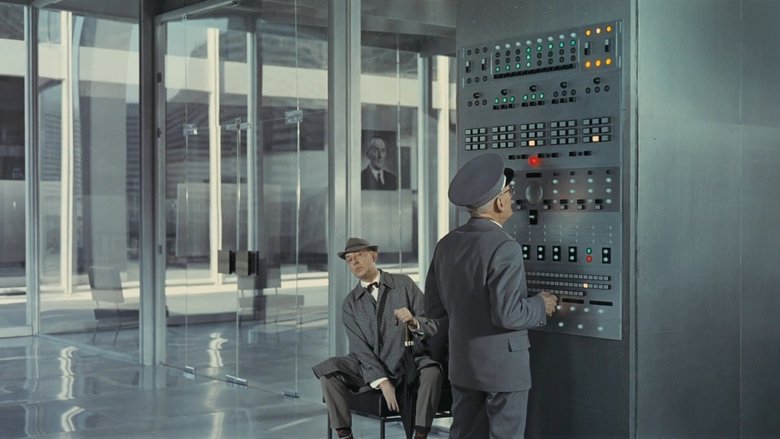
A modernist satire blending sterile architectural comedy with a silent symphony of chaotic humanity. Amidst a maze of glass and steel, a befuddled wanderer discovers that life's organic curve ultimately breaks through the rigid straight line.
PlayTime
PlayTime

"An incomparable spectacle."

13 December 1967 France 115 min ⭐ 7.7 (634)
Director: Jacques Tati
Cast: Jacques Tati, Barbara Dennek, Rita Maiden, France Rumilly, France Delahalle
Comedy
Modernity vs. Humanity Alienation and Connection Consumerism and Americanization The Democracy of the Eye

PlayTime - Ending Explained

⚠️ Spoiler Analysis

The film does not have a traditional plot with twists, but the structural 'climax' occurs at the Royal Garden Restaurant. The newly opened venue literally falls apart due to shoddy construction. A ceiling decoration collapses, the AC malfunctions, and the glass door shatters.

This destruction acts as a catalyst: the social barriers dissolve along with the architectural ones. The stuffy, rich patrons begin to mingle with the rowdy Americans and the staff. Hulot meets Barbara, and a drunk American businessman creates a 'bistro' atmosphere in a ruined corner.

Ending: The next morning, the chaos subsides. Hulot buys Barbara a scarf and a pin (resembling the street lamps of old Paris) as a souvenir. He is unable to give it to her directly due to a crowd, so he passes it through a chain of people. As Barbara's bus leaves for the airport, the traffic circle around her transforms visually into a merry-go-round, implying that the cold, grey city has been imbued with the warmth of the previous night's 'play'.

Alternative Interpretations

While typically viewed as a satire of dehumanizing modernism, some critics argue that the film is not purely negative. The ending, where the sterile city is transformed into a carnival, suggests an acceptance of the new world. Tati might be saying that humanity can adapt to any environment, finding joy and 'play' even in the most sterile of concrete jungles. The film can thus be read not as a rejection of the future, but as a guide on how to live in it: by maintaining a sense of humor and community.