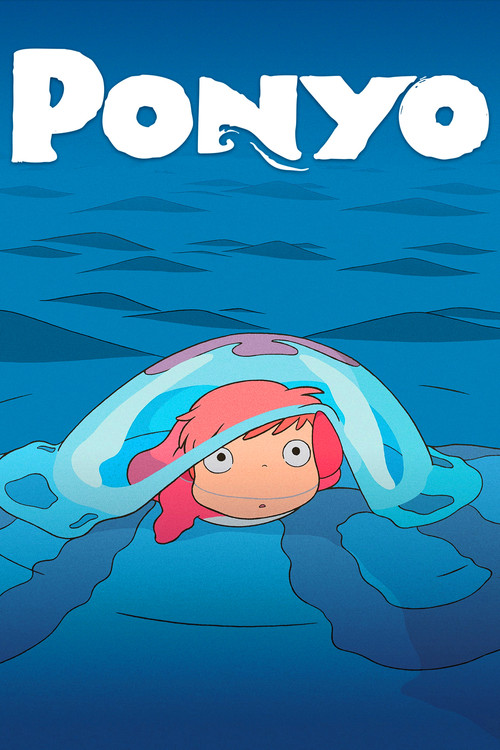
崖の上のポニョ
"Welcome to a world where anything is possible."
Ponyo - Symbolism & Philosophy
Symbols & Motifs
The Ocean
The ocean represents both the source of life (the subconscious, the mother) and a destructive force. It is a living character that can be nurturing or overwhelming.
The water is animated to look like waving hands or giant fish, emphasizing its sentient nature throughout the film.
The Tunnel
A classic liminal space representing rebirth or a passage to the afterlife. It signifies a transition where the characters must face fear to reach the other side.
Sosuke and Ponyo must pass through a dark, scary tunnel during their boat journey. Ponyo reverts to fish form here, signaling a loss of power/identity before her final test.
Bubbles
Symbolize magic, protection, and fragility. They represent the barrier between the underwater world and the surface.
Fujimoto travels in a bubble; Ponyo is encased in one when she sleeps; and the final test involves a kiss inside a bubble to seal her humanity.
Toy Boat
Represents human ingenuity and navigation through life's changes. It is Sosuke's vessel for maturity.
Ponyo uses magic to enlarge Sosuke's pop-pop boat, turning a child's toy into a life-saving vehicle for their journey.
Philosophical Questions
Can humanity and nature truly coexist without one destroying the other?
The film presents a conflict where human pollution harms the sea (Fujimoto's view), but the solution isn't the removal of humans. Instead, it proposes a symbiosis where the magic of the sea (Ponyo) integrates into the human world, suggesting that balance requires a fundamental change in how we relate to nature—treating it as family rather than a resource.
What is the nature of true love?
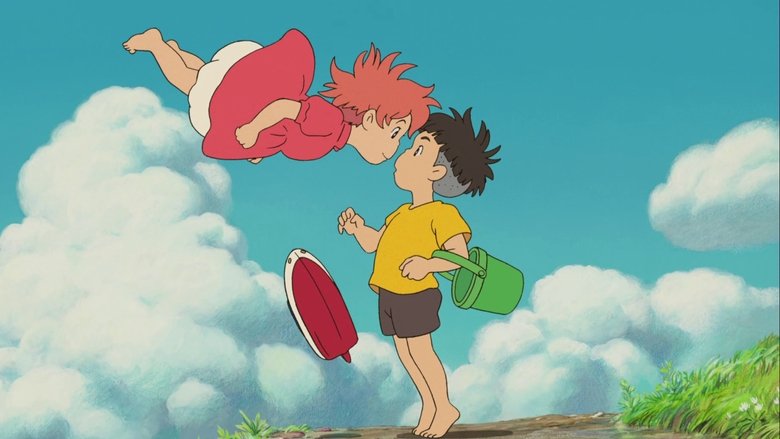
Through the 'test' of Sosuke, the film posits that love is acceptance of change. Sosuke must love Ponyo regardless of her form. This challenges the conditional nature of many adult relationships and elevates the purity of a child's bond as the ideal form of love.
Core Meaning
At its heart, Ponyo is a celebration of the unconditional acceptance found in childhood love and the vital balance between humanity and nature. Miyazaki illustrates that love requires responsibility and that humans must learn to coexist with the natural world rather than dominate it. The film suggests that the purity of a child's promise has the power to bridge worlds and restore harmony.