
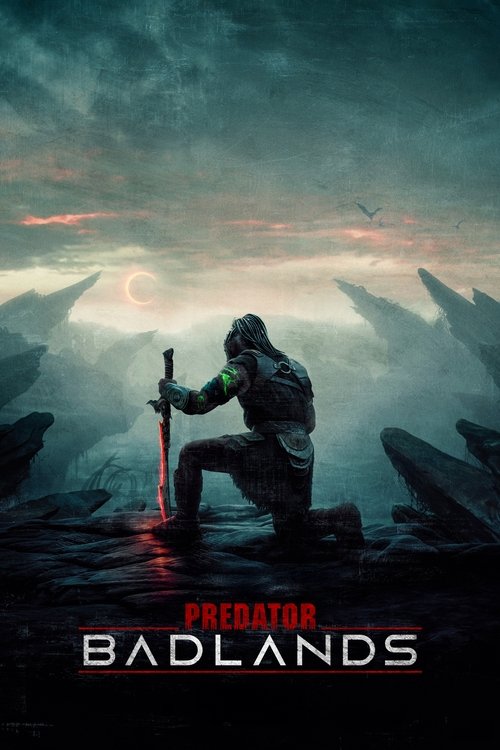
"First hunt. Last chance."
Predator: Badlands - Symbolism & Philosophy
Symbols & Motifs
The Kalisk
Represents the unconquerable force of nature and the cycle of life/rebirth. Its regenerative ability mirrors the resilience required of Dek to survive his trauma.
The creature is hunted by all factions but is ultimately revealed to be a mother protecting its young, paralleling Dek's own hidden desire for connection.
Thia's Severed Legs
Symbolizes vulnerability and interdependence. Thia literally cannot move without Dek, forcing the solitary hunter to become a protector and partner.
For much of the second act, Dek carries Thia on his back, a visual metaphor for their symbiotic relationship and his burden of care.
Tessa's Power Loader
A callback to Aliens, representing the arrogance of human(oid) technology trying to dominate nature through brute force.
Tessa uses the mech suit to fight the organic Kalisk, visually contrasting industrial rigidness with organic fluidity.
Green Blood
Traditionally a sign of the enemy being wounded, here it becomes a symbol of the protagonist's mortality and humanity.
When Dek bleeds during his duel with his father, it evokes sympathy rather than triumph for the attacker.
Philosophical Questions
Does heritage define destiny?
The film explores this through Dek, who is born a 'runt' and destined for execution or mediocrity. By rejecting his father's definition of a Yautja, he proves that individual choice and adaptation outweigh biological imperatives and cultural expectations.
What constitutes a 'monster'?
By making the terrifying Predator the hero and the human-looking synthetic the villain, the film challenges the audience's anthropocentric bias. It suggests that monstrosity is defined by actions (cruelty, greed) rather than appearance or species.
Core Meaning
At its heart, Predator: Badlands is a deconstruction of toxic legacy and the redefinition of strength. Director Dan Trachtenberg flips the script by making the "monster" the protagonist, using Dek's journey to critique the rigid, hyper-masculine expectations of Yautja culture. The film argues that empathy and adaptation—qualities often dismissed as weaknesses—are actually superior survival traits compared to brute force and dogma. By pairing a Predator with a synthetic, the film ultimately asks what it means to be "alive" and suggests that one's true family is found, not inherited.