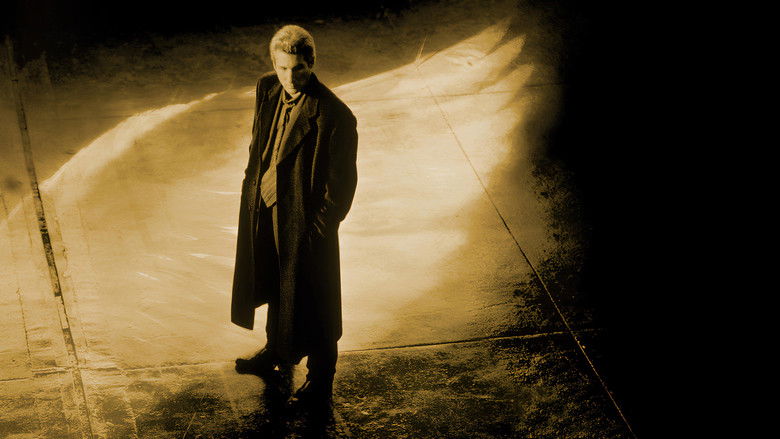
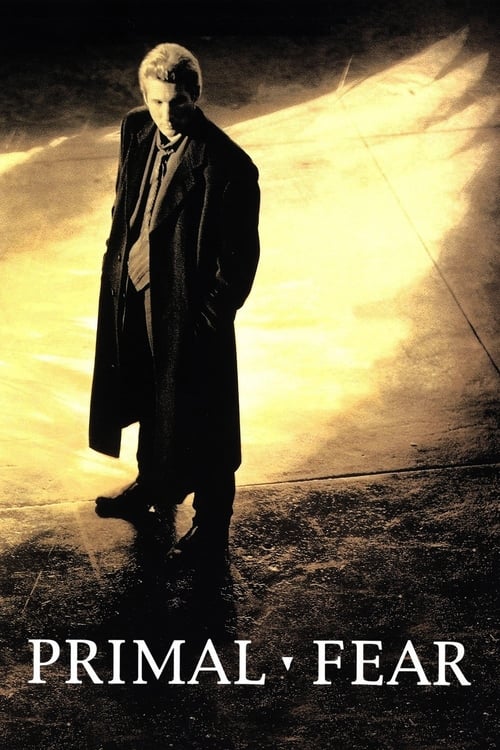
"Sooner or later, a man who wears two faces forgets which one is real."
Primal Fear - Symbolism & Philosophy
Symbols & Motifs
The Hawthorne Book / B32.156
The catalog code B32.156 references page 156 of Nathaniel Hawthorne's The Scarlet Letter, specifically an underlined quote about wearing one face to himself and another to the multitude. It symbolizes the central theme of duality, hidden sins, and the masks people wear to deceive both the world and themselves.
The quote is discovered in the Archbishop's private reading room, serving as a crucial clue that hints at both the Archbishop's hypocritical, predatory double life and Aaron's ultimate psychological deception.
The Videotape
The sex tape represents the undeniable, ugly truth that cannot be argued away by legal technicalities. It stands as a symbol of ultimate exploitation, the loss of innocence, and the tangible proof of the systemic abuse hidden behind closed doors.
Vail discovers the tape hidden in the Archbishop's residence, which shifts his perspective on the case, providing a motive for the murder and exposing the horrific reality of what Aaron and the other altar boys endured.
Blood-Soaked Altar Boy Clothes
The visual of Aaron in his blood-stained clerical garments juxtaposes the sacred with the profane. It acts as a powerful metaphor for the loss of innocence and how religious sanctuaries can become sites of absolute horror and violence.
This is the initial image presented to the audience and the police as Aaron is chased down and captured immediately following the brutal murder of the Archbishop.
Philosophical Questions
Is the justice system inherently flawed by its reliance on performance over truth?
The film aggressively questions the adversarial legal system, portraying it as a theater where the most compelling narrative, rather than objective reality, determines the verdict. Vail's manipulation of the jury and Aaron's manipulation of Vail demonstrate how easily justice can be subverted by skilled performers.
Can victims of horrific abuse be held entirely morally responsible for their violent retribution?
Even after the twist reveals Aaron as a calculating killer, the film leaves the audience grappling with the undeniable fact that he was subjected to monstrous sexual abuse by the Archbishop. It asks whether survival instincts and extreme trauma can contextualize, if not entirely justify, absolute brutal violence.
Can we ever truly know the inner mind of another human being?
The terrifying core of the film is the realization that absolute evil can perfectly mimic absolute innocence. It challenges the philosophical assumption that empathy and psychological evaluation can accurately map a person's soul, suggesting some darkness is completely impenetrable and unknowable.
Core Meaning
The core meaning of Primal Fear lies in its cynical deconstruction of truth, justice, and human nature. Director Gregory Hoblit, adapting William Diehl's novel, suggests that the legal system is less about discovering the truth and more about who can spin the most convincing narrative. It acts as a cautionary tale about the blinding nature of arrogance; Martin Vail's unshakeable belief in his own intellect and ability to manipulate the system ultimately makes him the perfect victim of a much darker manipulation. Furthermore, the film explores the terrifying concept that absolute evil can seamlessly hide behind the mask of absolute innocence, challenging the comforting illusion that we can truly know what lies within another person's mind.