"Princess Mononoke" explores the complex and often destructive relationship between humanity and the natural world. Director Hayao Miyazaki avoids a simplistic good-versus-evil narrative, instead presenting a nuanced portrayal of conflict where both sides have valid motivations. The film's core message is not a condemnation of humanity or progress, but a plea for balance and coexistence. It suggests that hatred and violence, whether from humans destroying nature or nature retaliating in kind, only beget more suffering. The film ultimately argues that even in the midst of conflict and hatred, there are things worth living for, and that understanding and compassion are the only paths toward a future where both humanity and nature can thrive.
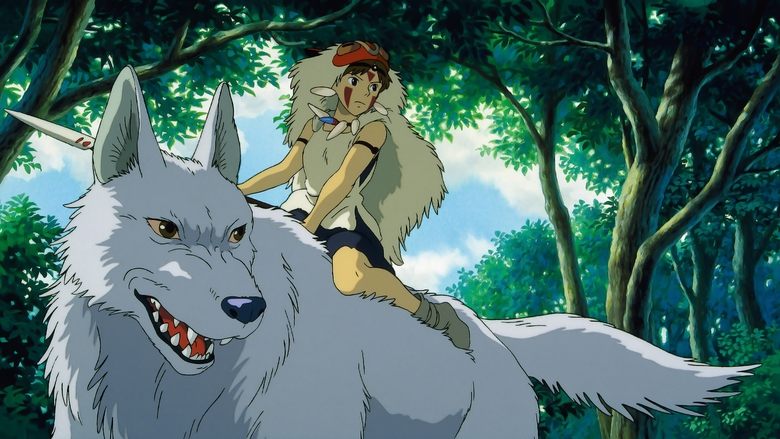
An epic, elemental fantasy that bleeds with the fury of a wounded forest god, grappling with the beautiful, brutal heart of humanity's conflict with nature.
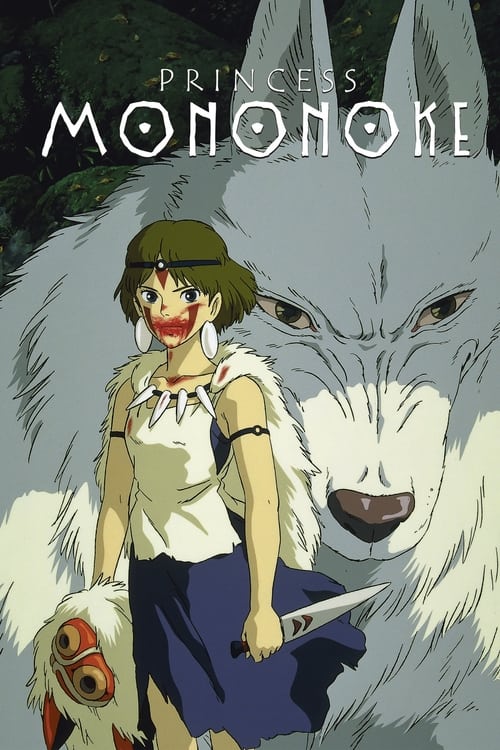
Princess Mononoke
もののけ姫
"The fate of the world rests on the courage of one warrior."
12 July 1997
Japan
134 min
8.3
(8,543)
Director: Hayao Miyazaki
Cast: Yoji Matsuda, Yuriko Ishida, Yuko Tanaka, Kaoru Kobayashi, Masahiko Nishimura
Animation
Fantasy
Adventure
Environmentalism vs. Industrialization
The Ambiguity of Good and Evil
Hatred, Revenge, and Forgiveness
Feminism and Strong Female Characters
Budget:
$23,500,000
Box Office:
$176,506,186
Princess Mononoke — Symbolism & Philosophy
Symbols & Motifs
The Forest Spirit (Shishigami)
Meaning:
The Forest Spirit, also known as the Deer God, represents the pure, untamed essence of nature itself. It embodies the dualistic forces of life and death, having the power to both create and destroy. It is not a benevolent or malevolent deity but a neutral force that maintains the natural balance. Its decapitation signifies humanity's ultimate transgression against nature, leading to catastrophic consequences.
Context:
The Forest Spirit appears in two forms: a deer-like creature by day and the giant, celestial Night Walker by night. It heals Ashitaka's gunshot wound but does not remove his curse. The central conflict of the film's latter half revolves around Lady Eboshi's plan to kill the spirit and Jigo's mission to deliver its head to the Emperor for a reward. After being beheaded, its body unleashes a destructive ooze that kills everything it touches until its head is returned, at which point it brings life back to the devastated land before disappearing.
Ashitaka's Curse
Meaning:
The curse on Ashitaka's arm, which appears as writhing, worm-like tendrils, is a physical manifestation of hatred and rage. It grants him immense power but at the cost of his life force, mirroring how hatred can empower yet ultimately consume an individual. His journey to find a cure is a quest to understand the root of this hatred and to find a way to live with it without being destroyed by it.
Context:
Ashitaka receives the curse after killing the demon boar god Nago at the beginning of the film. The curse flares up when he feels strong emotions like anger or when he uses his superhuman strength. It represents the corrupting influence of the iron bullet that poisoned Nago, linking industrial violence directly to the spiritual sickness of hatred. The curse is finally lifted at the end of the film when the Forest Spirit is healed and balance is restored.
San's Mask
Meaning:
San's mask, made of wood and fur, symbolizes her rejection of her own humanity and her identity as a member of the wolf clan. It is a representation of her fierce, untamed nature and her role as a warrior of the forest. When she wears it, she is the fearsome "Princess Mononoke"; when she removes it, her human vulnerability is revealed, particularly in her interactions with Ashitaka.
Context:
San is almost always seen wearing the mask when she is in combat or confronting humans. It serves to intimidate her enemies and to visually separate her from them. Ashitaka is one of the few humans to see her without it, signifying the bond that develops between them. The mask is a crucial part of her iconic design and represents her liminal state between the human and animal worlds.
The Kodama
Meaning:
The Kodama are small, white, rattling tree spirits that symbolize the health and vitality of the forest. Their presence indicates that the forest is thriving and spiritually pure. Their disappearance is a sign of the forest's decline due to human activity. They are silent observers of the conflict, representing the innocent life that is threatened by the war.
Context:
The Kodama appear in great numbers in the healthy parts of the forest. As the conflict escalates and the forest suffers, they begin to disappear. When the Forest Spirit is killed, all the Kodama die, but they reappear at the very end of the film after the land is rejuvenated, signifying the return of life and hope to the forest.
Philosophical Questions
Can humanity and nature ever truly coexist in harmony?
The film delves into this question by refusing to provide a simple answer. It presents the conflict as deeply complex, with both Irontown's need for resources and the forest's right to exist being valid. The ending is not a perfect resolution; San returns to the forest, unable to forgive humanity, and Ashitaka stays to help rebuild Irontown. However, they promise to see each other, suggesting that while perfect harmony may be unattainable, communication and a mutual desire for coexistence offer a path forward. The film posits that balance, not domination, is the key, but it is a balance that must be constantly negotiated and maintained.
Is there such a thing as absolute good or evil?
"Princess Mononoke" challenges the traditional binary of good versus evil. Lady Eboshi, who is responsible for the destruction of the forest, is also a benevolent and progressive leader to her people. The forest gods, while fighting for a just cause, are violent and capable of immense destruction. Ashitaka's journey is a lesson in seeing the good within the perceived 'evil' and the 'evil' within the perceived 'good'. The film argues that these concepts are relative and that actions are driven by complex motivations that cannot be easily categorized.
What is the cost of hatred?
The film explores the destructive nature of hatred through Ashitaka's curse. The curse is a physical manifestation of the boar god's pain and rage, and it slowly consumes Ashitaka's life. It symbolizes how hatred, even when justified, ultimately destroys the one who carries it. The war between the humans and the forest is perpetuated by a cycle of hatred and revenge. The film suggests that the only way to break this cycle is through empathy and a willingness to see beyond one's own pain and anger, as embodied by Ashitaka's quest "to see with eyes unclouded by hate."
Core Meaning
Explore More About This Movie
Dive deeper into specific aspects of the movie with our detailed analysis pages