"A new and altogether different screen excitement!"
Psycho - Symbolism & Philosophy
Symbols & Motifs
Birds
Birds symbolize predatory nature, entrapment, and the dual aspects of Norman's personality. Norman's hobby is taxidermy, specifically stuffing birds, which mirrors his act of preserving his mother's corpse. The birds in the parlor, particularly the owl with its wings spread, appear menacing and watch over the scene like silent judges. Furthermore, bird-related language is used throughout: Marion's last name is Crane, she is from Phoenix, and Norman remarks that she eats like a bird.
The stuffed birds are prominently displayed in the motel parlor during Norman and Marion's conversation. They loom over the characters, creating a threatening atmosphere. Norman compares Marion to a bird, and his dialogue often hints at themes of being trapped, much like his preserved specimens.
Mirrors and Reflections
Mirrors and reflections are used extensively to symbolize the theme of duality and fractured identity. They reflect the characters' inner conflicts and hidden selves. For Marion, her reflection signifies her guilt and her split from her former moral self. For Norman, reflections hint at his fragmented psyche, where two personalities exist in one body.
Hitchcock repeatedly frames characters with their reflections. Marion is seen with her reflection in the hotel room with Sam, at home, and in the bathroom of the car dealership after stealing the money, though she avoids looking at it. The film ends with a shot of Norman's face superimposed with the skull of his mother, the ultimate visual representation of his dual identity.
The Bates House
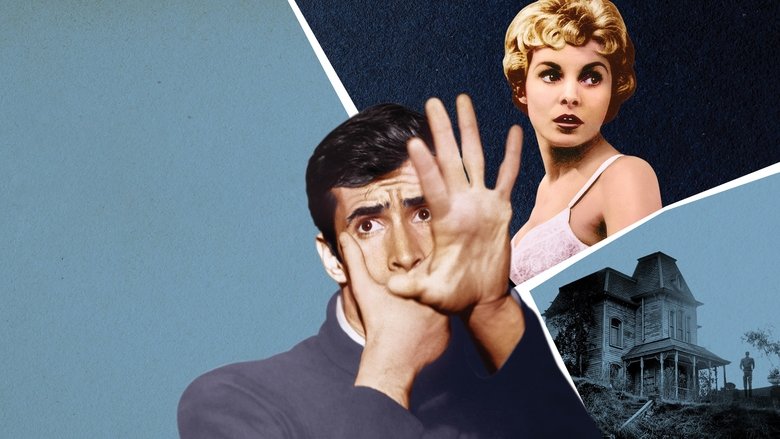
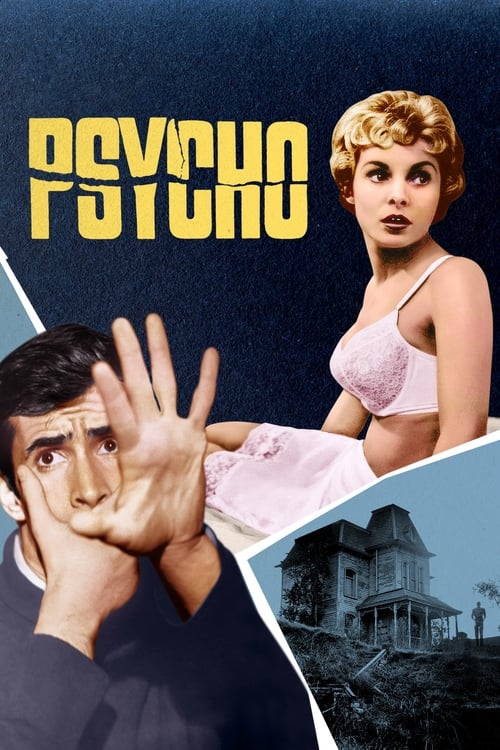
The Gothic, ominous house overlooking the modern, horizontal motel represents the dominance of Norman's 'Mother' personality over his own. Its verticality contrasts sharply with the low-lying motel, symbolizing the conscious (motel) and the unconscious, repressed mind (house). It is a physical manifestation of Norman's fractured psyche, with the dark secrets literally kept in the upper floors and the fruit cellar.
The house is constantly seen looming in the background behind the motel. Characters who venture into the house, such as Arbogast and Lila, are confronting the source of the mystery and danger. The final revelation of Mrs. Bates's mummified corpse occurs in the fruit cellar, the deepest and darkest part of the house and, symbolically, of Norman's mind.
Water and Rain
Water, particularly in the form of the downpour and the shower, symbolizes purification, cleansing, and ultimately, punishment. The torrential rain forces Marion off the main road and into Norman's trap. Her decision to shower is an attempt to wash away her guilt before she is brutally punished for her crime. Finally, her car and the stolen money are sunk into a swamp, with water being the final resting place for her and her transgression.
A heavy rainstorm begins as Marion is on the run, obscuring her vision and leading her to the Bates Motel. The shower scene is the film's most iconic use of water, transforming a symbol of cleansing into a site of horrific violence. The film's conclusion involves Norman sinking Marion's car into the swampy water behind the motel.
Philosophical Questions
What is the nature of evil and madness?
Psycho challenges the idea of evil as a purely external force. Instead, it presents evil as a product of internal psychological decay. The film asks whether Norman Bates is inherently evil or a victim of his abusive upbringing and subsequent mental illness. The psychiatrist's explanation at the end attempts to logically categorize Norman's madness as Dissociative Identity Disorder, suggesting a scientific, rather than moral, failing. However, the final shot of Norman, with 'Mother's' personality in full control, leaves the audience with a chilling sense of pure, inexplicable evil, questioning whether madness can ever be fully understood or contained.
Are the lines between sanity and insanity clearly defined?
The film deliberately blurs the lines between what is considered sane and insane behavior. Norman's famous line, 'We all go a little mad sometimes,' is directed at Marion, who has just committed a crime out of desperation. This suggests a continuum of 'madness' rather than a strict binary. While Norman's condition is extreme, Marion's transgression shows how an ordinary person can be driven to an irrational act by societal pressures. The film forces the audience to confront the unsettling idea that the potential for psychological breakdown exists within everyone, hidden just beneath the surface of a seemingly normal life.
Core Meaning
The core meaning of Psycho delves into the duality of human nature and the dark, often repressed, psychological forces that lie beneath a civilized exterior. Director Alfred Hitchcock masterfully suggests that everyone is capable of madness and transgression, blurring the lines between good and evil, sanity and insanity. The film explores how guilt, sexual repression, and fractured identity can lead to horrific consequences. It serves as a chilling commentary on the hidden darkness within ordinary people and the terrifying idea that the monster is not a creature from science fiction, but the person next door.