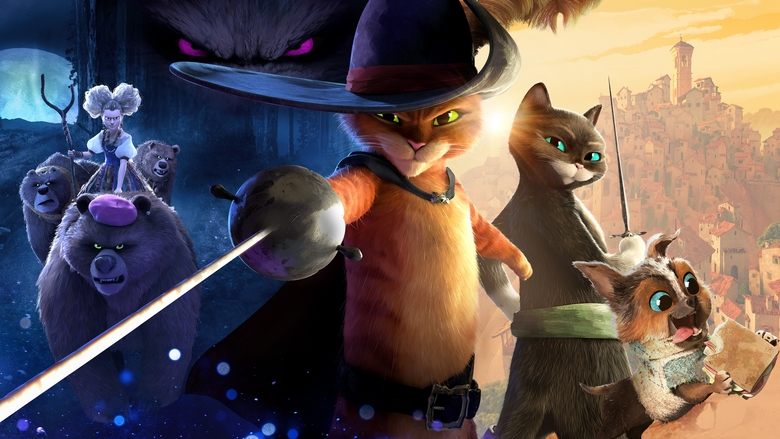
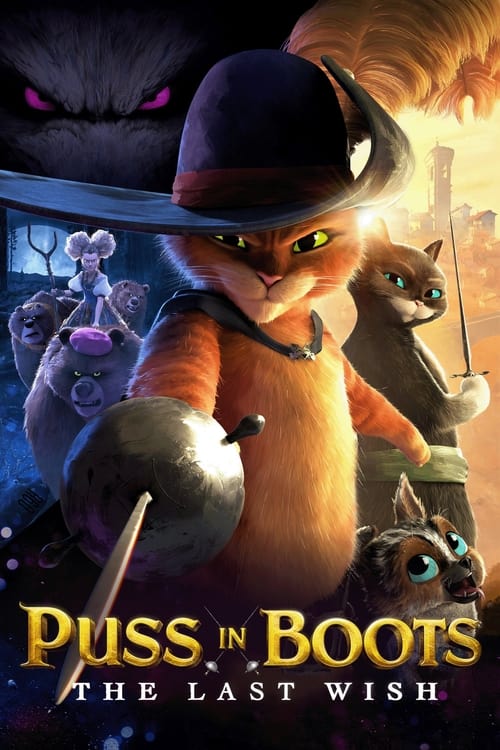
"Say hola to his little friends."
Puss in Boots: The Last Wish - Symbolism & Philosophy
Symbols & Motifs
The Wolf (Death)
The Wolf is the literal, physical embodiment of Death. He represents not just the end of life, but the inescapable reality of mortality that Puss has ignored for so long. His red eyes, twin sickles, and haunting whistle symbolize the terror and inevitability of death. He is not purely evil; he is a force of nature, disgusted by Puss's casual disregard for the gift of his past lives. He serves as the catalyst for Puss's entire psychological journey, forcing him to confront his deepest fear.
Death appears to Puss shortly after Puss learns he is on his last life. He first presents himself as a bounty hunter, easily defeating Puss and drawing his blood, which instills a profound fear in the hero for the first time. He then haunts Puss throughout the film, his whistle signaling his chilling presence and often triggering Puss's panic attacks. In the climax, he traps Puss in a ring of fire for a final duel, not just to kill him, but to test whether Puss has learned the value of life.
The Wishing Star
The Wishing Star represents the ultimate shortcut—the magical solution to life's deepest problems. For each character, it symbolizes what they believe is missing from their lives: for Puss, it's immortality; for Kitty, trust; for Goldilocks, a perfect family; for Jack Horner, absolute power. Thematically, the film argues that the pursuit of such a quick fix causes the characters to overlook the blessings they already possess. The journey to the star is ultimately more important than the wish itself.
The Wishing Star is the central MacGuffin of the plot. Its map is stolen from Big Jack Horner, setting off the race between all the main characters. The star itself is located at the heart of the Dark Forest. In the end, no one uses the wish. Puss, Kitty, and Goldilocks all realize they no longer need it, and they destroy the map to defeat Jack Horner, causing the star to collapse and consume him.
The Dark Forest Map
The map to the Wishing Star is a magical object that reflects the soul of its holder. It is not a static guide but a dynamic representation of the characters' internal struggles and desires. The path it reveals changes based on who is holding it, forcing them to confront their personal challenges. For Puss and Kitty, who are filled with fear and mistrust, the forest becomes a landscape of deadly obstacles. For the innocent and content Perrito, the path is a beautiful and easy stroll.
The map is the object everyone is fighting over. When Puss or Kitty hold it, it shows perilous routes like the "Cave of Lost Souls" or the "Grotto of Solitude." When Perrito holds it, the path transforms into the "Field of Quick & Easy Solutions" and the "River of Relaxation." This magical quality is a key plot device that reveals the characters' inner states and forces them to grow before they can reach their goal.
Death's Sickles
The Wolf's twin sickles are a clear and terrifying symbol of his identity as Death, reminiscent of the Grim Reaper's scythe. They represent mortality and the severing of life. The fact that he wields two makes him a relentless and unstoppable opponent. The sickles can also combine into a double-bladed glaive, symbolizing that there are multiple ways death can come and no way to truly escape it.
The sickles are used in every confrontation between Puss and the Wolf. In their first duel, the Wolf uses a sickle to draw Puss's blood, a symbolic act that shatters Puss's illusion of invincibility. In the final battle, Puss manages to disarm the Wolf of one sickle, a temporary victory that shows his newfound courage, not to defeat death, but to stand up to it.
Philosophical Questions
What is the true measure of a well-lived life?
The film explores this question by contrasting Puss's eight 'legendary' but frivolous lives with his one remaining, fear-filled life. It posits that a life's value isn't in its duration, number of adventures, or the fame it accrues, but in its capacity for love, trust, and meaningful connection. Puss's journey demonstrates that a single life lived with and for others holds more weight and brings more fulfillment than numerous lives lived for oneself. The film concludes that appreciating what you have, rather than chasing what you lack, is the key to a valuable existence.
How should one live in the face of inevitable death?
"The Last Wish" is a direct meditation on this existential question. Initially, Puss's response to the imminent threat of death is to stop living entirely—to retire in fear. The narrative rejects this, showing it as a hollow existence. The alternative it presents is not to be fearless, but to act courageously despite fear. The film argues that the awareness of death is what gives life its urgency and meaning. By accepting that his time is finite, Puss is finally able to commit to others and live his one remaining life to the absolute fullest.
Does happiness come from achieving what we wish for, or appreciating what we have?
This question is central to the arcs of Puss, Kitty, and Goldilocks. All three characters believe a single wish will solve their problems. However, the journey to the star forces them to confront the reality of their situations. Goldilocks realizes the family she has is the one she truly wants. Kitty finds the trust she sought in Puss's changed character, not in a magical wish. Puss discovers the love of his friends is worth more than all nine lives. The film unequivocally answers that true happiness is found in gratitude for the present, not in the magical fulfillment of desires.
Core Meaning
The core meaning of "Puss in Boots: The Last Wish" is an exploration of mortality and the profound realization that a life's value is not measured in quantity, but in its quality and the connections we forge. Director Joel Crawford and the creative team wanted to move beyond a simple fairytale to ask a universal question: "How are you gonna live your life?" The film posits that confronting our own vulnerability and the inevitability of death is what allows us to truly live.
Puss's journey from a legend who "laughs in the face of death" to someone who learns to fight for one precious life is the heart of the film's message. It suggests that true heroism isn't about being fearless or immortal, but about embracing fear and finding the courage to live fully and selflessly for others. Ultimately, the film argues that one life, shared with loved ones, is more than enough and is the greatest treasure one can have.