Quo Vadis, Aida? - Symbolism & Philosophy
Symbols & Motifs
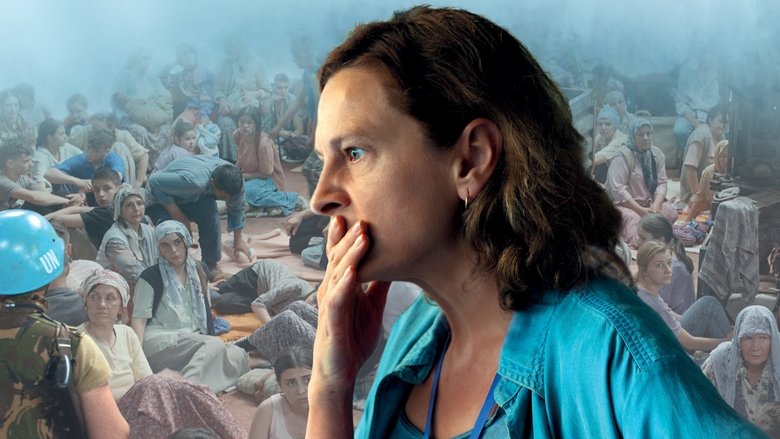
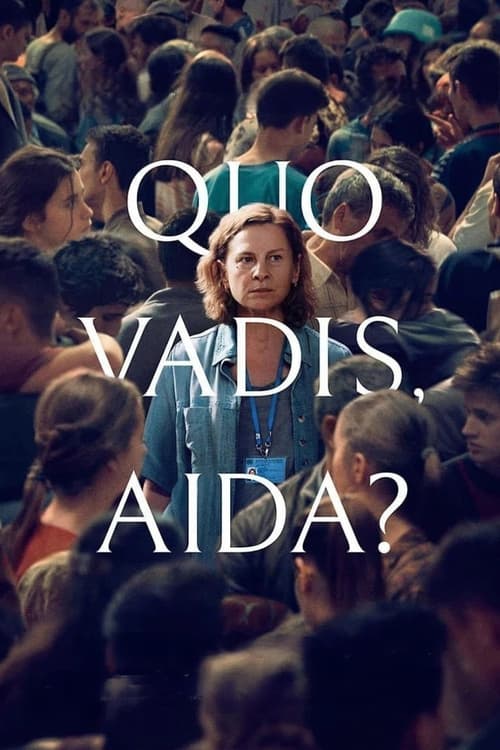
The UN ID Badge
It symbolizes the false promise of privilege, safety, and international authority [1.6].
Aida uses the badge to move freely through the camp, cut corners, and negotiate, believing it can protect her family. Ultimately, it proves utterly useless in the face of brutal force.
Children Covering Their Eyes
It represents the dual concepts of willful blindness to past atrocities and the hope of opening eyes to truth.
In the film's haunting final scene, children of both survivors and perpetrators perform a school play where they cover and uncover their eyes with their hands, leaving the audience to ponder if the cycle of denial will continue.
The Abandoned Battery Factory
It serves as an industrial cage rather than a sanctuary.
The physical space of the UN base quickly transforms from a beacon of hope into a claustrophobic trap where Bosniak refugees are methodically separated and handed over to their executioners.
The 1991 New Year's Eve Party
It symbolizes lost innocence and the shared humanity of the victims before the war.
Shown in a brief, dreamlike flashback, the camera lingers on the faces of Aida's townspeople as they dance joyfully, standing in stark contrast to their imminent, tragic fates.
Philosophical Questions
At what point does bureaucratic compliance become moral complicity?
The film harshly critiques the UN peacekeepers who, while not pulling the triggers themselves, facilitated the genocide by strictly adhering to rules and chains of command [1.4]. It forces the audience to ask whether inaction and procedural obedience in the face of evil are functionally identical to the evil itself.
How does one live alongside the architects of their tragedy?
In the epilogue, Aida returns to her hometown and resumes her life as a teacher, educating the children of the very men who murdered her family. The film explores the agonizing philosophical burden of post-conflict coexistence and the absolute limits of human endurance and forgiveness.
Does privilege obligate salvation, and what happens when it fails?
Aida uses her status as a UN translator to try and save her family, grappling with the moral weight of prioritizing her own blood over the thousands doomed outside the gates. Her ultimate failure interrogates the worth of status in a system stripped entirely of its humanity.
Core Meaning
At its core, Quo Vadis, Aida? is a searing indictment of the international community's complicity in the Srebrenica massacre through bureaucratic inertia and moral cowardice. Director Jasmila Žbanić refuses to focus solely on the bloodlust of the perpetrators; instead, she casts a glaring light on the bystanders—specifically the UN and the Dutchbat peacekeepers—who chose procedural obedience over human life. Beyond the geopolitics, the film explores the agonizing limits of maternal protection, demonstrating how the machinery of genocide strips away human dignity while demanding that we never avert our eyes from the truth of our history.