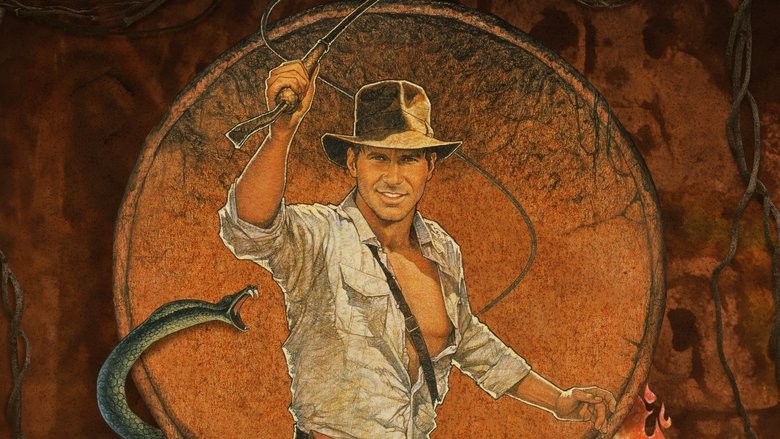
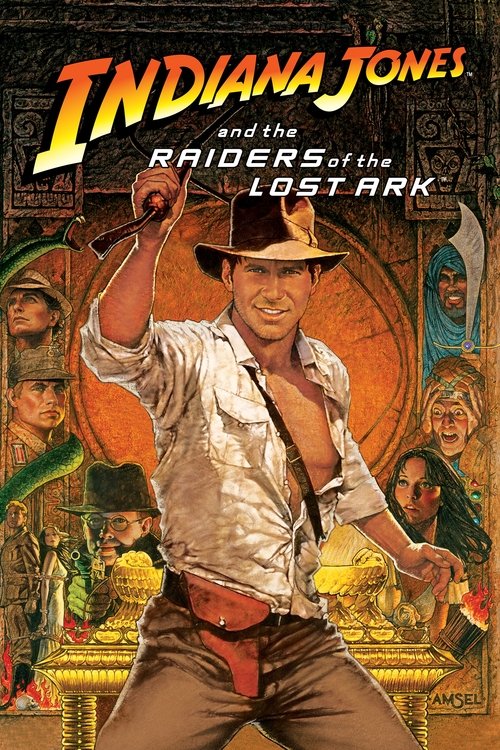
"The return of the great adventure."
Raiders of the Lost Ark - Symbolism & Philosophy
Symbols & Motifs
The Ark of the Covenant
The Ark symbolizes the power of God and the divine. It represents a force that is beyond human comprehension and control. It also serves as a test of character: those who seek to use it for their own selfish and evil purposes are ultimately destroyed by its power, while those who show it respect and humility are spared.
The Ark is the central object of the film's plot, sought after by both Indiana Jones and the Nazis. Its power is hinted at throughout the film, such as when it burns the Nazi symbol off its crate. The full extent of its power is revealed in the climax when it is opened, unleashing divine wrath upon Belloq and the Nazis.
Indiana Jones's Fedora and Whip
Indy's signature fedora and whip are symbols of his adventurous spirit and his persona as a daring archaeologist. The fedora, in particular, symbolizes his tenacity and determination, as he rarely loses it no matter the peril. The whip is an extension of his resourcefulness, used as both a weapon and a tool to navigate treacherous environments.
These items are present with Indiana Jones throughout almost all of his adventures in the film. The opening sequence, for instance, establishes the whip's utility as he swings across a chasm. His determination to retrieve his hat after being trapped is a recurring motif.
Snakes
Snakes symbolize Indiana Jones's primary fear and vulnerability. They serve to humanize the otherwise seemingly fearless hero, making him more relatable to the audience. Overcoming his fear of snakes, particularly in the Well of Souls, demonstrates his immense courage and determination to complete his mission.
Indy's fear of snakes is first mentioned before he enters the Peruvian temple. His phobia is put to the ultimate test when he and Marion are sealed in the Well of Souls, which is filled with thousands of snakes.
The Government Warehouse
The massive, anonymous government warehouse where the Ark is stored at the end of the film symbolizes the bureaucratic indifference and the hiding of knowledge. It suggests that even a discovery of monumental significance can be lost within the vast machinery of government. It raises questions about who decides what knowledge is too dangerous for the public and the potential for powerful objects to be forgotten rather than studied or revered.
The final shot of the film shows a worker pushing the crate containing the Ark down a long aisle in a seemingly endless warehouse filled with countless other identical crates. This leaves the audience with a sense of ambiguity about the fate of the powerful artifact.
Philosophical Questions
What is the relationship between faith, knowledge, and power?
The film explores the tension between scientific knowledge and religious faith. Indiana Jones initially represents the man of science, seeking to understand and categorize the world through archaeology. Belloq also seeks knowledge, but his goal is to harness the Ark's power for personal gain. The film ultimately suggests that true power lies beyond human knowledge and control. The Ark's divine energy cannot be understood or wielded by science or ambition. It demands faith and reverence. Jones survives because he respects this power and accepts the limits of his understanding by closing his eyes, an act of faith, while Belloq is destroyed by his arrogant belief that he can command it.
Who should be the custodian of powerful historical artifacts?
The film raises questions about the ownership and proper place of significant cultural and historical objects. Indy's mantra, "It belongs in a museum!", represents the idea that such items should be preserved for public study and appreciation. However, the film complicates this by showing the Ark's immense supernatural power, suggesting it's too dangerous for anyone to possess. The ending, where the Ark is hidden away in a vast, anonymous government warehouse, offers a cynical and ambiguous answer. It implies that perhaps the safest place for such power is to be forgotten, raising further questions about secrecy, bureaucracy, and the right to knowledge.
Core Meaning
"Raiders of the Lost Ark" is a masterful homage to the adventure serials of the 1930s and 40s, celebrating the spirit of adventure, heroism, and the triumph of good over evil. At its core, the film explores the theme of faith versus skepticism. Indiana Jones begins as a cynical archaeologist who views historical artifacts as treasures to be acquired. However, he ultimately witnesses a divine power that is beyond his scientific comprehension. The film suggests that there are forces in the world that cannot be controlled or understood by mankind, and that true power lies not in possessing ancient relics, but in respecting their sacred nature. The climax, where the hubristic villains are destroyed by the Ark's power while Indy and Marion survive by showing reverence, underscores the message that some things are not meant to be wielded by mortals.