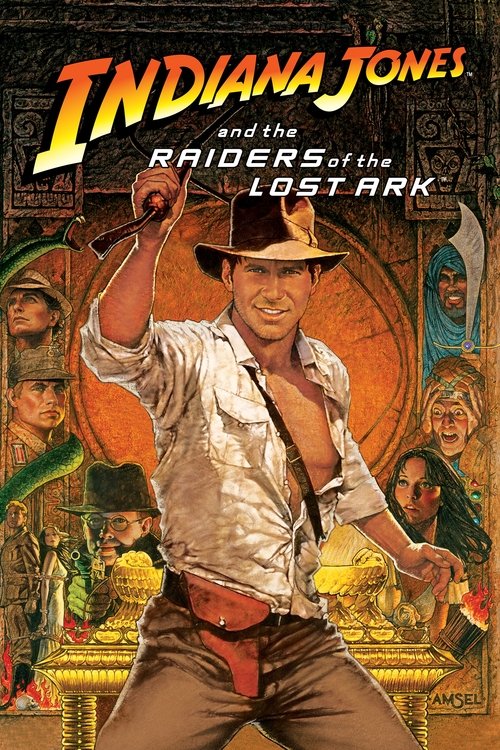
Raiders of the Lost Ark
An action-adventure spectacle that feels like a breathless, two-hour cliffhanger, capturing the thrilling spirit of classic Hollywood serials with relentless energy and a touch of the supernatural.
Raiders of the Lost Ark

Raiders of the Lost Ark

"The return of the great adventure."

12 June 1981 United States of America 115 min ⭐ 7.9 (13,121)
Director: Steven Spielberg
Cast: Harrison Ford, Karen Allen, Paul Freeman, John Rhys-Davies, Ronald Lacey
Action Adventure
Good vs. Evil The Supernatural and the Sacred Adventure and Exploration Redemption
Budget: $18,000,000
Box Office: $389,925,971

Overview

Set in 1936, "Raiders of the Lost Ark" introduces Indiana Jones (Harrison Ford), a respected archaeologist and professor who moonlights as a globetrotting adventurer. He is recruited by U.S. Army Intelligence to find the legendary Ark of the Covenant before the Nazis do. Adolf Hitler believes the biblical artifact will grant his army invincibility.

Jones's quest first takes him to Nepal to find his former flame, Marion Ravenwood (Karen Allen), who possesses a crucial artifact: the headpiece to the Staff of Ra. Together, they travel to Cairo, teaming up with Jones's friend Sallah (John Rhys-Davies) to decipher the headpiece and locate the Ark's resting place, the Well of Souls. Their mission becomes a frantic race against their rivals: the nefarious French archaeologist René Belloq (Paul Freeman) and a ruthless team of Nazis.

The film is a rollercoaster of thrilling action sequences, including intense chases, booby-trapped tombs, and narrow escapes. Jones and Marion must outwit their enemies and survive perilous situations to secure the Ark and prevent its immense power from falling into the wrong hands.
Core Meaning

"Raiders of the Lost Ark" is a masterful homage to the adventure serials of the 1930s and 40s, celebrating the spirit of adventure, heroism, and the triumph of good over evil. At its core, the film explores the theme of faith versus skepticism. Indiana Jones begins as a cynical archaeologist who views historical artifacts as treasures to be acquired. However, he ultimately witnesses a divine power that is beyond his scientific comprehension. The film suggests that there are forces in the world that cannot be controlled or understood by mankind, and that true power lies not in possessing ancient relics, but in respecting their sacred nature. The climax, where the hubristic villains are destroyed by the Ark's power while Indy and Marion survive by showing reverence, underscores the message that some things are not meant to be wielded by mortals.

Thematic DNA

Good vs. Evil 35%
The Supernatural and the Sacred 30%
Adventure and Exploration 25%
Redemption 10%

Good vs. Evil

The central conflict of "Raiders of the Lost Ark" is a clear-cut battle between good and evil. Indiana Jones, while flawed, represents the forces of good, seeking to preserve history and protect the world from tyranny. The Nazis, driven by a lust for power and world domination, are the unambiguous villains. The film takes a strong anti-Nazi stance, often depicting them as ruthless and deserving of their ultimate, spectacular demise at the hands of a divine power.

The Supernatural and the Sacred

The film delves into the realm of the supernatural through the Ark of the Covenant. Initially treated as a mere historical artifact, the Ark is revealed to possess immense, divine power. This theme challenges the characters' (and the audience's) skepticism, suggesting that there are forces beyond human understanding. The climax serves as a powerful testament to this, as those who disrespect the Ark's sanctity are destroyed, while those who show humility and awe are spared.

Adventure and Exploration

"Raiders of the Lost Ark" is a celebration of the spirit of adventure and exploration. The film's globetrotting narrative, from the jungles of Peru to the deserts of Egypt, is filled with exotic locales, ancient tombs, and thrilling discoveries. It taps into a sense of wonder and excitement, harkening back to classic adventure stories and serials. Indiana Jones himself embodies the quintessential adventurer: brave, resourceful, and driven by a thirst for knowledge and discovery.

Redemption

A more subtle theme in the film is Indiana Jones's personal redemption. His past relationship with Marion was clearly damaging, and their reunion is initially fraught with tension and resentment. Throughout their adventure, Indy is given a chance to right his past wrongs. His journey is not just about finding the Ark, but also about realizing what is truly important, culminating in his decision to prioritize Marion's safety over the artifact.

Character Analysis

Indiana Jones

Harrison Ford

Archetype: The Hero
Key Trait: Resourceful

Motivation

Initially, his motivation is to acquire the Ark of the Covenant for historical preservation and to prevent it from falling into the hands of the Nazis. However, as the film progresses, his motivation becomes increasingly personal, driven by his desire to protect Marion and his growing sense of responsibility to ensure the Ark's dangerous power is not misused.

Character Arc

Indiana Jones begins the film as a cynical adventurer and archaeologist, driven by the thrill of discovery and a belief that artifacts belong in a museum. While he is brave and resourceful, he is also emotionally guarded and has a history of questionable relationships, particularly with Marion. Throughout the course of the film, his experiences, especially witnessing the supernatural power of the Ark and rekindling his relationship with Marion, force him to confront the limitations of his worldview. He learns humility and the importance of faith, and by the end, he has also grown emotionally, recognizing the value of his connection with Marion over any treasure.

Marion Ravenwood

Karen Allen

Archetype: The Ally/Love Interest
Key Trait: Feisty

Motivation

Her initial motivation is to get financial compensation from Indy and to survive after her bar is burned down by the Nazis. This evolves into a desire to help Indy succeed in his quest and to rekindle their relationship, as well as to honor her father's work in searching for the Ark.

Character Arc

Marion is introduced as a tough, independent, and cynical woman, hardened by her past experiences, including a heartbreaking relationship with Indiana Jones. Initially, she is motivated by money and a desire for revenge against Indy. As she is drawn into the adventure, she rediscovers her feelings for him and proves to be a capable and resilient partner. She doesn't undergo a dramatic transformation but rather reveals her underlying warmth and vulnerability as her emotional walls come down. She is a strong female character who is Indy's equal in many ways.

Dr. René Belloq

Paul Freeman

Archetype: The Shadow/Main Antagonist
Key Trait: Arrogant

Motivation

Belloq is motivated by his professional rivalry with Indiana Jones and his ambition to obtain the Ark of the Covenant for the immense power and prestige it represents. He sees the Ark not as a sacred object to be respected but as a tool to achieve greatness, telling Indy it's like a "radio for speaking to God."

Character Arc

Belloq serves as a dark mirror to Indiana Jones. He is an intelligent and sophisticated archaeologist, but unlike Indy, he lacks a moral compass and is driven by vanity and a desire for power. His arc is one of hubris leading to destruction. He believes he can control the power of the Ark and use it to communicate with God, but his lack of reverence and his collaboration with the Nazis lead to his spectacular demise. He remains consistent in his self-serving ambition throughout the film.

Major Arnold Toht

Ronald Lacey

Archetype: The Henchman
Key Trait: Sadistic

Motivation

His motivation is to serve the Nazi regime by acquiring the headpiece to the Staff of Ra and ultimately the Ark of the Covenant. He is driven by a sadistic pleasure in inflicting pain and fear, as seen in his interactions with Marion.

Character Arc

Toht is a flat character who serves as a menacing and sadistic presence representing the evil of the Gestapo. He does not have a discernible character arc and remains a cruel and intimidating figure throughout the story until his gruesome death.

Sallah

John Rhys-Davies

Archetype: The Loyal Friend/Sidekick
Key Trait: Loyal

Motivation

Sallah is motivated by his friendship with Indiana Jones and his desire to help him succeed. He is also a man of faith who understands the significance of the Ark and wants to ensure it is protected from the Nazis.

Character Arc

Sallah is a loyal and good-hearted friend to Indiana Jones. He does not have a significant character arc but serves as a crucial ally, providing assistance, local knowledge, and moments of levity. He remains a steadfast and reliable companion throughout their time in Egypt.

Symbols & Motifs

The Ark of the Covenant

Meaning:

The Ark symbolizes the power of God and the divine. It represents a force that is beyond human comprehension and control. It also serves as a test of character: those who seek to use it for their own selfish and evil purposes are ultimately destroyed by its power, while those who show it respect and humility are spared.

Context:

The Ark is the central object of the film's plot, sought after by both Indiana Jones and the Nazis. Its power is hinted at throughout the film, such as when it burns the Nazi symbol off its crate. The full extent of its power is revealed in the climax when it is opened, unleashing divine wrath upon Belloq and the Nazis.

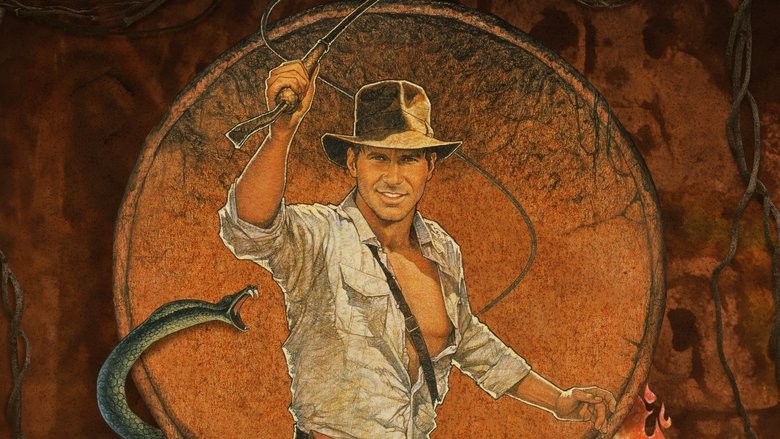
Indiana Jones's Fedora and Whip

Meaning:

Indy's signature fedora and whip are symbols of his adventurous spirit and his persona as a daring archaeologist. The fedora, in particular, symbolizes his tenacity and determination, as he rarely loses it no matter the peril. The whip is an extension of his resourcefulness, used as both a weapon and a tool to navigate treacherous environments.

Context:

These items are present with Indiana Jones throughout almost all of his adventures in the film. The opening sequence, for instance, establishes the whip's utility as he swings across a chasm. His determination to retrieve his hat after being trapped is a recurring motif.

Snakes

Meaning:

Snakes symbolize Indiana Jones's primary fear and vulnerability. They serve to humanize the otherwise seemingly fearless hero, making him more relatable to the audience. Overcoming his fear of snakes, particularly in the Well of Souls, demonstrates his immense courage and determination to complete his mission.

Context:

Indy's fear of snakes is first mentioned before he enters the Peruvian temple. His phobia is put to the ultimate test when he and Marion are sealed in the Well of Souls, which is filled with thousands of snakes.

The Government Warehouse

Meaning:

The massive, anonymous government warehouse where the Ark is stored at the end of the film symbolizes the bureaucratic indifference and the hiding of knowledge. It suggests that even a discovery of monumental significance can be lost within the vast machinery of government. It raises questions about who decides what knowledge is too dangerous for the public and the potential for powerful objects to be forgotten rather than studied or revered.

Context:

The final shot of the film shows a worker pushing the crate containing the Ark down a long aisle in a seemingly endless warehouse filled with countless other identical crates. This leaves the audience with a sense of ambiguity about the fate of the powerful artifact.

Memorable Quotes

Snakes. Why'd it have to be snakes?

— Indiana Jones

Context:

Indiana Jones says this line to Sallah as they look down into the Well of Souls and discover that it is filled with countless snakes. This is the moment he realizes he must confront his greatest fear to retrieve the Ark.

Meaning:

This quote is significant because it reveals a moment of vulnerability in an otherwise fearless hero. It makes Indiana Jones more relatable and human, showing that even he has a deep-seated fear. It has become an iconic line that encapsulates the character's everyman quality despite his extraordinary adventures.

It's not the years, honey. It's the mileage.

— Indiana Jones

Context:

A battered and bruised Indiana Jones says this to Marion aboard the Bantu Wind steamer as she tends to his injuries. It's a moment of quiet intimacy and reflection after a series of intense action sequences.

Meaning:

This improvised line by Harrison Ford perfectly captures the world-weariness of Indiana Jones. It suggests that his exhaustion and aches come not from his age, but from the physically demanding and perilous life he has led as an adventurer. It's a testament to his rugged and experienced character.

They're digging in the wrong place!

— Indiana Jones

Context:

After Sallah helps him get the inscription on the headpiece translated by an old imam, Indy realizes that the Nazis, using an incomplete version of the headpiece, have miscalculated the height of the Staff of Ra and are therefore excavating in the incorrect location.

Meaning:

This line marks a turning point in the race to find the Ark. It signifies that Indiana Jones, through his superior knowledge and the complete headpiece, has outsmarted Belloq and the Nazis. It injects a renewed sense of hope and excitement into the narrative as Indy realizes he still has a chance to find the Ark first.

We are simply passing through history. This... this *is* history.

— Dr. René Belloq

Context:

Belloq says this to Indiana Jones in a Cairo bar, trying to persuade him of the futility of their rivalry and the greater significance of the Ark they both seek. He presents himself as a kindred spirit to Indy, albeit a 'shadowy reflection'.

Meaning:

This quote reveals Belloq's perspective on archaeology and his justification for his actions. He sees himself and Indy as conduits for history, but believes the Ark itself is the ultimate prize, transcending their individual roles. It highlights his ambition and his view of history as something to be possessed and controlled, rather than simply studied.

Philosophical Questions

What is the relationship between faith, knowledge, and power?

The film explores the tension between scientific knowledge and religious faith. Indiana Jones initially represents the man of science, seeking to understand and categorize the world through archaeology. Belloq also seeks knowledge, but his goal is to harness the Ark's power for personal gain. The film ultimately suggests that true power lies beyond human knowledge and control. The Ark's divine energy cannot be understood or wielded by science or ambition. It demands faith and reverence. Jones survives because he respects this power and accepts the limits of his understanding by closing his eyes, an act of faith, while Belloq is destroyed by his arrogant belief that he can command it.

Who should be the custodian of powerful historical artifacts?

The film raises questions about the ownership and proper place of significant cultural and historical objects. Indy's mantra, "It belongs in a museum!", represents the idea that such items should be preserved for public study and appreciation. However, the film complicates this by showing the Ark's immense supernatural power, suggesting it's too dangerous for anyone to possess. The ending, where the Ark is hidden away in a vast, anonymous government warehouse, offers a cynical and ambiguous answer. It implies that perhaps the safest place for such power is to be forgotten, raising further questions about secrecy, bureaucracy, and the right to knowledge.

Alternative Interpretations

One of the most popular alternative interpretations of "Raiders of the Lost Ark" was famously discussed on the TV show "The Big Bang Theory." The theory posits that Indiana Jones is actually irrelevant to the outcome of the story. If he had never gotten involved, the Nazis would have still found the Ark, taken it to the island, opened it, and been destroyed by its power. While this is a technically plausible reading of the plot, it overlooks Indy's role in ensuring the Ark ended up in the hands of the U.S. government rather than potentially being discovered by another party after the Nazis' demise. It also discounts the personal journey and character development of Indy and his relationship with Marion, which form the emotional core of the film.

Another interpretation views the film through a more critical lens, seeing Indiana Jones not as a hero, but as a problematic figure who engages in the unethical appropriation of cultural artifacts. From this perspective, his catchphrase "It belongs in a museum!" is seen as a justification for a colonialist mindset, where historical objects are removed from their original contexts and communities for display in Western institutions. This reading highlights the complex and often controversial history of archaeology and museum collections.

Cultural Impact

"Raiders of the Lost Ark" was a massive critical and commercial success, becoming the highest-grossing film of 1981 and profoundly influencing popular culture. It revitalized the action-adventure genre, which had been dormant, by blending the fast-paced, cliffhanger style of 1930s and 40s serials with modern filmmaking techniques and a knowing wit. The film established Indiana Jones as one of cinema's most iconic heroes and Harrison Ford as a major leading man.

Its influence can be seen in countless subsequent films, television shows, and video games that have tried to capture its blend of action, humor, and historical adventure. Franchises like "Tomb Raider" and "Uncharted" owe a significant debt to the template established by "Raiders". The film also sparked a renewed public interest in archaeology, leading to an increase in students enrolling in the field, despite the fact that the film's portrayal of archaeology is highly romanticized and often criticized by actual archaeologists for its 'treasure hunting' mentality.

The film's iconography—the fedora, the whip, John Williams's rousing score—has become deeply ingrained in pop culture, instantly recognizable and frequently parodied. In 1999, the United States Library of Congress selected "Raiders of the Lost Ark" for preservation in the National Film Registry, cementing its status as a culturally, historically, and aesthetically significant film.

Audience Reception

Upon its release, "Raiders of the Lost Ark" was met with widespread acclaim from both critics and audiences. Audiences were thrilled by its relentless pace, spectacular action set pieces, and charismatic hero. The film was praised for its sense of fun and high adventure, successfully reviving the spirit of classic Saturday matinee serials for a modern audience. Harrison Ford's performance as Indiana Jones was lauded for its perfect blend of toughness, vulnerability, and charm. The chemistry between Ford and Karen Allen was also a highlight for many viewers. The scene where Indy simply shoots the swordsman reportedly received huge cheers and laughter in theaters. While there is little in the way of significant criticism, some modern viewers have pointed out the dated gender dynamics and the problematic aspects of its portrayal of archaeology. Overall, however, the film is overwhelmingly regarded as a masterpiece of the action-adventure genre and one of the greatest films ever made.

Interesting Facts

  • The initial concept for the film was developed by George Lucas in the early 1970s, before he made Star Wars.
  • Tom Selleck was originally cast as Indiana Jones, but had to drop out due to his commitment to the TV series "Magnum, P.I.".
  • The iconic scene where Indy shoots a menacing swordsman was improvised. Harrison Ford was suffering from food poisoning and suggested shooting the swordsman to shorten the originally planned lengthy whip-versus-sword fight scene.
  • During filming in Tunisia, most of the cast and crew got sick with food poisoning, except for director Steven Spielberg, who only ate canned Spaghetti-O's that he brought from home.
  • The name Indiana was inspired by George Lucas's Alaskan Malamute dog.
  • For the Well of Souls scene, producers gathered thousands of real snakes, but still needed more, so they added lengths of rubber hose to the mix.
  • The sound of the heavy lid of the Ark being moved was created by recording the sound of a toilet cistern lid being shifted.
  • The submarine used in the film was a model borrowed from the production of Wolfgang Petersen's "Das Boot" (1981).
  • Some of the action sequences that were cut from the script, such as a mine cart chase and a fight behind a giant rolling gong, were later used in "Indiana Jones and the Temple of Doom" (1984).

Easter Eggs

Hieroglyphs of R2-D2 and C-3PO from "Star Wars" can be seen.

In the Well of Souls, as Indy and Sallah are lifting the Ark, hieroglyphics depicting the famous droids R2-D2 and C-3PO can be seen on a pillar to their right. This is a fun inside joke and a nod to George Lucas's other iconic film series.

The airplane at the beginning of the film has the registration number "OB-CPO".

The seaplane that Indiana Jones escapes in from the Hovitos has the registration number OB-CPO on its side. This is a reference to the "Star Wars" characters Obi-Wan Kenobi and C-3PO.

The opening shot of a mountain resembles the Paramount Pictures logo.

The film begins with a shot of a mountain that dissolves into the Paramount Pictures logo. This became a recurring visual motif in the first three Indiana Jones films, linking the film's adventurous spirit to the classic Hollywood studio.

A canyon from "Star Wars" is reused.

The canyon in Tunisia where Indy threatens to blow up the Ark with a bazooka is the same location used for the scene in "Star Wars: A New Hope" where the Jawas capture R2-D2.

⚠️ Spoiler Analysis

Click to reveal detailed analysis with spoilers

Frequently Asked Questions

Explore More About This Movie

Dive deeper into specific aspects of the movie with our detailed analysis pages

Comments (0)

Leave a comment

No comments yet. Be the first to share your thoughts!