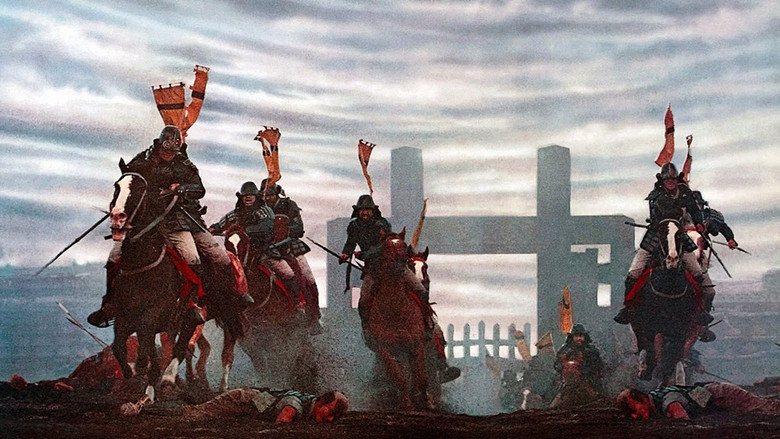

"Ran"'s narrative is a relentless march toward total annihilation, fulfilling the prophecy of its title, which translates to "chaos." The central twist is the inversion of the foundational myth of Mōri Motonari, on which the story is partly based. Where Motonari's three arrows symbolized unbreakable unity, Hidetora's sons shatter that ideal, turning on each other with brutal efficiency.
The plot is driven by a series of escalating betrayals. Taro, the eldest son, and his wife Lady Kaede are the first to dishonor Hidetora. This leads to Jiro seeing an opportunity; his general Kurogane assassinates Taro during the siege of the Third Castle, allowing Jiro to seize power. However, the true mastermind is revealed to be Lady Kaede. Her family was murdered by Hidetora, and her marriage to Taro was the first step in a long-planned revenge. After Taro's death, she seduces Jiro, convincing him to marry her and demanding the death of his gentle wife, Lady Sué, to solidify her power and complete her vengeance against Hidetora's bloodline.
The tragic climax subverts any hope for redemption. Saburo, the banished but loyal son, returns to rescue his now-mad father. They share a brief, poignant reconciliation in the plains. Just as Hidetora regains a moment of clarity and asks for forgiveness, Saburo is shot and killed by one of Jiro's snipers. The shock and grief of seeing his only good son die is too much for Hidetora, who dies moments later. The ending is mercilessly bleak. Jiro's forces are simultaneously attacked by rival lords, and his castle is overwhelmed. Lady Sué is decapitated on Kaede's orders. Discovering this, Kurogane, Jiro's general, kills Lady Kaede, ending her reign of terror. The Ichimonji clan is utterly destroyed, their legacy reduced to ashes. The final, devastating image is of the blind Tsurumaru, Lady Sué's brother, standing alone at the edge of a cliff, tapping his cane into the void. He drops a scroll depicting the Buddha his sister gave him, symbolizing that even faith cannot save humanity from itself. The hidden meaning is that the chaos Hidetora unleashed through his violent life did not end with his retirement but instead consumed everything he built, leaving a void where his kingdom once stood.