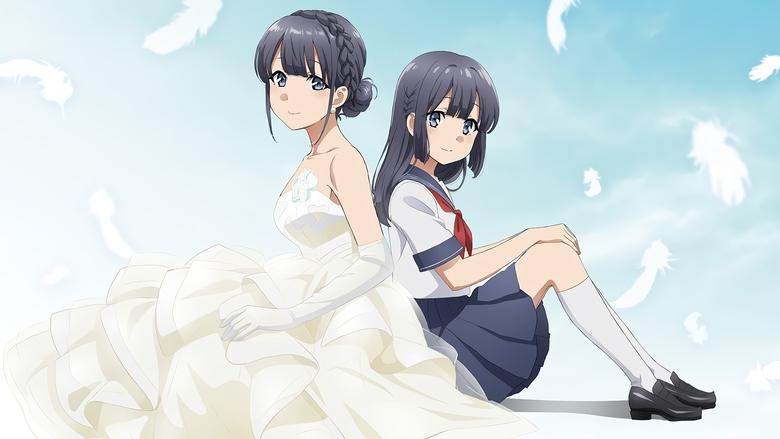
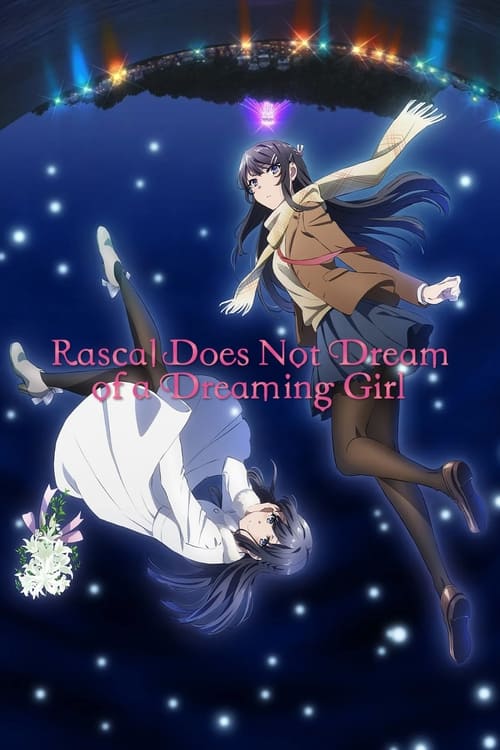
The central twist of the film is the revelation that adult Shoko exists because she received a heart transplant from Sakuta, who was fated to die in a traffic accident on Christmas Eve. Her “Adolescence Syndrome” is a manifestation of her younger self’s anxiety about her future, creating a simulation of a reality where she lives on. Adult Shoko traveled back from this future to try and save Sakuta, creating the central paradox.
The plot escalates into a series of tragic, cascading sacrifices. Determined to save Shoko, Sakuta resolves to let the accident happen. However, Mai, unable to accept a future without him, pushes him out of the way at the last second and is hit by the car herself. In this new timeline, Mai dies and becomes Shoko's heart donor. Devastated, Sakuta is given one last chance by a grief-stricken adult Shoko (who now has Mai's heart) to travel back in time again to prevent Mai's death.
In the final loop, Sakuta successfully prevents both his and Mai's deaths. This action, however, creates a timeline where young Shoko has no donor and is fated to die. Unwilling to accept this, Sakuta and Mai decide to find another way. The resolution comes from Shoko herself. Having experienced all possible futures and gained the memories of her adult self, young Shoko finds peace. She fills out her future-goals worksheet, resolving the anxiety that powered her syndrome. This act, combined with Sakuta and Mai's shared experiences from the erased timelines, creates a new, stable reality. In this final timeline, Mai, influenced by subconscious memories of the ordeal, stars in a movie that raises awareness for organ donation. This campaign succeeds, and Shoko receives a heart from an anonymous donor, allowing all three characters to live. The film ends with Sakuta and Mai meeting a young, healthy Shoko on the beach, recognizing each other through the faint, dream-like echoes of their shared past.