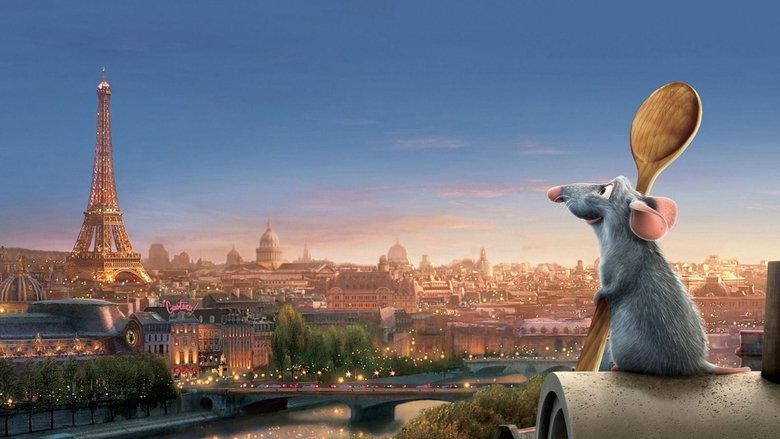
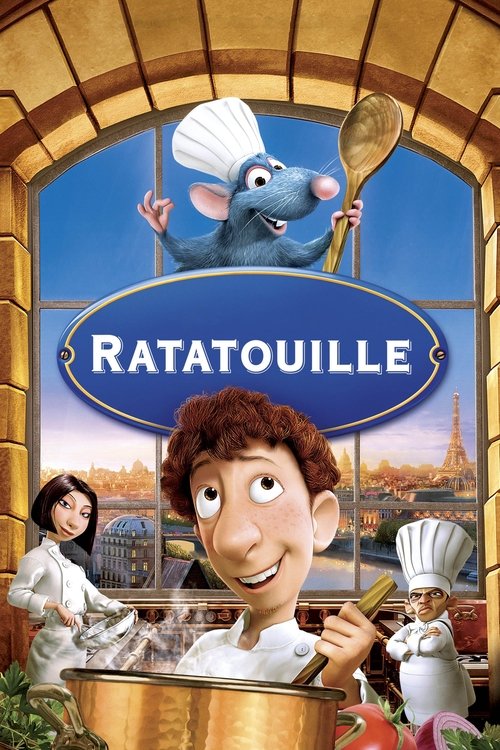
"He's dying to become a chef."
Ratatouille - Symbolism & Philosophy
Symbols & Motifs
The Ratatouille Dish
The humble peasant dish of ratatouille symbolizes the film's core message that greatness can come from simple and unexpected origins. It represents the idea that art and quality are not defined by exclusivity or pretension. For Anton Ego, it is a powerful symbol of nostalgia, innocence, and the profound emotional connection that food can create, reminding him of his mother's cooking.
The dish is served at the film's climax to the formidable food critic Anton Ego. Expecting a complex, high-end dish, he is instead presented with a simple, rustic meal. The taste transports him back to his childhood, breaking down his cynical exterior and leading to his transformative realization about the nature of art and criticism.
Gusteau's Restaurant
Gusteau's restaurant symbolizes the pinnacle of culinary achievement and the dream that Remy aspires to. It represents a world of creativity, passion, and excellence that is seemingly inaccessible to him. Its decline and eventual revival mirror the journey of the main characters and the struggle to maintain artistic integrity in the face of commercialism.
The restaurant is the primary setting for the film. Remy is drawn to it as a beacon of his culinary dreams. The kitchen becomes the stage for the collaboration between Remy and Linguini, and its fate is ultimately tied to their success.
The Chef's Toque (Hat)
The chef's toque is a traditional symbol of a chef's authority and expertise. In the film, it also becomes a symbol of the unique and secret collaboration between Remy and Linguini. It represents the hidden talent and the unconventional methods they employ to achieve their success.
Remy hides inside Linguini's toque to control his movements while cooking. This allows them to work together in secret, with Linguini as the public face and Remy as the hidden genius. The hat is central to their partnership and a key element of the film's visual comedy.
Philosophical Questions
Can greatness truly come from anywhere?
The film's central premise directly engages with this question. Remy, a rat, is the most talented chef in Paris. This challenges our preconceived notions about where talent can originate. The film argues that societal barriers and prejudices often prevent us from recognizing talent in unexpected places. Anton Ego's final review serves as the film's philosophical conclusion on this matter, asserting that while not everyone can be a great artist, the potential for greatness is not confined by one's background or origins.
What is the role of the critic in relation to art?
"Ratatouille" presents a complex view of criticism through the character of Anton Ego. Initially, he is portrayed as a destructive force, whose negative review contributes to Gusteau's death. However, his transformative experience with Remy's cooking leads to a profound reflection on the critic's responsibility. The film suggests that the critic's role is not simply to judge, but to champion the new and the innovative, even when it comes from an unexpected source. Ego's final monologue argues that the work of a critic is, in the grand scheme of things, less meaningful than the creation of art itself.
To what extent should we be defined by our origins?
Remy's internal conflict is between his identity as a rat and his aspirations as a chef. His father, Django, insists that he should remain true to his nature and his family. The film explores the tension between heritage and individual ambition. Ultimately, "Ratatouille" suggests that while our origins are a part of who we are, they do not have to define our destiny. Remy learns to embrace both aspects of his identity, creating a new path for himself that honors his talents without completely abandoning his family.
Core Meaning
The central message of "Ratatouille" is encapsulated in Chef Gusteau's motto: "Anyone can cook." Director Brad Bird expands this to mean that not everyone can become a great artist, but a great artist can come from anywhere. The film champions the idea that talent and passion should not be constrained by one's origins or societal expectations. It's a powerful statement against prejudice and a celebration of pursuing one's dreams with perseverance and courage, regardless of the obstacles. The film suggests that true artistry transcends social barriers and that greatness can be found in the most unexpected of places and forms.