Ratatouille
"He's dying to become a chef."
Overview
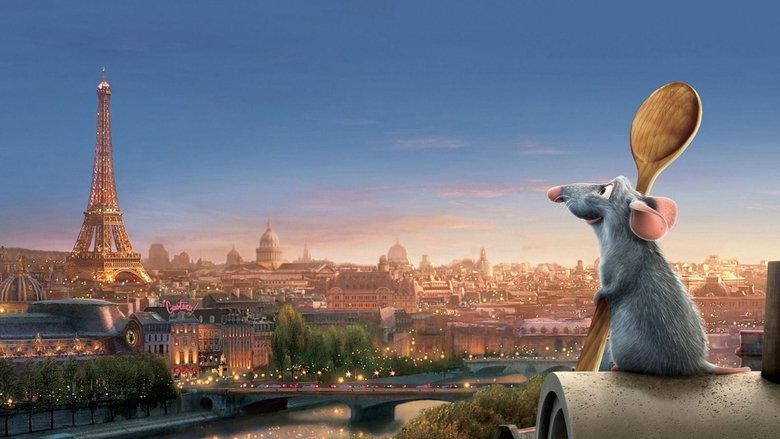
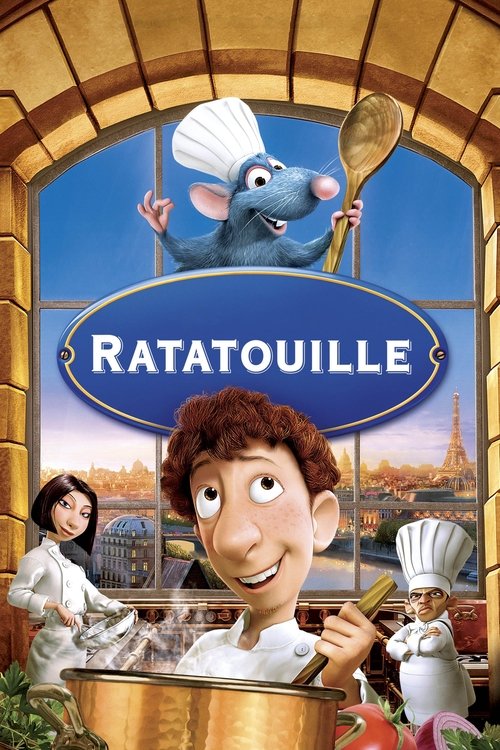
"Ratatouille" tells the story of Remy, a rat with an unusually refined sense of taste and smell who dreams of becoming a chef, inspired by his idol, the late Auguste Gusteau. Fate intervenes when Remy is separated from his family and finds himself in Paris, right at Gusteau's celebrated restaurant. Despite the obvious challenges of being a rat in a professional kitchen, Remy's passion for cooking refuses to be extinguished.
He forms an unlikely and clandestine partnership with Alfredo Linguini, a clumsy garbage boy at the restaurant who is on the verge of being fired. Remy, hiding under Linguini's toque, guides his movements, turning the hapless young man into a culinary sensation. As Linguini's star rises, so do the suspicions of the tyrannical head chef, Skinner. Together, Remy and Linguini navigate the high-pressure world of haute cuisine, confronting prejudice, forming friendships, and ultimately proving that a great artist can come from anywhere.
Core Meaning
The central message of "Ratatouille" is encapsulated in Chef Gusteau's motto: "Anyone can cook." Director Brad Bird expands this to mean that not everyone can become a great artist, but a great artist can come from anywhere. The film champions the idea that talent and passion should not be constrained by one's origins or societal expectations. It's a powerful statement against prejudice and a celebration of pursuing one's dreams with perseverance and courage, regardless of the obstacles. The film suggests that true artistry transcends social barriers and that greatness can be found in the most unexpected of places and forms.
Thematic DNA
Pursuit of Passion Against All Odds
Remy's journey is the embodiment of this theme. Despite being a rat, a creature reviled in a kitchen, his passion for culinary arts drives him to overcome immense obstacles. He risks his life and defies his family's expectations to follow his dream. This theme is universal, encouraging viewers to believe in their own potential and to pursue their passions relentlessly, no matter how unconventional or difficult the path may seem.
Prejudice and Acceptance
The film directly confronts prejudice through the human aversion to rats. Remy is constantly judged by his species rather than his abilities. His father, Django, also holds a prejudice against humans. The story explores how these preconceived notions are challenged and eventually broken down through Remy's talent and his collaboration with Linguini. Anton Ego's transformation from a cynical critic to an open-minded patron is a pivotal moment that underscores the theme of acceptance.
Art and Criticism
"Ratatouille" offers a nuanced exploration of the relationship between the artist and the critic. Anton Ego's character arc is central to this theme. Initially, he represents the harsh, cynical critic whose words can destroy careers. However, his profound experience tasting Remy's ratatouille leads to a thoughtful monologue about the true nature of criticism and the importance of championing new and unexpected art. The film suggests that while criticism can be destructive, it can also be a force for good when it recognizes and supports genuine talent.
Family and Identity
Remy struggles with his identity, torn between his rat family and his human aspirations. His father, Django, represents tradition and the safety of staying with one's own kind. Remy's journey is one of self-discovery, learning to embrace his unique identity as a rat who is also a chef. The film suggests that one can forge their own path while still honoring their roots, and that family can eventually come to understand and support individual passions, even if they are unconventional.
Character Analysis
Remy
Patton Oswalt
Motivation
Remy is driven by an innate passion for food and a desire to create. He is not content with the life of a typical rat, stealing garbage to survive. He wants to make things, to contribute something beautiful to the world, and to be recognized for his unique talents.
Character Arc
Remy begins as an outcast within his own rat colony, dreaming of a world he is forbidden from. His journey is one of self-actualization. He learns to harness his unique talents and, through his partnership with Linguini, finds a way to express his creativity. He grapples with his identity as both a rat and a chef, eventually learning to bridge these two worlds and gain the acceptance of both his family and the human culinary world.
Alfredo Linguini
Lou Romano
Motivation
Initially, Linguini's motivation is simply to keep his job as a garbage boy. As he begins to experience success through his partnership with Remy, his motivation shifts to maintaining this newfound respect and building a career. He is also motivated by his growing affection for Colette and his desire to do the right thing.
Character Arc
Linguini starts as a clumsy, insecure, and jobless young man with no direction. Through his collaboration with Remy, he gains confidence and a sense of purpose. He learns to stand up for himself and to value friendship and loyalty. His arc is about discovering his own worth, even if his primary talent is being a vessel for Remy's genius. He also discovers his lineage as Gusteau's son, giving him a newfound sense of belonging.
Anton Ego
Peter O'Toole
Motivation
Ego is motivated by a love for food, though it is initially expressed through a cynical and demanding perfectionism. He seeks out culinary excellence and is ruthless in his dismissal of anything he considers mediocre. His ultimate motivation is to experience something new and brilliant in the world of cuisine.
Character Arc
Anton Ego begins as a formidable and cynical food critic, whose harsh reviews can make or break a restaurant. His office is shaped like a coffin, and his typewriter resembles a skull, symbolizing the death he can bring to a culinary establishment. His transformation is one of the most significant in the film. After tasting Remy's ratatouille, he is humbled and reminded of the simple joy of food. He moves from being a detached, feared critic to a passionate supporter of new and unexpected talent, ultimately sacrificing his career and reputation to champion a great artist.
Colette Tatou
Janeane Garofalo
Motivation
Colette is motivated by a deep respect for cooking and for Chef Gusteau's philosophy. She is fiercely dedicated to her craft and to maintaining the high standards of the restaurant. She is also motivated by a desire to prove herself and succeed in a challenging profession.
Character Arc
Colette is introduced as a tough, no-nonsense, and highly skilled chef, the only woman in Gusteau's kitchen. She has had to fight for her position in a male-dominated field. Initially, she is resentful of Linguini's seemingly effortless success. However, she grows to respect his (or rather, Remy's) talent and develops a romantic relationship with him. She learns to trust in the seemingly impossible and becomes a key ally to Remy and Linguini.
Skinner
Ian Holm
Motivation
Skinner is motivated by greed and a lust for power. He wants to exploit Gusteau's legacy for profit by launching a line of frozen foods. He is also driven by a deep-seated insecurity and a desire for control, which is threatened by Linguini's unexpected success.
Character Arc
Skinner is the diminutive and tyrannical head chef of Gusteau's. His arc is one of decline. After Gusteau's death, he seeks to commercialize the restaurant's name for his own financial gain, betraying Gusteau's culinary spirit. His paranoia and greed lead him to uncover Remy and Linguini's secret, but his attempts to expose them ultimately lead to his own downfall.
Symbols & Motifs
The Ratatouille Dish
The humble peasant dish of ratatouille symbolizes the film's core message that greatness can come from simple and unexpected origins. It represents the idea that art and quality are not defined by exclusivity or pretension. For Anton Ego, it is a powerful symbol of nostalgia, innocence, and the profound emotional connection that food can create, reminding him of his mother's cooking.
The dish is served at the film's climax to the formidable food critic Anton Ego. Expecting a complex, high-end dish, he is instead presented with a simple, rustic meal. The taste transports him back to his childhood, breaking down his cynical exterior and leading to his transformative realization about the nature of art and criticism.
Gusteau's Restaurant
Gusteau's restaurant symbolizes the pinnacle of culinary achievement and the dream that Remy aspires to. It represents a world of creativity, passion, and excellence that is seemingly inaccessible to him. Its decline and eventual revival mirror the journey of the main characters and the struggle to maintain artistic integrity in the face of commercialism.
The restaurant is the primary setting for the film. Remy is drawn to it as a beacon of his culinary dreams. The kitchen becomes the stage for the collaboration between Remy and Linguini, and its fate is ultimately tied to their success.
The Chef's Toque (Hat)
The chef's toque is a traditional symbol of a chef's authority and expertise. In the film, it also becomes a symbol of the unique and secret collaboration between Remy and Linguini. It represents the hidden talent and the unconventional methods they employ to achieve their success.
Remy hides inside Linguini's toque to control his movements while cooking. This allows them to work together in secret, with Linguini as the public face and Remy as the hidden genius. The hat is central to their partnership and a key element of the film's visual comedy.
Memorable Quotes
Not everyone can become a great artist, but a great artist can come from anywhere.
— Anton Ego
Context:
Anton Ego writes this line in his review of Gusteau's after tasting Remy's ratatouille and learning the truth about the chef's identity. It is the closing thought of his powerful and heartfelt review, which ultimately leads to the closure of the restaurant but also solidifies Remy's status as a great chef.
Meaning:
This quote is the culmination of Anton Ego's transformation and the central message of the film. It's a profound statement about the nature of talent and creativity, suggesting that greatness is not limited by background, class, or species. It champions the idea that potential can be found in the most unexpected of places.
If you are what you eat, then I only want to eat the good stuff.
— Remy
Context:
Remy says this early in the film, explaining to his brother Emile why he is so particular about the food he eats. This line establishes his character and his unique perspective on the world, setting the stage for his culinary journey.
Meaning:
This quote succinctly captures Remy's philosophy and his fundamental difference from the other rats. It's not just about eating for survival; it's about appreciating quality, flavor, and the art of cuisine. It speaks to his aspirational nature and his desire for a life beyond scavenging for garbage.
The only thing predictable about life is its unpredictability.
— Remy (quoting Gusteau)
Context:
Remy recalls this piece of wisdom from Chef Gusteau at various points in the film, particularly when he is lost and alone in Paris. It helps him to see his predicament not as a disaster, but as an opportunity.
Meaning:
This quote embraces the chaotic and often surprising nature of life. It suggests that one should be open to unexpected events and opportunities, as they can lead to wonderful outcomes. It serves as a source of encouragement for Remy when he finds himself in difficult situations.
Anyone can cook, but only the fearless can be great.
— Auguste Gusteau
Context:
This is a key part of Gusteau's philosophy, which he shares in his cookbook and which Remy takes to heart. It inspires Remy to be bold and innovative in his cooking, pushing boundaries and defying expectations.
Meaning:
This is an extension of Gusteau's famous motto. It clarifies that while the act of cooking is accessible to anyone, achieving greatness requires courage, creativity, and a willingness to take risks. It speaks to the idea that true artistry requires more than just technical skill; it requires heart and a fearless spirit.
Philosophical Questions
Can greatness truly come from anywhere?
The film's central premise directly engages with this question. Remy, a rat, is the most talented chef in Paris. This challenges our preconceived notions about where talent can originate. The film argues that societal barriers and prejudices often prevent us from recognizing talent in unexpected places. Anton Ego's final review serves as the film's philosophical conclusion on this matter, asserting that while not everyone can be a great artist, the potential for greatness is not confined by one's background or origins.
What is the role of the critic in relation to art?
"Ratatouille" presents a complex view of criticism through the character of Anton Ego. Initially, he is portrayed as a destructive force, whose negative review contributes to Gusteau's death. However, his transformative experience with Remy's cooking leads to a profound reflection on the critic's responsibility. The film suggests that the critic's role is not simply to judge, but to champion the new and the innovative, even when it comes from an unexpected source. Ego's final monologue argues that the work of a critic is, in the grand scheme of things, less meaningful than the creation of art itself.
To what extent should we be defined by our origins?
Remy's internal conflict is between his identity as a rat and his aspirations as a chef. His father, Django, insists that he should remain true to his nature and his family. The film explores the tension between heritage and individual ambition. Ultimately, "Ratatouille" suggests that while our origins are a part of who we are, they do not have to define our destiny. Remy learns to embrace both aspects of his identity, creating a new path for himself that honors his talents without completely abandoning his family.
Alternative Interpretations
One alternative interpretation of "Ratatouille" views the relationship between Remy and Linguini as a metaphor for the conscious and unconscious mind. In this reading, Remy represents the raw, instinctual creative talent (the unconscious), while Linguini is the conscious self that presents this talent to the world. Their collaboration symbolizes the process of an artist learning to trust their creative instincts and translate them into tangible work.
Another interpretation sees the film as a commentary on social class and mobility. Remy, a member of the lowest social strata (a rat), possesses a talent that is typically associated with the elite world of haute cuisine. His struggle to be accepted can be seen as an allegory for individuals from underprivileged backgrounds trying to break into exclusive fields. The film's resolution, where a new, more inclusive restaurant is opened, suggests a a more meritocratic ideal where talent is valued over pedigree.
Cultural Impact
"Ratatouille" was released in 2007 to widespread critical acclaim and was a commercial success, grossing over $623 million worldwide. It won the Academy Award for Best Animated Feature. The film was praised for its sophisticated storytelling, stunning animation, and mature themes, which appealed to both children and adults. It is considered one of Pixar's finest films and a modern classic of animation.
The film had a significant impact on the culinary world, inspiring a new appreciation for the art of cooking and the dish of ratatouille itself. The film's depiction of a professional kitchen was lauded for its accuracy and attention to detail, which was the result of extensive research by the filmmakers. "Ratatouille" also sparked discussions about the nature of art, creativity, and criticism, with Anton Ego's final monologue being particularly praised for its insight and eloquence. The film's central message, that "a great artist can come from anywhere," has resonated with audiences worldwide, making it an enduring and inspirational story about overcoming prejudice and pursuing one's passion.
Audience Reception
Audience reception for "Ratatouille" has been overwhelmingly positive. Viewers consistently praise the film for its beautiful animation, particularly the detailed and appetizing depiction of food and the romantic atmosphere of Paris. The story is often described as heartwarming and inspiring, with many viewers connecting to the themes of following one's dreams and overcoming obstacles. The characters are beloved, with Remy being a particularly relatable and endearing protagonist. The film's humor is also frequently highlighted as a strong point, appealing to both children and adults.
Points of criticism are rare, but some viewers have pointed out the predictability of certain plot points, as the film follows a classic underdog formula. However, most agree that the execution is so charming and well-crafted that this does not detract from the overall enjoyment. The film is widely regarded as one of Pixar's best, and it remains a favorite among audiences of all ages.
Interesting Facts
- To research for the film, director Brad Bird and producer Brad Lewis spent time in Paris and dined at several top restaurants. Lewis also interned at Thomas Keller's acclaimed restaurant, The French Laundry.
- The ratatouille dish that Remy prepares in the film is a real recipe called Confit byaldi, which was adapted for the film by Chef Thomas Keller.
- The animators kept pet rats in the studio for over a year to study their movements and behavior to make the animation more realistic.
- The character of Skinner was named after the psychologist B.F. Skinner, who was known for his experiments with rats.
- To make the food in the film look appetizing, the animation team prepared over 270 real dishes, photographed them, and then animated them.
- Patton Oswalt was cast as the voice of Remy after Brad Bird heard his stand-up comedy routine about food.
- The character of Anton Ego's office is shaped like a coffin, and his typewriter resembles a skull, symbolizing his power to 'kill' a restaurant with a bad review.
Easter Eggs
The Pizza Planet truck from "Toy Story" can be seen on a bridge over the Seine during the chase scene between Skinner and Remy.
The Pizza Planet truck is a recurring Easter egg that appears in almost every Pixar film, creating a fun, interconnected universe for dedicated fans to discover.
Bomb Voyage, a villain from "The Incredibles" (also directed by Brad Bird), makes a cameo appearance as a mime on a bridge as Linguini and Colette are roller-skating. He also appears on the front page of a newspaper that Colette is reading.
This is a direct nod to director Brad Bird's previous Pixar film, "The Incredibles," and is a fun inside joke for fans of his work.
When Linguini is trying to hide Remy in his pants, his underwear has the logo for "The Incredibles" on them.
Another playful reference to Brad Bird's prior film, this Easter egg is a quick, humorous detail that rewards attentive viewers.
The number A113, a reference to the classroom at the California Institute of the Arts where many Pixar animators studied, appears on a tag on the ear of a large rat named Git.
A113 is another one of Pixar's signature Easter eggs, appearing in every one of their feature films as a tribute to the animators' shared origins.
Doug, the dog from the movie "Up," makes an early appearance as a shadow on a wall when Remy is running through the buildings of Paris.
This is a fun instance of Pixar teasing a character from a future film. "Up" was released two years after "Ratatouille."
⚠️ Spoiler Analysis
Click to reveal detailed analysis with spoilers
Frequently Asked Questions
Explore More About This Movie
Dive deeper into specific aspects of the movie with our detailed analysis pages
Comments (0)
No comments yet. Be the first to share your thoughts!