Remember the Titans
An uplifting sports drama that transforms the gridiron into a battlefield for the soul, where the sweat and blood of divided young men forge an unbreakable brotherhood against the backdrop of a fractured nation.
Remember the Titans
Remember the Titans

"History is written by the winners."

29 September 2000 United States of America 113 min ⭐ 7.6 (2,869)
Director: Boaz Yakin
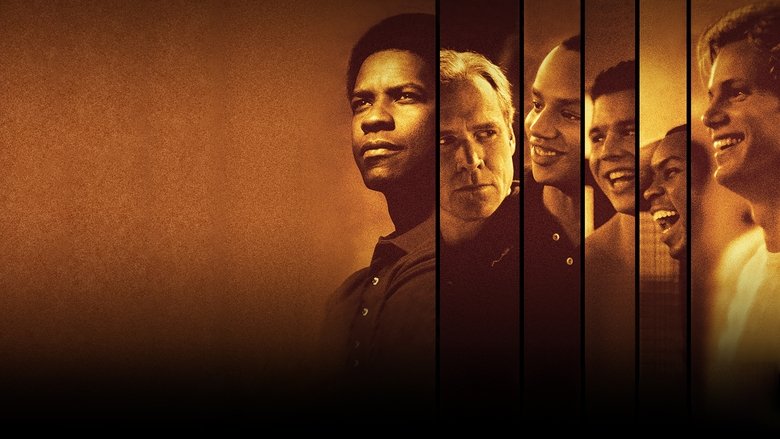
Cast: Denzel Washington, Will Patton, Wood Harris, Ryan Hurst, Donald Faison
Drama
Racial Integration and Unity Transformational Leadership Brotherhood and Empathy Sacrifice and Personal Growth
Budget: $30,000,000
Box Office: $136,700,000

Remember the Titans - Ending Explained

⚠️ Spoiler Analysis

The film builds toward a highly dramatic climax where the Titans win the state championship on a risky trick play, but the true emotional climax occurs completely off the field. Before the final championship game, team captain Gerry Bertier is broadsided in a devastating car crash, leaving him permanently paralyzed from the waist down.

In a heart-wrenching hospital scene, Gerry insists on seeing Julius, telling a racist nurse who tries to block him that Julius is his brother. This tragedy cements the film's message that their bond transcends both football and race. Furthermore, the film uses a framing device: it opens and closes in 1981 at Gerry's funeral, following his death in a second car crash caused by a drunk driver. Seeing the older Titans, both Black and white, reunited to mourn him while singing 'Na Na Hey Hey Kiss Him Goodbye' reveals the hidden meaning of the story—the brotherhood they forged in 1971 was not a temporary convenience for a winning season, but an unbreakable, lifelong bond.

Alternative Interpretations

A Cinematic Fairy Tale Over Historical Record: Because the actual desegregation of Alexandria occurred years prior and the racial tension in 1971 was heavily exaggerated for the screen, many cultural analysts interpret the film not as a biopic, but as an American myth. From this view, the film is designed to soothe white guilt by offering a neat, sanitized resolution to civil rights struggles, suggesting that systemic racism can be solved by personal friendships and athletic success.

Subversion of the White Savior Trope: Conversely, some film scholars view the movie as a clever subversion of standard Hollywood sports tropes. Instead of a white coach coming in to save minority students, the film forces the white establishment (embodied by Bill Yoast) to take a backseat. The film centers Black leadership, demanding that the white characters submit to Herman Boone's authority and learn from his discipline, placing the burden of moral awakening primarily on the white characters.