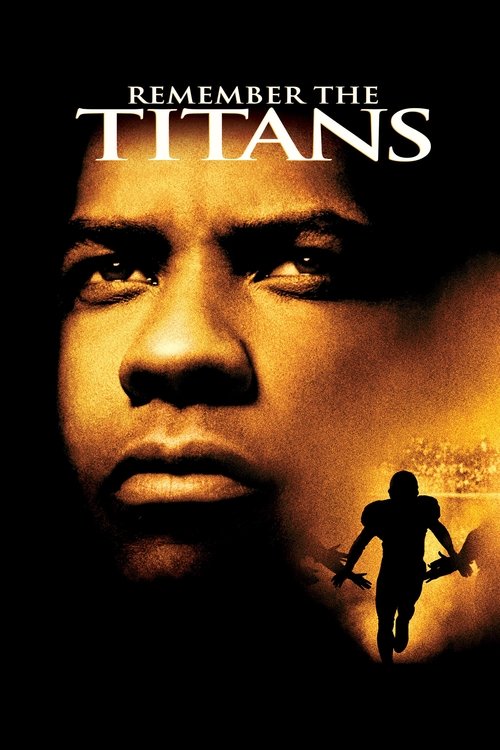
Remember the Titans
"History is written by the winners."
Overview
Set in Alexandria, Virginia, in 1971, Remember the Titans follows the forced integration of T.C. Williams High School, a decision that merges its Black and white students. The intense racial tension in the community immediately bleeds onto the town's beloved football team, the Titans. The friction reaches a boiling point when Herman Boone, a no-nonsense African-American coach, is appointed as the new head coach, effectively demoting the highly successful and locally revered white coach, Bill Yoast.
To build a functioning team, Boone takes the young men to an agonizingly tough training camp at Gettysburg College. Through relentless discipline, exhausting drills, and uncompromising truths, Boone forces the players to confront their deep-seated bigotry. Gradually, spearheaded by the evolving friendship between white captain Gerry Bertier and Black standout Julius Campbell, the boys begin to see each other not as racial enemies, but as teammates. They forge an unlikely brotherhood that transcends the hatred they were taught.
Upon returning home, the Titans find their town is still violently divided. The team must fight to protect their newfound unity from prejudiced parents, biased school board officials, and systemic racism. As they embark on an undefeated season, the Titans become a shining symbol of hope and a catalyst for change, proving that harmony is possible on the field even when the world outside remains fiercely resistant.
Core Meaning
Director Boaz Yakin uses the microcosm of high school football to assert that racial harmony and deep understanding can be forged through shared struggles, forced proximity, and common goals. The film's core message is that while systemic racism and learned prejudices deeply divide society, uncompromising leadership and mutual respect can dismantle those walls. The football field serves as an equalizer—a sanctuary where character, effort, and ability outweigh skin color. Ultimately, the film suggests that true victory is not found on the scoreboard, but in the empathy and brotherhood built between individuals who refuse to let societal hatred dictate their hearts.
Thematic DNA
Racial Integration and Unity
The film's primary focus is the painful but rewarding process of integration. It showcases how the Black and white players evolve from bitter, violent enemies into a unified family. Through shared suffering at camp and the mutual goal of winning, the film demonstrates how proximity and common purpose can overcome generations of learned prejudice.
Transformational Leadership
This theme is embodied by the contrasting but complementary styles of the two coaches. Coach Boone's dictatorial, demanding approach forces the boys out of their comfort zones, while Coach Yoast's compassionate, empathetic guidance keeps them grounded. Together, their leadership models how authority figures can actively dismantle toxic environments.
Brotherhood and Empathy
The deeply personal relationship between Gerry Bertier and Julius Campbell acts as the emotional anchor of the film. Their journey from mutual disdain to considering each other brothers symbolizes the bridging of racial divides through vulnerable conversations, empathy, and mutual defense against a prejudiced society.
Sacrifice and Personal Growth
Several characters must sacrifice their pride, community standing, or personal ambitions for the greater good. Most notably, Coach Yoast sacrifices his prestigious Hall of Fame induction by calling out biased refereeing, choosing his integrity and the well-being of the integrated team over his own career.
Character Analysis
Herman Boone
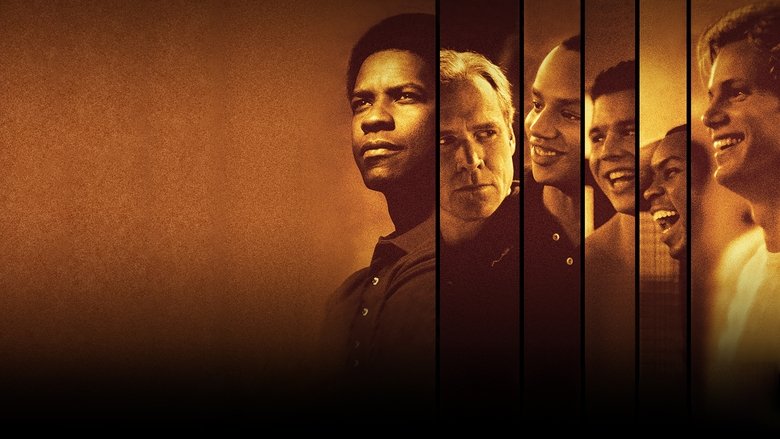
Denzel Washington
Motivation
To build a perfect, winning football team while ensuring his players learn to respect one another and survive in a prejudiced world.
Character Arc
Boone arrives as a fiercely unyielding and demanding coach who believes dictatorial authority is the only way to force integration. Over the season, while he maintains his high standards, he learns to soften his edges, accept help from Coach Yoast, and recognize the emotional needs of his players.
Bill Yoast
Will Patton
Motivation
To protect his boys, maintain his moral integrity, and foster a healthy environment for the young athletes.
Character Arc
Initially feeling humiliated by his demotion, Yoast stays to protect his white players. As he witnesses Boone's effective methods and the team's genuine integration, he transitions from a reluctant subordinate to a fiercely loyal ally, ultimately sacrificing his own career honors for the team's success.
Gerry Bertier
Ryan Hurst
Motivation
To be a strong, effective leader and protect the integrity of his team.
Character Arc
Gerry begins as a racially prejudiced team captain who clashes heavily with his Black teammates. Through forced interaction and painful truths, he undergoes a profound transformation, becoming best friends with Julius and actively rebuking the racism of his girlfriend and peers.
Julius Campbell
Wood Harris
Motivation
To demand respect, prove his undeniable talent, and protect his own dignity.
Character Arc
Julius starts out deeply cynical, looking out only for himself because he believes white people will never give him a fair chance. Challenged by Gerry, he learns to trust his teammates, eventually dropping his guard to become a selfless team player and devoted brother to Gerry.
Symbols & Motifs
The Gettysburg Battlefield
It symbolizes the deadly, tragic cost of racial division and the repeating cycles of hatred in American history.
Coach Boone takes the team on an exhausting 3 a.m. run to the cemetery. He uses the setting to deliver a haunting speech, warning the boys that if they don't unite on that hallowed ground, they will destroy themselves just as the soldiers did during the Civil War.
The Left Side / Strong Side Chant
It represents the team's absolute unity, interdependence, and the strength they derive from supporting one another regardless of race.
Originating as a breakthrough moment of bonding between captains Gerry and Julius during camp, it becomes the team's rallying cry on the field to hype themselves up and intimidate opponents.
The Football Field
It functions as a neutral ground and a microcosm of what an integrated, merit-based society should look like.
Boone explicitly declares the field their universe, stating that while the outside world may be chaotic and racist, on the field, absolute fairness and perfection are the only rules that apply.
Memorable Quotes
Attitude reflects leadership, captain.
— Julius Campbell
Context:
Julius says this to Gerry during a heated argument at training camp, calling out Gerry's failure to lead the white players to block for the Black players.
Meaning:
A poignant reminder that a leader's mindset and biases directly trickle down to impact the behavior and success of their entire team.
If we don't come together right now on this hallowed ground, we too will be destroyed, just like they were.
— Coach Herman Boone
Context:
Spoken to the exhausted team at the Gettysburg cemetery at dawn, using the graves of fallen soldiers as a grim lesson in unity.
Meaning:
A powerful historical parallel emphasizing the self-destructive nature of racial hatred and in-fighting.
I don't care if you like each other or not, but you will respect each other.
— Coach Herman Boone
Context:
Delivered during training camp as Boone sets his absolute, non-negotiable rules for the newly integrated team.
Meaning:
Highlights the foundational baseline requirement for integration—respect and basic human decency must precede affection.
Left side! Strong side!
— Gerry Bertier and Julius Campbell
Context:
Chanted enthusiastically on the field as a psych-up routine, demonstrating to both their teammates and the opposing team that they stand as one.
Meaning:
A vocal affirmation of their unity, reliance on each other, and unshakeable brotherhood.
Philosophical Questions
Can shared goals and forced proximity truly eradicate deeply ingrained prejudices?
The film aggressively explores whether the team's unity is a genuine moral awakening to racial harmony, or merely a pragmatic byproduct of their mutual desire to win a football championship. It asks if proximity and shared suffering are the ultimate antidotes to bigotry.
Does attitude reflect leadership, or does leadership reflect the attitude of the collective?
Sparked by Julius's famous quote, the film philosophically questions the reciprocal nature of authority. It examines whether a toxic team culture is the fault of the players' individual prejudices or the failure of the leaders (Gerry and the coaches) to set a righteous standard.
Alternative Interpretations
A Cinematic Fairy Tale Over Historical Record: Because the actual desegregation of Alexandria occurred years prior and the racial tension in 1971 was heavily exaggerated for the screen, many cultural analysts interpret the film not as a biopic, but as an American myth. From this view, the film is designed to soothe white guilt by offering a neat, sanitized resolution to civil rights struggles, suggesting that systemic racism can be solved by personal friendships and athletic success.
Subversion of the White Savior Trope: Conversely, some film scholars view the movie as a clever subversion of standard Hollywood sports tropes. Instead of a white coach coming in to save minority students, the film forces the white establishment (embodied by Bill Yoast) to take a backseat. The film centers Black leadership, demanding that the white characters submit to Herman Boone's authority and learn from his discipline, placing the burden of moral awakening primarily on the white characters.
Cultural Impact
Released in 2000, Remember the Titans was a massive commercial success, grossing over $136 million. It tapped into a pre-9/11 cultural desire for feel-good, unifying narratives about racial reconciliation in America. The movie popularized the sports-as-a-microcosm-for-society trope and cemented Denzel Washington's status as a formidable leading man capable of carrying deeply emotional, inspirational dramas.
Over the decades, it has become a cultural staple, heavily utilized in classrooms, corporate retreats, and sports locker rooms to teach lessons on leadership, teamwork, and overcoming prejudice. However, its cultural legacy is also heavily debated. While audiences adore its uplifting message, critics and historians often point out its reliance on the 'feel-good integration' trope. It has sparked critical discussions about how Hollywood sanitizes history, pointing out that the film oversimplifies the harsh, systemic realities of racism by depicting bigotry as a cartoonish villain that can be defeated simply by winning football games and singing Motown songs.
Audience Reception
Audiences overwhelmingly praised Remember the Titans, granting it a phenomenal audience score (around 93% on aggregator sites). Viewers adored its emotional resonance, the highly infectious Motown soundtrack, and the powerhouse performances by Denzel Washington, Will Patton, and the young ensemble cast. The chemistry between Gerry and Julius is frequently cited as the emotional highlight of the film.
However, the film faced criticism from historians and some film critics who found the narrative overly formulaic, melodramatic, and historically inaccurate. Critics argued it leaned too heavily into sports clichés and overly sanitized the realities of 1970s racism to create a safe, Disney-friendly product. Despite these critiques of its schmaltzy nature, the overall verdict remains incredibly positive, with the film enduring as one of the most beloved and re-watchable sports movies of all time.
Interesting Facts
- The real T.C. Williams High School was actually integrated several years earlier in 1965; the 1971 events were a consolidation of three already-integrated schools.
- The 1971 Titans were never massive underdogs as depicted; they were a powerhouse team that dominated their season with nine shutouts.
- Gerry Bertier's tragic car accident actually happened after the season-ending State Championship game, not before it, as he was driving home from a banquet honoring their undefeated season.
- In real life, a racist vandal threw a toilet through Coach Boone's window. The filmmakers changed it to a brick because they feared audiences would laugh at a toilet during a serious scene.
- Wood Harris, who played high schooler Julius Campbell, was 30 years old during filming, making him 11 years older than some of his co-stars like 19-year-old Ryan Gosling.
- Denzel Washington insisted on calling the young actors by their character names on set to build genuine realism and team chemistry.
- The dramatic 3 a.m. run to Gettysburg never happened in real life; the team simply went on an organized, guided daytime tour of the battlefield.
Easter Eggs
The team bus has the number '71' on it.
A subtle nod to 1971, the year the historical events took place and the season the Titans won the state championship.
The 'French Bread' drill response.
During a brutal drill, Coach Boone yells, 'What is pain?' and the team screams back, 'French bread!' This is a clever linguistic easter egg and pun, as the French word for bread is literally 'pain'.
Gerry Bertier's raised fist in the hospital.
Early in the film, Gerry aggressively tells Julius to take down a poster symbolizing Black Power. Later, after his paralyzing accident, Gerry raises his hand in the exact same Black Power salute to the nurse who tries to send Julius away, visually symbolizing his absolute solidarity and profound character growth.
⚠️ Spoiler Analysis
Click to reveal detailed analysis with spoilers
Frequently Asked Questions
Explore More About This Movie
Dive deeper into specific aspects of the movie with our detailed analysis pages
Comments (0)
No comments yet. Be the first to share your thoughts!