"Every dog has his day."
Reservoir Dogs - Symbolism & Philosophy
Symbols & Motifs
The Black Suits
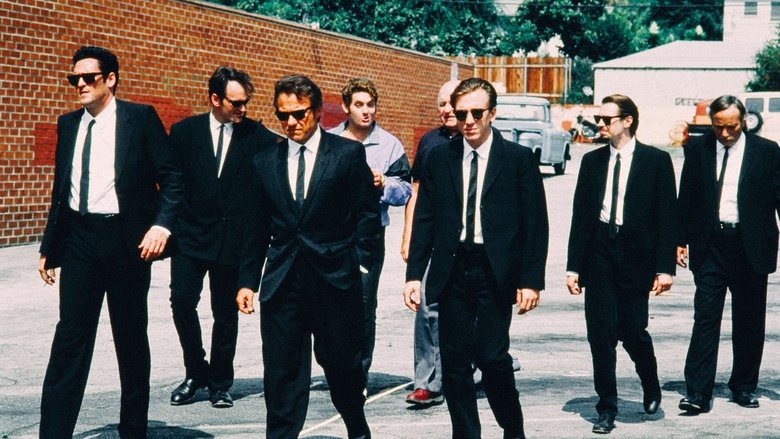
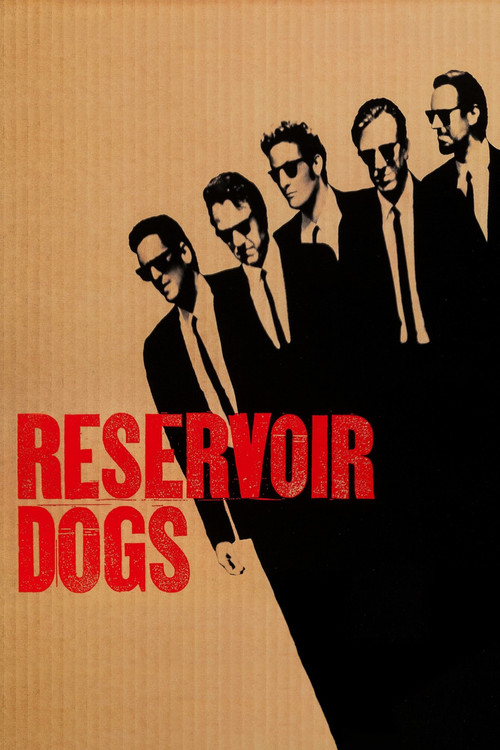
The matching black suits serve as a uniform, intended to project an image of cool, anonymous professionalism. They visually unite the disparate group of strangers, giving them a collective identity for the heist. However, as the plan unravels, the pristine suits become stained with blood, symbolizing the messy, chaotic failure of their professional endeavor and the loss of that detached coolness.
The suits are worn by all the main criminals throughout the film, from the opening diner scene to the bloody climax in the warehouse. The stark visual of the black suits against the splashes of red blood is one of the film's most iconic images.
The Warehouse
The warehouse is a claustrophobic, purgatorial space. It's a neutral ground that becomes a pressure cooker and a confessional. Once the doors close, it's an inescapable stage where the characters' true natures are revealed under extreme stress. It was filmed in an abandoned funeral home, which adds a layer of symbolism, as the space becomes a tomb for most of the characters.
The majority of the film's runtime is set within the confines of the warehouse, where the surviving criminals meet after the failed heist. It's the setting for the torture scene, the central arguments, and the final standoff.
Color Codenames
The codenames (Mr. Pink, Mr. White, etc.) are meant to strip the characters of their identities and personal connections, reinforcing the theme of professionalism and distrust. However, critics and audiences have often assigned symbolic meanings to the colors themselves. For example, Mr. White is seen as the moral, if flawed, "white knight" of the group, while Mr. Orange, the informant, is associated with the negative traits of insincerity and deception.
The names are assigned by Joe Cabot in a flashback scene. The characters' reactions to their names (notably Mr. Pink's complaint) offer early insights into their personalities. The names are used almost exclusively throughout their interactions.
Philosophical Questions
Can a meaningful code of honor exist in an inherently immoral world?
The film constantly tests the idea of "honor among thieves." Mr. White embodies this code, showing loyalty and compassion to a comrade, which he believes is the professional and right thing to do. However, this code is what ultimately leads to his death, as his loyalty is misplaced in an undercover officer. The film explores whether his honorable actions have any meaning when they are in service of a violent crime and are directed at his enemy. It questions if virtues like loyalty can be separated from the context in which they are practiced, suggesting that in the world of these characters, such codes are a fatal liability.
What is the nature of trust and how is it built?
Reservoir Dogs examines how trust is formed under pressure. Mr. White's trust in Mr. Orange is built rapidly through a shared traumatic experience—the bloody aftermath of the heist. It's an emotional, instinctual bond. Conversely, the entire criminal enterprise is built on a foundation of professional distrust, using aliases to prevent personal ties. The film contrasts this emotional trust with the proven, history-based trust Joe Cabot has for Mr. Blonde. In the end, both forms of trust are shown to be flawed and lead to deadly miscalculations, suggesting that in this high-stakes environment, trust is little more than a gamble.
Core Meaning
The core meaning of Reservoir Dogs revolves around the deconstruction of honor and loyalty among thieves. Tarantino explores the inherent contradictions within a criminal code of conduct. The film questions whether true loyalty can exist in a world built on betrayal and self-interest. It examines themes of professionalism versus panic, and the chaotic breakdown of trust when a meticulously planned crime implodes. Ultimately, the film suggests that in such a violent, hyper-masculine world, self-preservation inevitably trumps any notion of camaraderie, leading to a tragic and bloody conclusion for nearly everyone involved.