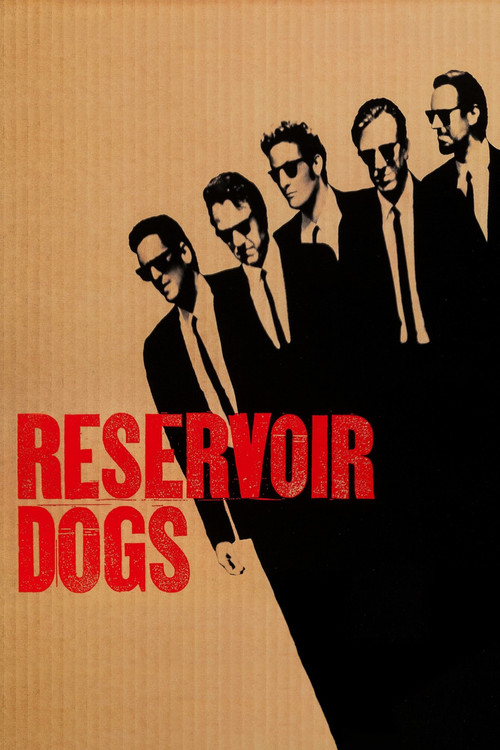
Reservoir Dogs
"Every dog has his day."
Overview
Quentin Tarantino's explosive directorial debut, Reservoir Dogs, follows the immediate aftermath of a diamond heist gone terribly wrong. A group of color-coded criminals, strangers to one another, rendezvous at a pre-arranged warehouse. As they piece together the bloody, chaotic events of the robbery, it becomes terrifyingly clear that one of them is an undercover cop.
With Mr. Orange bleeding out from a gunshot wound, tensions escalate between the volatile Mr. White, the pragmatic Mr. Pink, and the sadistic Mr. Blonde. Through a non-linear narrative featuring flashbacks, the film explores the planning of the heist and how the undercover officer infiltrated the gang. The majority of the film is a character-driven pressure cooker, focusing on paranoia, shifting allegiances, and violent confrontations as the surviving criminals desperately try to identify the traitor in their midst before the police close in.
Core Meaning
The core meaning of Reservoir Dogs revolves around the deconstruction of honor and loyalty among thieves. Tarantino explores the inherent contradictions within a criminal code of conduct. The film questions whether true loyalty can exist in a world built on betrayal and self-interest. It examines themes of professionalism versus panic, and the chaotic breakdown of trust when a meticulously planned crime implodes. Ultimately, the film suggests that in such a violent, hyper-masculine world, self-preservation inevitably trumps any notion of camaraderie, leading to a tragic and bloody conclusion for nearly everyone involved.
Thematic DNA
Loyalty vs. Betrayal
This is the central theme of the film, driving the entire plot. The paranoia of a police informant among the crew forces each character to question the allegiance of the others. Mr. White's fierce loyalty to the gut-shot Mr. Orange, whom he barely knows, is a powerful, albeit misguided, example of a personal code. This contrasts sharply with Mr. Pink’s cynical self-interest and the ultimate betrayal by Mr. Orange, the undercover cop. Mr. Blonde's unshakeable loyalty to his boss, Joe Cabot, is another key element, as it makes him above suspicion in Eddie's eyes. The film culminates in a bloody Mexican standoff born from these conflicting loyalties and suspicions.
Professionalism and its Breakdown
The criminals frequently discuss the importance of being a "professional." Mr. Pink, in particular, champions a logical, detached approach, focused solely on the job and survival. He is the one who keeps his cool and deduces they were set up. Mr. White, while also a veteran, allows his emotions and a sense of guilt to cloud his judgment, particularly in his protection of Mr. Orange. Mr. Blonde represents the complete antithesis of professionalism; his psychopathic enjoyment of violence directly leads to the heist's failure by escalating the situation unnecessarily. The film shows how, under extreme pressure, the veneer of professionalism cracks, revealing the flawed and chaotic human beings beneath.
Masculinity and Honor
Reservoir Dogs is set in a hyper-masculine world defined by violence, tough-guy posturing, and a specific criminal code of honor. The dialogue is filled with profanity and insults, and characters constantly challenge each other's manhood. The concept of "honor among thieves" is tested throughout; Mr. White believes in it, refusing to abandon a wounded man, while Mr. Pink sees it as a liability. Mr. Blonde's loyalty is presented as a form of honor, having served prison time without ratting on the Cabots. The film ultimately presents a bleak view of this code, suggesting it's a fragile construct that shatters in the face of paranoia and violence.
Trust and Deception
From the outset, the color-coded aliases are designed to prevent personal connections and maintain anonymity, a system built on inherent distrust. The central mystery—the identity of the rat—makes every interaction a potential deception. Mr. Orange's entire character is a performance; his backstory, his camaraderie with Mr. White, all a carefully constructed lie. His ability to sell a fabricated story is what gets him into the crew. The film masterfully plays with the audience's trust as well, withholding the identity of the informant until later in the story, forcing us to suspect everyone alongside the characters.
Character Analysis
Mr. White (Larry Dimmick)
Harvey Keitel
Motivation
His primary motivation shifts from professional duty to a deeply personal sense of responsibility and guilt for Mr. Orange. He is driven by a need to protect the younger man, believing it's the honorable thing to do, even if it means confronting his own bosses.
Character Arc
Mr. White begins as a seasoned, professional criminal who believes in a code of honor. He takes the inexperienced Mr. Orange under his wing, forming a mentor-like bond. His arc is a tragic downfall fueled by misplaced loyalty. His guilt over Mr. Orange's injury causes him to break his professional code, revealing his name and defending Orange to the death. His realization of Orange's betrayal in the final moments completely shatters his worldview just before he is killed.
Mr. Orange (Freddy Newandyke)
Tim Roth
Motivation
Initially, his motivation is to do his job: arrest Joe Cabot. After he is shot, his motivation becomes twofold: to survive his grievous wound and to maintain his cover until help arrives. His final motivation appears to be a need to confess the truth to the one man who trusted and protected him.
Character Arc
Mr. Orange is an undercover cop who successfully infiltrates the gang. His arc is defined by his performance and the moral toll of his deception. He's a good actor, convincingly selling his criminal persona. However, after being shot, his arc becomes a slow, painful journey toward death, during which he develops a genuine, albeit complicated, bond with Mr. White. His final confession to White is a moment of truth that stems from guilt and the strange connection they formed, leading to both of their deaths.
Mr. Blonde (Vic Vega)
Michael Madsen
Motivation
His primary motivation is sadistic pleasure. He enjoys violence and wielding power over others. He is loyal to the Cabots, but his actions are driven more by his own psychopathic impulses than any professional goal. He tortures the cop not for information, but because he finds it amusing.
Character Arc
Mr. Blonde has no real arc; he is a static character who serves as a catalyst for chaos. He is introduced as a loyal soldier to the Cabot family, having done prison time for them. However, his calm demeanor masks a sadistic and violent psychopath. His actions during the heist (needlessly killing civilians) and after (torturing a captured cop for amusement) demonstrate his complete lack of morality and professionalism. His arc is cut short when he is killed by Mr. Orange just before he can immolate the officer.
Mr. Pink
Steve Buscemi
Motivation
Pure self-preservation and greed. He is relentlessly focused on figuring out what went wrong so he can ensure his own safety and escape with his share of the loot. He argues against tipping because he doesn't believe in paying for something that isn't earned, a philosophy that extends to his entire criminal outlook.
Character Arc
Mr. Pink is a neurotic, high-strung, but ultimately rational criminal. His arc is that of the lone survivor, precisely because he refuses to let emotion or loyalty interfere with his logic. He is the first to insist they were set up and maintains a professional distance. While the others are consumed by their conflicts, he focuses on the diamonds and escape. His arc concludes with him fleeing the warehouse with the diamonds, though sounds of a crash and police suggest his escape may be short-lived.
Symbols & Motifs
The Black Suits
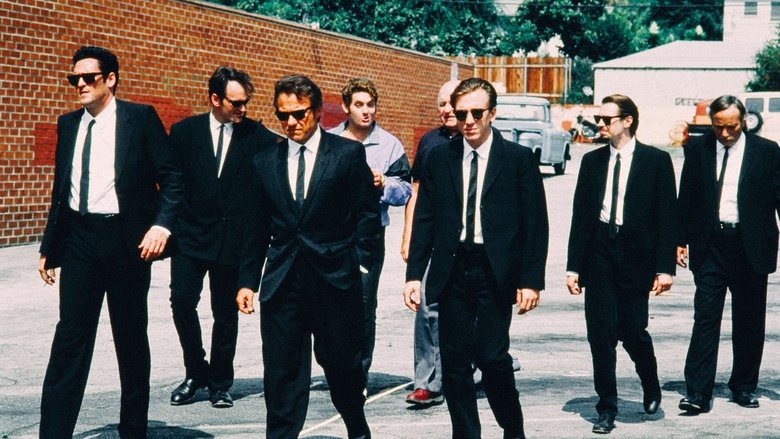
The matching black suits serve as a uniform, intended to project an image of cool, anonymous professionalism. They visually unite the disparate group of strangers, giving them a collective identity for the heist. However, as the plan unravels, the pristine suits become stained with blood, symbolizing the messy, chaotic failure of their professional endeavor and the loss of that detached coolness.
The suits are worn by all the main criminals throughout the film, from the opening diner scene to the bloody climax in the warehouse. The stark visual of the black suits against the splashes of red blood is one of the film's most iconic images.
The Warehouse
The warehouse is a claustrophobic, purgatorial space. It's a neutral ground that becomes a pressure cooker and a confessional. Once the doors close, it's an inescapable stage where the characters' true natures are revealed under extreme stress. It was filmed in an abandoned funeral home, which adds a layer of symbolism, as the space becomes a tomb for most of the characters.
The majority of the film's runtime is set within the confines of the warehouse, where the surviving criminals meet after the failed heist. It's the setting for the torture scene, the central arguments, and the final standoff.
Color Codenames
The codenames (Mr. Pink, Mr. White, etc.) are meant to strip the characters of their identities and personal connections, reinforcing the theme of professionalism and distrust. However, critics and audiences have often assigned symbolic meanings to the colors themselves. For example, Mr. White is seen as the moral, if flawed, "white knight" of the group, while Mr. Orange, the informant, is associated with the negative traits of insincerity and deception.
The names are assigned by Joe Cabot in a flashback scene. The characters' reactions to their names (notably Mr. Pink's complaint) offer early insights into their personalities. The names are used almost exclusively throughout their interactions.
Memorable Quotes
Are you gonna bark all day, little doggy, or are you gonna bite?
— Mr. Blonde
Context:
Said in the warehouse after Mr. White confronts Mr. Blonde about going "crazy" and shooting civilians during the heist. Instead of escalating the argument, Mr. Blonde delivers this line with an unnerving calm before casually sipping his drink.
Meaning:
This line perfectly encapsulates Mr. Blonde's cool, menacing, and psychopathic nature. He is completely unfazed by Mr. White's furious, threatening outburst. The quote is a chillingly calm challenge, highlighting his confidence and readiness for violence, establishing him as the most dangerous and unpredictable character in the room.
I don't tip because society says I have to.
— Mr. Pink
Context:
During the opening diner scene, the criminals are pooling money for a tip. Mr. Pink refuses to contribute, launching into a lengthy diatribe about the philosophy of tipping, much to the annoyance of the other characters.
Meaning:
This quote, from the film's opening scene, immediately establishes Mr. Pink's character. It shows he is a contrarian who operates on his own logical, if selfish, code. His refusal to conform to a simple social convention foreshadows his professional ethos throughout the film: he is pragmatic, self-interested, and won't do anything unless he sees a direct, deserved benefit.
You shoot me in a dream, you better wake up and apologize.
— Mr. White
Context:
In the opening diner scene, after Joe Cabot has given out the color names, Mr. White and Mr. Blonde have a brief, tense exchange. Mr. Blonde jokingly asks Joe if he should shoot Mr. White, to which Mr. White responds with this serious warning.
Meaning:
This line establishes Mr. White's tough, old-school criminal persona. It's a classic piece of tough-guy dialogue that conveys he is not to be trifled with and has a strong sense of personal respect and boundaries. It demonstrates his capacity for violence and his adherence to an unwritten code of conduct.
Listen kid, I'm not gonna bullshit you, all right? I don't give a good fuck what you know, or don't know, but I'm gonna torture you anyway, regardless. Not to get information. It's amusing, to me, to torture a cop.
— Mr. Blonde
Context:
Mr. Blonde says this to the captured police officer, Marvin Nash, after the other criminals have left the main warehouse area. He turns on the radio to 'Stuck in the Middle with You' before beginning his horrific torture.
Meaning:
This chilling monologue reveals the absolute depths of Mr. Blonde's sadism. It clarifies that his violence is not a means to an end (gaining information) but the end itself. The act of torture is purely for his own entertainment, which makes him far more terrifying than a typical criminal. It's a pure expression of his psychopathy.
Philosophical Questions
Can a meaningful code of honor exist in an inherently immoral world?
The film constantly tests the idea of "honor among thieves." Mr. White embodies this code, showing loyalty and compassion to a comrade, which he believes is the professional and right thing to do. However, this code is what ultimately leads to his death, as his loyalty is misplaced in an undercover officer. The film explores whether his honorable actions have any meaning when they are in service of a violent crime and are directed at his enemy. It questions if virtues like loyalty can be separated from the context in which they are practiced, suggesting that in the world of these characters, such codes are a fatal liability.
What is the nature of trust and how is it built?
Reservoir Dogs examines how trust is formed under pressure. Mr. White's trust in Mr. Orange is built rapidly through a shared traumatic experience—the bloody aftermath of the heist. It's an emotional, instinctual bond. Conversely, the entire criminal enterprise is built on a foundation of professional distrust, using aliases to prevent personal ties. The film contrasts this emotional trust with the proven, history-based trust Joe Cabot has for Mr. Blonde. In the end, both forms of trust are shown to be flawed and lead to deadly miscalculations, suggesting that in this high-stakes environment, trust is little more than a gamble.
Alternative Interpretations
One of the most debated aspects of the film is Mr. Orange's final confession. The primary interpretation is that after witnessing Mr. White's unwavering loyalty and compassion, a guilt-ridden and dying Orange feels compelled to tell him the truth. It's a moment of pure human connection in the midst of betrayal. However, an alternative interpretation suggests a more cynical motive: that Orange, knowing he is dying, confesses out of a final act of professional duty or even spite, wanting to destroy the man who protected him by revealing the futility of his actions. He ensures that White knows his entire moral stand was based on a lie.
Another area of interpretation is the film's ending and the fate of Mr. Pink. While he escapes the warehouse with the diamonds, the sounds of a car crash, yelling, and gunfire are heard outside. Most viewers interpret this to mean he was either killed or apprehended by the police just moments after his escape, reinforcing the film's nihilistic theme that no one truly gets away. A more optimistic (though less likely) reading is that the sounds are unrelated and that Mr. Pink, the ultimate professional, is the sole survivor and victor.
Cultural Impact
Reservoir Dogs premiered at the Sundance Film Festival in 1992 and, despite its low budget and controversial violence, became a landmark film that revolutionized American independent cinema. Its non-linear narrative, sharp and pop-culture-laden dialogue, and stylized violence broke from mainstream conventions and inspired a generation of filmmakers in the 1990s.
The film established Quentin Tarantino as a major new voice in cinema, with his distinctive style—pastiche of other film genres, memorable soundtracks, and focus on character interactions over plot mechanics—becoming instantly recognizable. The film's aesthetic, particularly the iconic image of the suit-clad criminals, has been widely parodied and referenced in pop culture. The infamous torture scene set to Stealers Wheel's "Stuck in the Middle with You" became instantly notorious and is one of the most discussed scenes of the decade, cementing the film's reputation for blending brutal violence with upbeat pop music. Despite a modest box office performance initially, it became a massive cult classic on home video, proving that an independent film could achieve widespread cultural relevance.
Audience Reception
Audience reception for Reservoir Dogs has been overwhelmingly positive since it gained cult status, though it was polarizing upon its initial release. Viewers consistently praise Quentin Tarantino's sharp, witty, and profane dialogue, with the opening diner scene being a frequently cited highlight. The performances of the ensemble cast, particularly Harvey Keitel, Steve Buscemi, and Michael Madsen, are widely lauded. The non-linear storytelling and the unique focus on the before and after of the heist, rather than the event itself, are seen as innovative and compelling.
The main point of criticism and controversy, both then and now, is the film's graphic violence. The ear-cutting torture scene is infamous, with reports of audience members walking out during early festival screenings. Some viewers find the violence gratuitous and overly stylized. Despite this, the film's gripping tension, dark humor, and cool aesthetic have made it a fan favorite and a landmark of independent film.
Interesting Facts
- The film was made on a very small budget, initially planned for $30,000 before Harvey Keitel signed on as an actor and co-producer, helping to raise it to over $1.2 million.
- Many actors wore their own clothes for the film due to the limited costume budget. Chris Penn's tracksuit and the iconic black suits were often provided by the actors themselves.
- Quentin Tarantino originally wrote the role of Mr. Pink for himself, but was so impressed by Steve Buscemi's audition that he gave him the part and took the smaller role of Mr. Brown instead.
- The infamous ear-cutting scene was difficult for actor Michael Madsen (Mr. Blonde) to film, as he was uncomfortable with the level of pretend violence.
- Tim Roth spent so much time lying in a pool of fake blood that the syrupy mixture congealed on the hot set, effectively gluing him to the floor between takes.
- The entire film was shot in just 35 days.
- The title's origin is debated. One popular story is that Tarantino, a former video store clerk, got the title from a customer who mispronounced Louis Malle's film "Au revoir les enfants" as "Reservoir Dogs".
- Veteran actor Lawrence Tierney, who played Joe Cabot, was notoriously difficult on set, getting into arguments and even a physical altercation with Tarantino.
- The character Mr. Blonde (Vic Vega) is the brother of Vincent Vega from Tarantino's later film, *Pulp Fiction*.
Easter Eggs
K-Billy's Super Sounds of the Seventies
The radio station that provides the film's soundtrack is a fictional creation of Tarantino's. The concept of using a diegetic radio show to score a film would become a hallmark of his style, used again in films like *Pulp Fiction* and *Once Upon a Time in Hollywood*. It firmly grounds the film in a specific pop culture aesthetic.
The Trunk Shot
The scene where Mr. White and Mr. Pink are shown the captured cop in the trunk of Mr. Blonde's car is filmed from the perspective of the trunk looking out. This low-angle shot would become a signature visual trademark in nearly all of Tarantino's subsequent films.
Pam Grier Mention
During a conversation, the character Pam Grier is mentioned by name. This serves as an early nod to the actress and the Blaxploitation genre that heavily influenced Tarantino. He would later cast Pam Grier in the titular lead role of his 1997 film, *Jackie Brown*.
⚠️ Spoiler Analysis
Click to reveal detailed analysis with spoilers
Frequently Asked Questions
Explore More About This Movie
Dive deeper into specific aspects of the movie with our detailed analysis pages
Comments (0)
No comments yet. Be the first to share your thoughts!