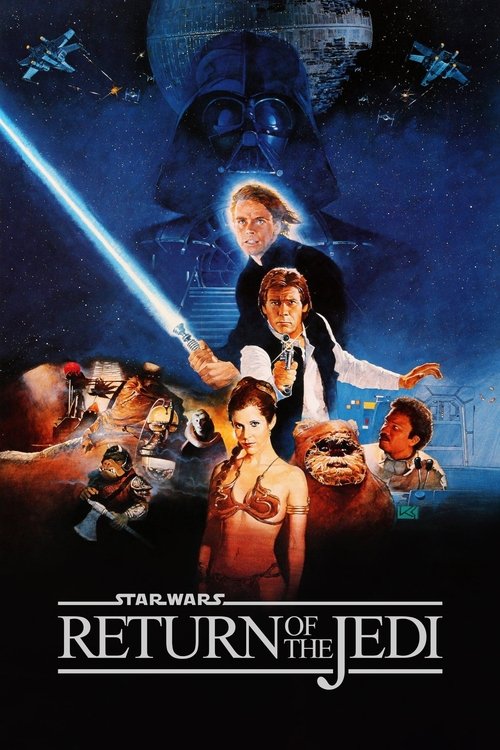
"Return to a galaxy far far away."
Return of the Jedi - Symbolism & Philosophy
Symbols & Motifs
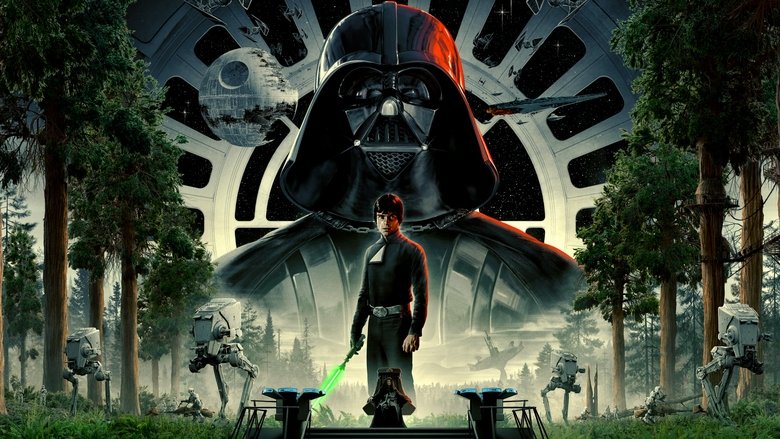
Darth Vader's Mask
The mask symbolizes Vader's entrapment in the dark side and his loss of humanity. It is the machine that keeps Anakin Skywalker buried.
Throughout the film, the mask represents the fearsome Sith Lord. In the final moments, Luke removes the mask at his father's request, allowing Anakin to see his son with his own eyes. This act symbolizes Vader's death and Anakin's return, revealing the vulnerable, redeemed man underneath.
Luke's Green Lightsaber
The lightsaber is first revealed in the confrontation at Jabba's sail barge. The color was changed from blue to green during production to stand out better against the blue sky of Tatooine, but it has since become an iconic symbol of Luke's Jedi identity.
The Second Death Star
The incomplete but operational second Death Star symbolizes the Empire's hubris and its cyclical, destructive nature. It is bigger and more powerful, but it represents the Empire's failure to learn from its past mistakes, believing technology alone can ensure its power.
The entire final act revolves around the Rebel Alliance's desperate attempt to destroy the station before it can annihilate their fleet. Its destruction signifies the definitive end of the Emperor's reign and the collapse of the Empire's power structure.
Luke's Black Attire
Luke's all-black outfit in the first half of the film symbolizes his proximity to the dark side. It visually connects him to his father, suggesting his internal conflict and the danger that he might follow the same path.
From his entrance into Jabba's palace to his confrontation with Vader on Endor, Luke wears black. In the final duel, he opens his tunic to reveal a white flap underneath, symbolizing his ultimate rejection of the dark side and his choice to remain in the light.
Philosophical Questions
Is anyone truly beyond redemption?
The film's central plot explores this question through Darth Vader. Despite his long history of horrific deeds, Luke believes his father can be saved. The film argues that redemption is always possible, predicated on a conscious choice to turn away from evil. Vader's final act is not about atoning for his past, but about making the right choice in the present to save someone he loves, suggesting that the capacity for good can survive even the deepest descent into darkness.
Does destiny control our choices, or do our choices create our destiny?
Luke is told he must confront Vader and that it is his destiny. The Emperor believes Luke's destiny is to take his father's place at his side. However, the climax hinges on Luke's choices. He chooses not to kill his father, rejecting the path of anger and the destiny the Emperor has foreseen. This act of free will, in turn, inspires his father to make his own choice to defy his master. The film suggests that while destiny may present the path, it is individual choice that determines the outcome.
What is the true nature of power?
"Return of the Jedi" contrasts two forms of power. The Emperor wields immense physical and political power through fear, anger, and technological terror (the Death Star). Luke, however, discovers a different kind of power in compassion, love, and self-control. By throwing away his weapon, he demonstrates that true strength lies not in the ability to destroy, but in the will to refuse to do so. His non-violent resistance is ultimately what defeats the Sith, proving that emotional and spiritual power can triumph over brute force.
Core Meaning
The core meaning of "Return of the Jedi" is centered on the enduring power of hope and the possibility of redemption. It posits that no one is beyond saving and that compassion and love are forces more powerful than hatred and anger. Luke Skywalker's unwavering belief in the good buried within his father, Anakin Skywalker, serves as the film's emotional and philosophical anchor. The film ultimately argues that tyranny is defeated not just through military victory, but through an individual's choice to reject darkness and embrace the light, even at great personal cost.