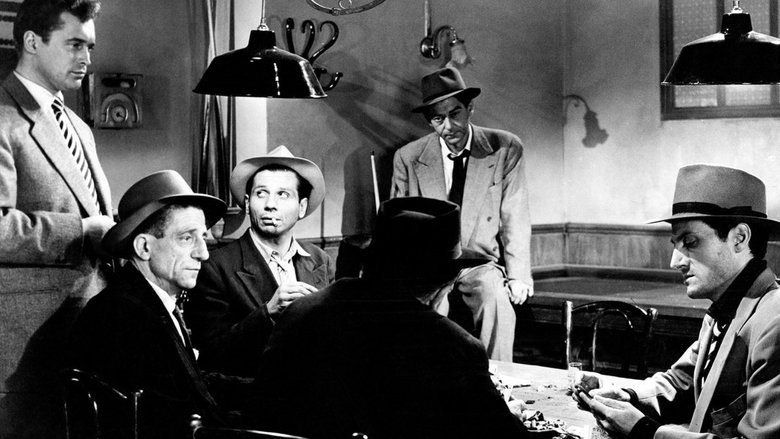

Du rififi chez les hommes
"...Means Trouble!"
Rififi - Symbolism & Philosophy
Symbols & Motifs
The Silence
Symbolizes pure professionalism and the suspension of the outside world. In silence, the thieves are at their most unified and effective; when they start talking again, their world begins to fracture.
Used throughout the legendary 30-minute heist where no dialogue or music is heard.
The "Can Opener"
Represents manual ingenuity and precision. It elevates the burglary from a crude act of theft to a specialized craft, highlighting the thieves as artisans of the underworld.
The custom tool used to cut through the jewelry store's safe.
The Stolen Ring
Symbolizes vanity and the 'Judas' element. It is the physical manifestation of the breach in the code that leads to the gang's destruction.
César steals a single ring for his mistress, Viviane, which tips off the rival Grutter gang.
The Toy Penguin
Represents innocence and Tony's latent paternal instinct. It serves as a reminder of what the men are ostensibly fighting for (the next generation) and what they have ultimately corrupted.
Tony buys this for Jo's young son, Tonio, and it appears in the tragic final sequence.
Philosophical Questions
Can there ever be a 'perfect' human endeavor?
The film uses the heist as a metaphor for human achievement. It suggests that even the most perfectly planned and executed act is ultimately subject to the chaos of human emotion.
What is the true cost of loyalty?
The film explores whether a code of honor that requires the killing of a friend is actually honorable or merely a different form of damnation.
Is redemption possible through sacrifice?
Tony's final drive to save the boy is often seen as a secular redemption. The film asks if one's past sins can be washed away by a single, final act of selfless violence.
Core Meaning
At its heart, Rififi is a meditation on the futility of the criminal life and the inevitable collapse of the "honor among thieves" myth. Director Jules Dassin, who was himself blacklisted and betrayed by colleagues during the McCarthy era, infused the film with a profound sense of existential isolation and the weight of professional integrity. The film suggests that while a crime can be technically perfect, the humans performing it are inherently flawed, and those flaws—be they greed, lust, or sentimentality—will eventually bring the entire structure crashing down. It serves as a tragic ode to a disappearing breed of men who live by rigid, often cruel, rules in a world that has become increasingly lawless and indifferent.