
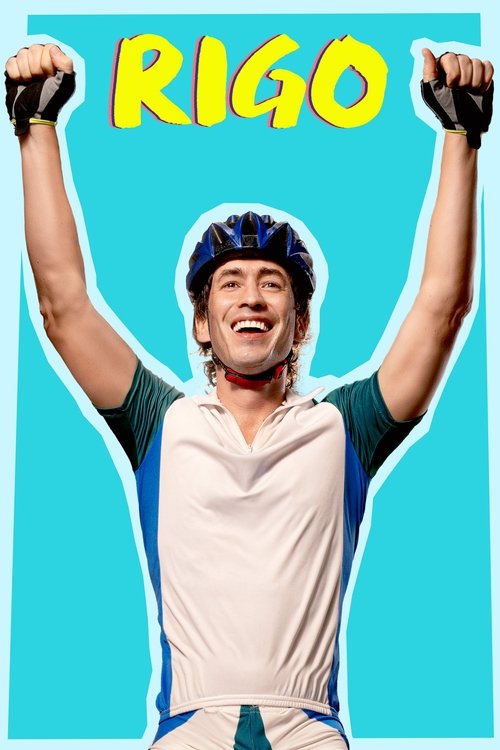
"Rigo" follows a biographical arc, culminating in Rigoberto Urán's establishment as a world-renowned cyclist and family man. A major turning point early in the series is the tragic murder of his father, Don Rigoberto Urán, by a paramilitary group, an event that cements Rigo's resolve to succeed for his family. This act of violence is a shadow that hangs over his early career, making his eventual triumphs more poignant.
The central romantic plot concludes with Rigo and Michelle Durango overcoming their family's initial objections and the many obstacles posed by his career to build a life together. Their relationship is tested by distance, his fame, and interference from others, but they ultimately marry and have a child, mirroring the real-life story. The antagonistic subplot with the moneylender Evaristo Rendón is resolved with his schemes ultimately failing, symbolizing Rigo's ability to rise above the petty and malicious challenges of his past.
The series finale does not focus on a single climactic race but rather on the culmination of Rigo's personal and professional journey. It sees him achieving stability and success, having fulfilled the promises he made at his father's coffin. He is shown not only as a cycling champion, with highlights like his Olympic silver medal, but as a successful entrepreneur and, most importantly, a devoted husband and father. The ending emphasizes that his greatest victory was not on the bike, but in building a life of happiness and purpose despite his tragic beginnings, fully embodying the resilience and optimism that defined his character throughout the 99 episodes.