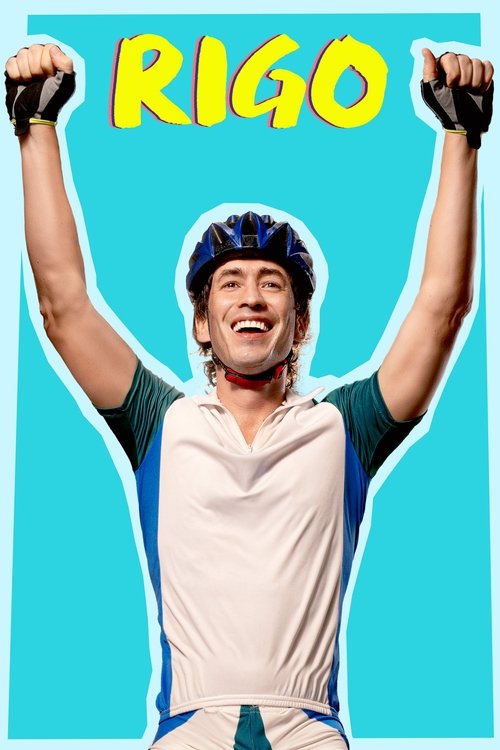
Rigo
A heartfelt and humorous biographical drama, capturing the relentless spirit of a cyclist who pedals through tragedy and adversity with unwavering optimism, painting a vibrant portrait of Colombian resilience.
Rigo

Rigo

08 October 2023 — 15 April 2024 Colombia 1 season 99 episode Ended ⭐ 8.4 (313)
Cast: Juan Pablo Urrego, Ana María Estupiñán, Sandra Reyes, Ramiro Meneses, Ella Becerra
Drama
Overcoming Adversity The Importance of Family and Roots Love and Support Colombian Identity and Resilience

Overview

"Rigo" chronicles the inspiring and often challenging life of Colombian road racing cyclist Rigoberto Urán. The series, based on the book by Andrés López, follows his journey from humble beginnings in the small town of Urrao, Antioquia, to becoming a celebrated figure on the world's biggest cycling stages. It delves into the profound impact of the loss of his father at a young age, a tragedy that forged his determination to succeed for his family.

The narrative skillfully balances the intense physical and emotional demands of professional cycling with Rigo's personal life. Viewers witness his struggles with poverty, the complexities of navigating violence in 1980s and 90s Colombia, and the numerous injuries that threaten his career. A central thread throughout the series is his enduring love story with Michelle Durango, who becomes a pillar of support and motivation. The telenovela is lauded for its authentic portrayal of Colombia's "Paisa" culture, infused with regional humor, slang, and traditions, making it more than just a sports drama but a vibrant depiction of resilience, family, and the pursuit of dreams against all odds.
Core Meaning

The core meaning of "Rigo" is a testament to the power of resilience and optimism in the face of profound adversity. The creators convey that one's origins do not define their destiny and that passion, hard work, and the unwavering support of family can propel an individual to overcome immense obstacles, including poverty and violence. The series champions the idea that success is not just measured by professional achievements but by maintaining one's character, humor, and connection to one's roots. It is an inspiring story about turning personal tragedy into a driving force for greatness, celebrating the indomitable spirit of both an individual and a nation.

Thematic DNA

Overcoming Adversity 40%
The Importance of Family and Roots 30%
Love and Support 20%
Colombian Identity and Resilience 10%

Overcoming Adversity

This is the central theme of the series. From the tragic murder of his father by paramilitaries when he was just 14, to battling poverty and career-threatening injuries, Rigo's life is a series of immense challenges. The show consistently portrays his refusal to be defeated by circumstances. Each setback, particularly the loss of his father, becomes a catalyst for his promise to take care of his family and succeed in cycling, showcasing a powerful narrative of resilience and fighting against the odds.

The Importance of Family and Roots

Family is the cornerstone of Rigo's motivation. His promise to his deceased father to care for his mother and sister is a recurring driver of his ambition. The series emphasizes the deep bonds within his family and community in Urrao, who provide a constant source of support. Despite achieving international fame, Rigo remains deeply connected to his hometown and the "Paisa" culture, highlighting the theme that staying true to one's origins provides strength and identity.

Love and Support

Rigo's relationship with Michelle Durango is a pivotal storyline, representing a source of enduring love and motivation. She is portrayed as a crucial pillar in his life, supporting him through his professional and personal struggles. This theme explores how meaningful personal relationships can provide the emotional foundation needed to pursue ambitious dreams, acting as a stabilizing force amidst the chaos of professional sports and personal tragedy.

Colombian Identity and Resilience

The series is a vibrant celebration of Colombian, and specifically "Paisa," culture. It authentically portrays the region's accent, humor, traditions, and idiosyncrasies. Beyond culture, the show addresses the harsh reality of violence in Colombia during the era, using Rigo's personal tragedy to reflect a collective national experience. His story becomes a metaphor for the country's own resilience, showcasing the ability to find joy, humor, and success despite a history marked by conflict.

Character Analysis

Rigoberto 'Rigo' Urán

Juan Pablo Urrego

Archetype: The Hero
Key Trait: Resilient Optimism

Motivation

His primary motivation is to honor his father's memory by fulfilling three promises: taking care of his mother and sister, finishing his education, and succeeding as a cyclist. This evolves into a desire to win on the world stage, not just for himself, but for his family, his town of Urrao, and for Colombia. His love for Michelle also becomes a central driving force, motivating him to be a better man and a champion.

Character Arc

Rigo begins as a charismatic, happy-go-lucky teenager from Urrao whose life is shattered by his father's murder. This event forces him into premature adulthood, saddling him with the responsibility of his family. His arc is one of channeling grief into determination. Throughout the series, he evolves from a raw, local talent into a disciplined world-class athlete. He learns to navigate the cutthroat world of professional cycling, facing betrayals, injuries, and immense pressure, yet he never loses his characteristic optimism and humor. His journey is about fulfilling the promise made to his father, achieving professional success while finding personal happiness with Michelle and honoring his roots.

Michelle Durango

Ana María Estupiñán

Archetype: The Ally/Love Interest
Key Trait: Steadfast Support

Motivation

Her motivation is rooted in her love for Rigo and her belief in his dreams. She is driven by a desire to build a life with him, supporting his career while also pursuing her own ambitions. She values family, loyalty, and integrity, and she motivates Rigo by providing stability and unwavering encouragement.

Character Arc

Michelle starts as the affluent, well-educated girl who captures Rigo's heart. Initially, their social differences pose a challenge. Her arc involves looking past these societal barriers to see Rigo's true character and potential. She grows from a supportive girlfriend into a steadfast partner who is integral to his success. Michelle faces her own challenges, including family pressure and the difficulties of being in a relationship with a high-profile athlete. She becomes a successful professional herself, demonstrating an arc of personal growth and independence alongside her role as Rigo's emotional anchor.

Aracely Urán de Urán

Sandra Reyes

Archetype: The Matriarch
Key Trait: Enduring Strength

Motivation

Her motivation is the well-being of her children, Rigo and Berenice. After her husband's death, her primary drive is to see them safe and successful. She is the keeper of the family's emotional core, and her support for Rigo's seemingly impossible dream is a testament to her faith in him.

Character Arc

Aracely is introduced as a loving mother who is plunged into a deep depression after the murder of her husband. Her character arc is one of profound resilience and recovery. With Rigo's support, she slowly finds the strength to overcome her grief and become the pillar of the family once more. She transitions from a figure of sorrow to one of strength and wisdom, embodying the family's ability to endure tragedy and find hope again. Her journey is a quiet but powerful testament to a mother's strength.

Evaristo Rendón

Julián Arango

Archetype: The Antagonist
Key Trait: Greed

Motivation

Evaristo is motivated by greed and a desire for power and social standing within Urrao. He sees the Urán family's vulnerability as an opportunity for personal gain. His antagonism is also fueled by a personal animosity and jealousy towards their resilience and Rigo's growing success, which he cannot control.

Character Arc

Evaristo is the town's unscrupulous moneylender and a constant thorn in the side of the Urán family. He represents the societal obstacles and personal rivalries Rigo must overcome. His arc is less about transformation and more about serving as a consistent force of opposition. He schemes to take the Urán family's home and undermines Rigo at every turn. While primarily a villain, the series may offer glimpses into the insecurities that fuel his greed, though his fundamental nature as an antagonist remains largely unchanged, symbolizing the persistent nature of life's challenges.

Symbols & Motifs

The Bicycle

Meaning:

The bicycle symbolizes hope, freedom, and social mobility. For Rigo, it is initially a tool for work, helping him sell lottery tickets, but it transforms into his vehicle for escaping poverty and achieving global recognition. It represents his father's legacy and the promise he made to succeed.

Context:

The bicycle is present from the very beginning, accompanying Rigo through his toughest moments in Urrao to his greatest triumphs on the international stage. It is a constant in his life, representing his unwavering dedication and the path he forged from tragedy to triumph.

Memorable Quotes

Mijito, lo importante no es ganar, es ser una buena persona.

— Don Rigoberto Urán

Context:

This is a guiding principle taught by Rigo's father (played by Robinson Díaz) in flashbacks, establishing the core values of the protagonist before his father's tragic death.

Meaning:

Meaning "Son, the important thing is not to win, but to be a good person," this quote encapsulates the moral foundation Rigo's father provides. It emphasizes that character and integrity are more valuable than victory, a lesson Rigo carries throughout his life and career.

Tengo un chicharrón en el trabajo.

— Rigo Urán

Context:

This phrase is used by Rigo in various situations throughout the series when he faces a problem, highlighting his colloquial way of speaking and the cultural specificity of the dialogue.

Meaning:

Literally meaning "I have a pork rind at work," this is a classic Colombian slang phrase where "chicharrón" means "a problem." Its use in the series is a prime example of the show's authentic depiction of "Paisa" dialect and humor, showing how Rigo approaches even difficult situations with a unique, colloquial charm.

Episode Highlights

Episode 1

S1E1

The first episode introduces the vibrant world of Urrao and the charismatic young Rigo. It establishes the key relationships in his life: his deep bond with his father, his affection for his family, and his immediate infatuation with Michelle. The episode skillfully sets up the central conflict and Rigo's passion for cycling, all infused with the distinctive humor and culture of the region.

Significance:

This episode is crucial as it lays the entire foundation for the series. It establishes the optimistic and determined spirit of the protagonist before the tragedy that will come to define his journey, making the subsequent events more impactful.

The Death of Don Rigoberto

S1E

This pivotal episode depicts the murder of Rigo's father at the hands of a paramilitary group. It is a raw and emotional turning point that starkly contrasts with the show's often lighthearted tone. The event forces Rigo to confront the brutal reality of the violence in his country and make a solemn vow to care for his family and succeed in his father's honor.

Significance:

This is the inciting incident of the entire series. It transforms Rigo from a carefree boy into a man with a heavy burden and a powerful motivation. The episode is frequently cited by critics and viewers as one of the most impactful moments, grounding the inspiring sports story in a painful, historical reality.

Philosophical Questions

How does personal tragedy shape destiny?

The series explores this question through its central traumatic event: the murder of Rigo's father. Instead of breaking him, this profound loss becomes the defining and motivating force of his life. "Rigo" suggests that while tragedy is not desirable, the human response to it is what forges character and determines one's path. It examines whether destiny is a matter of fate or a conscious choice to build a meaningful life from the ashes of personal pain.

Can optimism be a radical act of defiance?

In a context of systemic violence, poverty, and personal loss, Rigo's unwavering optimism and humor are portrayed as more than just personality traits; they are a form of resistance. The series posits that choosing joy and maintaining a positive outlook in the face of overwhelming adversity is a powerful act of defiance against the forces that seek to crush the human spirit. It questions whether this optimistic resilience is the key to not only surviving but thriving.

Alternative Interpretations

While the primary interpretation of "Rigo" is a straightforward inspirational biopic, some critics and viewers have discussed it through a broader socio-political lens. One interpretation views the series as a commentary on social mobility in a country marked by inequality and violence. Rigo's bicycle is not just a piece of sports equipment but a symbolic vehicle for escaping a predetermined fate of poverty and provincial life. His success is an allegory for the potential that lies within marginalized communities when given a chance.

Another perspective focuses on the character of Evaristo Rendón, the antagonist. He can be seen as more than a simple villain; he is a product of a system where economic desperation and a lack of opportunity breed predatory behavior. This interpretation suggests the series subtly critiques the socio-economic conditions that create such figures, presenting him as a dark mirror to Rigo's optimistic ambition. The narrative, therefore, becomes not just a story of one man's triumph, but a depiction of the different paths people take in response to systemic hardship.

Cultural Impact

"Rigo" achieved significant cultural impact in Colombia, becoming more than just a popular telenovela. It tapped into the national pride for cycling, a sport deeply beloved in the country, and celebrated one of its most charismatic figures. The series premiered on October 9, 2023, and quickly captivated millions, resonating deeply for its authentic portrayal of the "Paisa" culture—its dialect, humor, and traditions. Viewers, especially those from the Antioquia region, praised its accuracy and heart.

Critically, the show was lauded for balancing entertainment with a poignant look at Colombia's history of violence. The storyline of Don Rigoberto's murder at the hands of paramilitaries was a powerful and emotional moment that reflected the real-life struggles of many Colombians, serving as a form of collective remembrance. The series reinvigorated the biographical genre in Colombian television, demonstrating a strong public appetite for stories of national heroes who embody resilience. Its success on both network television (Canal RCN) and a streaming platform (Prime Video) broadened its reach, introducing Urán's inspiring story to a new generation and an international audience. Ultimately, "Rigo" became a cultural touchstone, celebrating the unbreakable Colombian spirit that finds optimism and humor even in the darkest of times.

Audience Reception

Audience reception for "Rigo" was overwhelmingly positive, particularly within Colombia, where it became a ratings success. Viewers widely praised Juan Pablo Urrego's charismatic and heartfelt portrayal of Rigoberto Urán, as well as the performances of the supporting cast. The show's authentic depiction of "Paisa" culture, including its specific slang and humor, was a major point of praise, with many Colombians feeling it accurately represented their identity. The blend of comedy, drama, and romance appealed to a broad audience.

The main points of criticism, though minor, were often related to the typical telenovela format, which some found to be campy or overly dramatic at times. However, even these critiques were often framed with affection, acknowledging that the style was part of the show's charm. The emotional weight of the story, especially the depiction of the violence that affected the Urán family, was commended for its impact and sensitivity. Overall, the audience verdict was that "Rigo" was an inspiring, funny, and deeply moving series that successfully celebrated a national hero.

Interesting Facts

  • The series is based on the book "Rigo" by Andrés López, which chronicles the cyclist's life.
  • Lead actor Juan Pablo Urrego had to learn to ride a road bike for the role and underwent significant physical training to portray a professional cyclist authentically.
  • The real Rigoberto Urán and his wife, Michelle Durango, were involved in the production, opening their home to the actors and sharing personal stories, photos, and even Rigo's school notebooks to ensure authenticity.
  • Filming began on March 23, 2023.
  • The show accurately captures the "Paisa" accent and slang of the Antioquia region, which was a specific focus for the actors, many of whom are not from there.
  • The series was a massive success in Colombia, with viewership numbers ranging between 5.5 and 9.3 million viewers per episode, reflecting the country's passion for cycling.
  • The real Nairo Quintana, another famous Colombian cyclist and a contemporary of Urán, publicly praised the series for its inspiring and motivating story, highlighting its importance for Colombians.

⚠️ Spoiler Analysis

Click to reveal detailed analysis with spoilers

Frequently Asked Questions

Explore More About This Movie

Dive deeper into specific aspects of the movie with our detailed analysis pages

Comments (0)

Leave a comment

No comments yet. Be the first to share your thoughts!