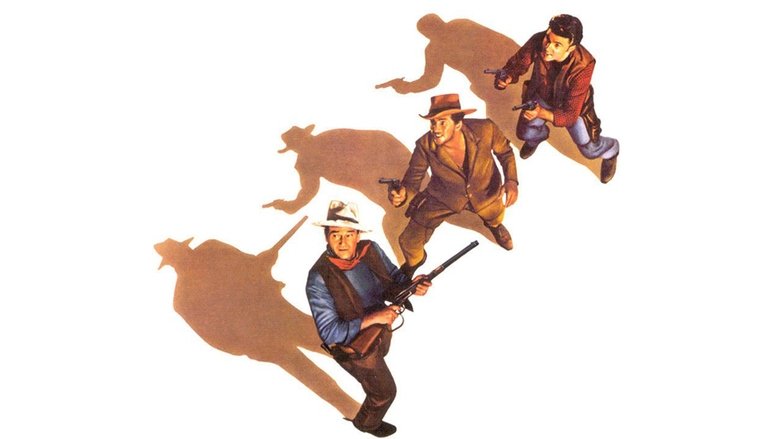
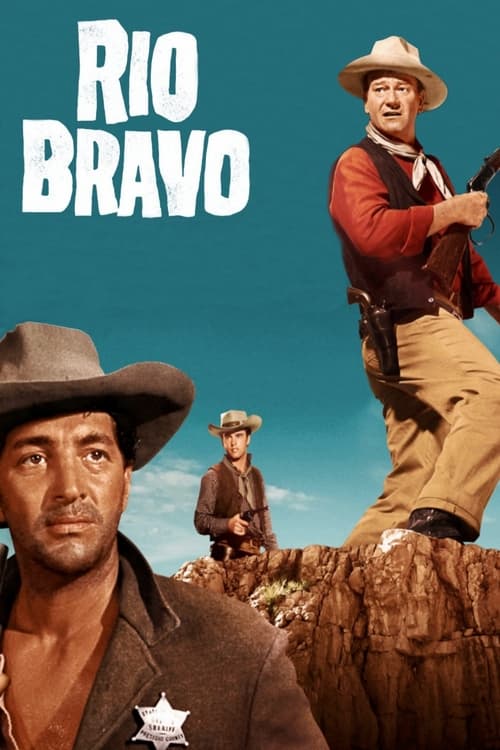
"They fought back to back... No quarter given... No quarter asked... No way in... No way out... of Rio Bravo!"
Rio Bravo - Symbolism & Philosophy
Symbols & Motifs
The Spittoon
Symbolizes humiliation and the loss of dignity. The act of Joe Burdette throwing a coin into the spittoon for Dude to retrieve establishes the power dynamic of the town and provides the visual marker for Dude's eventual redemption when he finally refuses to grovel.
Introduced in the opening scene and revisited later when Dude's sobriety is tested; it marks the beginning and end of his psychological journey.
El Deguello
A song meaning 'No Quarter' (the cutthroat). It symbolizes impending doom and the ruthless nature of the antagonist, Nathan Burdette, signaling that no mercy will be shown to the lawmen.
Burdette hires a band to play the song continuously in the saloon across from the jail to wear down the nerves of the Sheriff's posse.
Feathers' Wardrobe
Represents the conflict between identity and societal judgment. Her flashy, feathered clothing and black tights symbolize her independence and 'shady' past, while her willingness to change for Chance represents her vulnerability and desire for a new life.
Feathers' clothing is a constant point of contention between her and Chance, culminating in the final scene where she wears her 'working' outfit just for him.
Philosophical Questions
What is the true measure of a man's worth?
The film explores whether worth is inherent or earned through professional conduct. Dude's struggle suggests that dignity is a daily choice made through discipline, while Stumpy's role argues that utility is not limited by physical capability.
Does professionalism require the sacrifice of emotional connection?
Chance tries to maintain a wall of stoicism to protect others and himself, but his eventual surrender to Feathers' charms suggests that isolation is a weakness, and true strength comes from integrating duty with human connection.
Core Meaning
At its heart, Rio Bravo is a celebration of professionalism and the Hawksian group. Director Howard Hawks created the film as a direct ideological rebuttal to High Noon (1952), which he felt depicted a lawman as an 'amateur' for begging his community for help. In Rio Bravo, the sheriff only accepts help from those who are 'good enough,' suggesting that true dignity comes from competence and self-reliance within a trusted circle of peers.
The film carries a message about the power of redemption through discipline. It argues that a man's past—be it alcoholism, physical disability, or youth—does not define him as much as his willingness to stand his ground and perform his duty with excellence.