
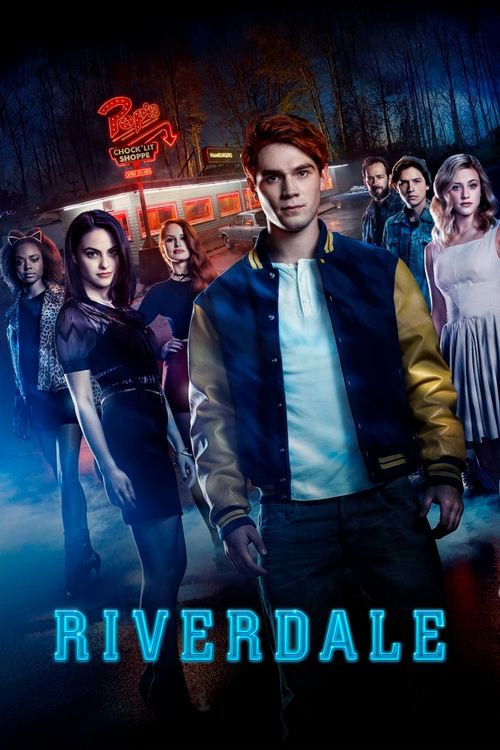
"To save the future, they must survive the past."
Riverdale - Symbolism & Philosophy
Symbols & Motifs
Jughead's Crown Beanie
Symbolizes Jughead's status as an outsider and his refusal to conform to societal expectations. It represents his crown as the "king" of his own narrative and his emotional armor.
Worn almost constantly in the early seasons; its removal often signifies extreme vulnerability or a shift in his identity, particularly when he joins the Southside Serpents.
Pop's Chock'lit Shoppe
Represents a sanctuary of purity and neutrality in a town of chaos. It is the "moral heart" of Riverdale, where all characters, regardless of their sins, find common ground.
Used as the primary meeting spot across all seven seasons. It becomes a literal battleground for the town's soul when Percival Pickens attempts to destroy it in Season 6.
Sweetwater River
A symbol of the border between life and death, as well as the transition from innocence to experience. It is the site where the town's secrets are washed away or brought to the surface.
The series begins with Jason Blossom's disappearance at the river and ends with the characters' symbolic crossing into the afterlife in the series finale.
The Color Red
Primarily associated with the Blossom family, it symbolizes wealth, danger, blood, and passion. For Archie, it represents his hair and his role as the town's protector/hero.
The Blossom household is saturated in red; Cheryl uses the color as a weapon of intimidation and a sign of her awakening power as a witch.
Philosophical Questions
Are we defined by the sins of our ancestors?
The series repeatedly asks if the children of Riverdale can escape the criminal and moral failings of their parents, suggesting through the finale that while the past is inescapable, our response to it defines our humanity.
Does a 'pure' world truly exist, or is it a projection of nostalgia?
Season 7 explicitly explores this by placing characters in an 'ideal' 1950s setting only to reveal the racism, sexism, and repression bubbling just beneath the surface of that era's perfection.
What is the nature of a 'soul' in a shifting reality?
As characters move between timelines and gain superpowers, the show explores what remains constant—their loyalty and love for one another—positing that identity is found in relationships rather than circumstances.
Core Meaning
At its heart, Riverdale is a meta-commentary on the death of American innocence and the cyclical nature of storytelling. The creators used the wholesome framework of Archie Comics to explore the duality of the human psyche—the idea that even the most perfect facades hide deep-seated darkness. Through its many genre shifts, the series suggests that identity is fluid and that individuals are often forced to battle the collective "sins of the fathers" to define their own futures.
The show ultimately posits that nostalgia is both a sanctuary and a prison. By concluding the series in a literal "Sweet Hereafter," the narrative emphasizes that while the physical town and its inhabitants may change or perish, the idealized version of friendship and community lives on through the stories we tell. It is a tribute to the endurance of character archetypes and the way they adapt to reflect the anxieties of the modern era.