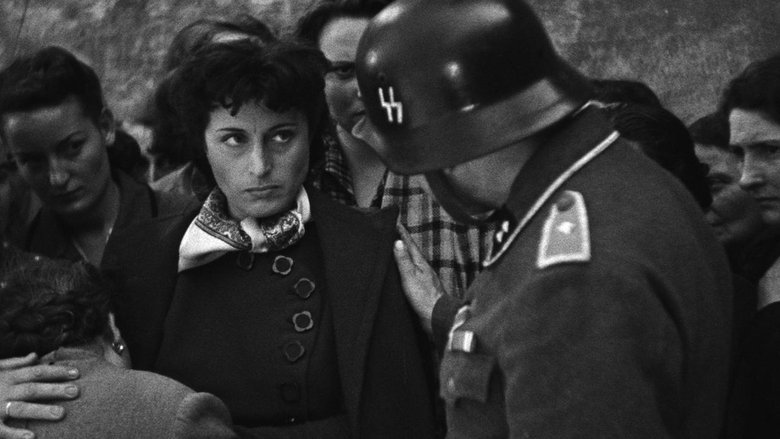
The plot of "Rome, Open City" culminates in a series of tragic events that underscore its themes of sacrifice and betrayal. After Francesco is arrested during a raid on his apartment building, Pina breaks through a police cordon, screaming his name. In one of cinema's most shocking and iconic moments, she is unceremoniously shot and killed in the street. Although Francesco later escapes when the convoy is attacked by partisans, the hope of his life with Pina is irrevocably destroyed.
The film's final act centers on the capture of Giorgio Manfredi and Don Pietro. Giorgio's ex-girlfriend, Marina, feeling rejected and seeking drugs and a fur coat, betrays their location to the Gestapo official Ingrid. At the Gestapo headquarters, Major Bergmann subjects Manfredi to horrific torture, including a blowtorch, to force him to reveal the names of other Resistance leaders. Don Pietro is forced to witness the ordeal. Manfredi, in a final act of defiance, refuses to speak and dies a martyr. His resilience shakes the Nazis' ideological confidence in their status as a "master race." Overcome with guilt upon seeing Giorgio's body, Marina faints.
The following morning, Don Pietro is taken to be executed by a firing squad. The Italian soldiers, unwilling to kill a priest, deliberately miss. The German commanding officer, disgusted by their sentimentality, executes Don Pietro himself with a pistol shot to the head. The priest's death is witnessed from a distance by the young boys of his parish, including Pina's son Marcello. The film concludes with the boys silently walking back towards the city, with the dome of St. Peter's visible in the distance, symbolizing that the future of Rome and the spirit of resistance now rest with their generation.