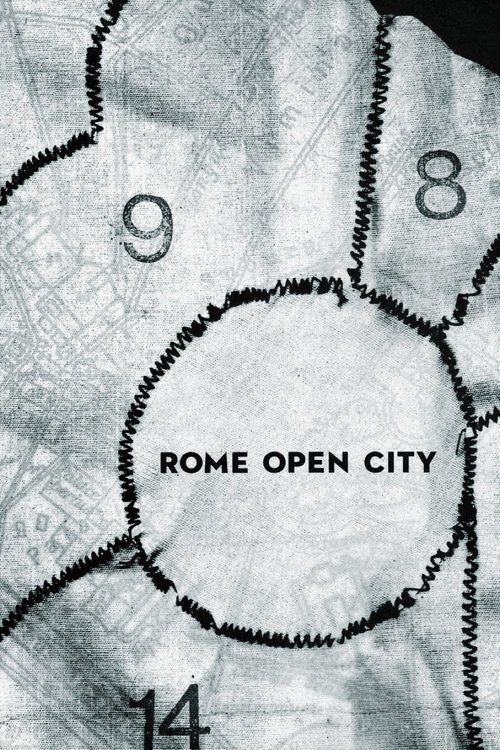
Rome, Open City
Roma città aperta
"Our battle has barely begun."
Overview
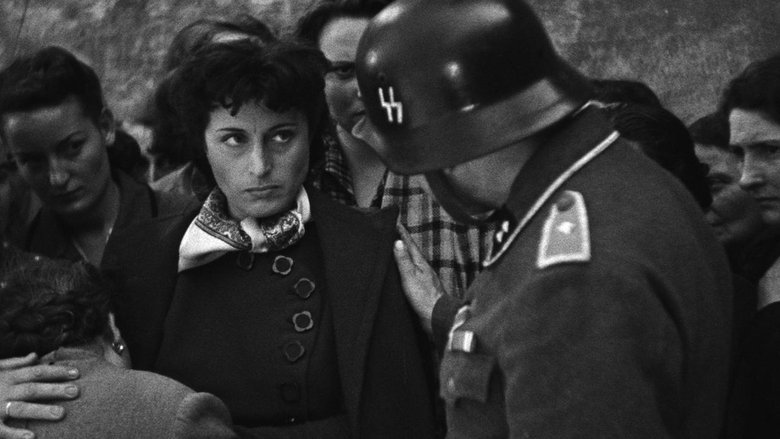
"Rome, Open City" (original title: "Roma città aperta") is a seminal 1945 Italian neorealist war drama directed by Roberto Rossellini. The film is set in Rome in 1944, during the Nazi occupation. The title refers to the historical declaration of Rome as an "open city" on August 14, 1943, a status intended to prevent it from being a battleground. The narrative follows a diverse group of Romans as they navigate the perils of life under German control.
The central plot revolves around Giorgio Manfredi (Marcello Pagliero), a communist engineer and a leader in the Resistance, who is being hunted by the Gestapo. He seeks refuge with Francesco, a fellow Resistance fighter, and meets Francesco's pregnant fiancée, the spirited Pina (Anna Magnani). Manfredi also enlists the help of Don Pietro Pellegrini (Aldo Fabrizi), a courageous Catholic priest who is actively aiding the partisan cause. The film masterfully intertwines the lives of these central figures with those of ordinary citizens, including Pina's young son Marcello, who participates in his own small-scale resistance activities. As the German Major Bergmann (Harry Feist) closes in, the film builds a tense and moving portrait of solidarity, sacrifice, and the human cost of conflict.
Core Meaning
The core meaning of "Rome, Open City" is a powerful testament to the resilience of the human spirit in the face of brutal oppression. Director Roberto Rossellini, who began working on the film while the war was still ongoing in parts of Italy, aimed to capture the raw, immediate reality of the Nazi occupation. The film's message is fundamentally one of moral and political unity; it depicts communists and Catholics, intellectuals and working-class citizens, all bound together in a common struggle for freedom and justice. Rossellini stated, "For me, neorealism is above all a moral position." The film argues that in the crucible of conflict, ideological differences can be set aside for a greater human cause. It is a profound exploration of sacrifice, highlighting that even in defeat and death, the fight for one's principles constitutes a victory for humanity. The film serves as both a historical document and a timeless exploration of humanity's capacity for both betrayal and heroic self-sacrifice.
Thematic DNA
Resistance and Unity
The film's primary theme is the collective struggle against the Nazi occupation. It powerfully illustrates how people from different walks of life—a communist leader (Manfredi), a Catholic priest (Don Pietro), and a working-class woman (Pina)—unite against a common enemy. This alliance between Catholicism and Communism, often seen as opposing forces, is central to the film's message of a united Italian resistance. Don Pietro's willingness to help Manfredi, an atheist, underscores the idea that the fight for justice transcends religious and political dogma. The small-scale partisan activities of the local children further emphasize the widespread nature of the resistance, permeating all levels of society.
Sacrifice and Martyrdom
Sacrifice is a pervasive theme, embodied by the film's central characters. Pina's shocking and abrupt death as she runs towards the truck carrying her fiancé is a raw depiction of civilian sacrifice. Giorgio Manfredi endures horrific torture without betraying his cause, becoming a martyr for the resistance. His death is portrayed with Christ-like allusions. The most explicit exploration of martyrdom is the execution of Don Pietro, who forgives his Italian executioners before being killed by a German officer. These acts of sacrifice are presented not as failures, but as profound moral victories that expose the bankruptcy of the oppressors' ideology.
The Brutality of War
Rossellini does not shy away from depicting the harsh realities of the occupation. The film's documentary-like style, born from the necessity of filming on the war-torn streets of Rome with limited resources, lends a stark authenticity to the suffering of ordinary people. Daily life is characterized by food shortages, fear, and sudden violence. The film's most visceral sequences, including Pina's death and Manfredi's torture, serve as a brutal reminder of the human cost of conflict and the inhumanity of the occupying forces. The contrast between the suffering of the Romans and the decadent, cold cruelty of the Nazi officers like Major Bergmann highlights the moral chasm between the two sides.
Betrayal and Moral Corruption
Contrasting with the heroism of the resistance is the theme of betrayal. Marina Mari, Giorgio's former lover, betrays him to the Gestapo in exchange for drugs and luxuries like a fur coat. Her actions, driven by personal weakness and addiction, lead directly to Giorgio's capture and death. Her character, along with the treacherous Ingrid, represents the moral decay and corruption fostered by the occupation, where personal gain is sought at the expense of human life and national solidarity. When Marina faints upon seeing the result of her betrayal, it signifies a moment of horrified realization of the consequences of her moral failure.
Character Analysis
Don Pietro Pellegrini
Aldo Fabrizi
Motivation
His primary motivation is his Christian faith and a profound sense of duty to help anyone fighting for justice and liberty, which he believes is the "path of God." He is driven by a commitment to charity and humanity that transcends political ideologies, allowing him to collaborate with communists like Manfredi against the greater evil of Nazism.
Character Arc
Don Pietro begins as a parish priest dedicated to his community and willing to help those in need. As the narrative progresses, his involvement with the Resistance deepens, forcing him to confront the Nazi regime directly. He transforms from a provider of spiritual and material aid into a symbol of moral defiance. His arc culminates in his martyrdom, where he faces death with unwavering faith and courage, becoming a spiritual rock for the Resistance and a testament to the power of faith in action.
Pina
Anna Magnani
Motivation
Pina is motivated by a fierce love for her family—her son Marcello and her fiancé Francesco—and a deep-seated sense of justice. She is pragmatic and devout, wrestling with her faith amidst the horrors of war but ultimately acting on instinct and a powerful drive to protect her loved ones and fight for their future.
Character Arc
Pina represents the resilience and strength of the common Italian people. A pregnant widow preparing to marry the man she loves, she is grounded in the daily struggles of survival. Her character doesn't have a traditional arc of change but rather one of revelation; her inherent courage and fierce love are revealed in a moment of crisis. Her impulsive, desperate run towards the truck taking her fiancé is a primal scream against injustice, and her sudden, brutal death transforms her from an ordinary woman into an iconic symbol of civilian sacrifice and the heart of the resistance.
Giorgio Manfredi
Marcello Pagliero
Motivation
An atheist and a communist, Manfredi is driven by a powerful political and ideological commitment to liberating Italy from fascism and Nazism. He is willing to endure any hardship and make the ultimate sacrifice for his ideals and for the comrades who depend on him.
Character Arc
Manfredi is an experienced and dedicated Resistance leader, constantly on the run. His arc is one of steadfast commitment in the face of escalating danger. He begins as a strategic leader trying to evade capture and ends as a martyr who embodies the physical suffering of the cause. His refusal to break under extreme torture demonstrates the strength of his convictions, and his death serves to galvanize the resolve of others, like Don Pietro, and to shake the confidence of his captors.
Major Fritz Bergmann
Harry Feist
Motivation
Bergmann is motivated by a fanatical belief in Nazi ideology and a desire to crush all opposition through systematic terror and torture. He seeks to prove the dominance of his worldview by breaking the will of his prisoners, seeing their resistance not just as a military obstacle but as a personal and ideological affront.
Character Arc
Major Bergmann is the personification of the cold, calculating evil of the Nazi regime. He does not undergo a significant change but rather his arrogance and cruelty are steadily revealed. He begins confident in his methods and the superiority of the "master race." However, his inability to break Manfredi or Don Pietro represents a psychological and ideological defeat. He succeeds in killing them physically but fails to destroy their spirit, leaving him shaken and his worldview challenged by the resilience of those he deems a "slave race."
Symbols & Motifs
The Children of Rome
The children, particularly Pina's son Marcello and his small band of partisans, symbolize the future of Italy and the hope for a new beginning. Their resistance activities, though small, show that the struggle for freedom is being passed to the next generation. The film's final shot, showing the boys walking home with the dome of St. Peter's Basilica in the background, is a powerful and optimistic symbol of rebirth and the eventual triumph of a new, post-fascist Rome.
The children are seen throughout the film engaging in clandestine activities like planting small bombs. The final, poignant scene occurs after they have witnessed Don Pietro's execution. As they walk away from the site of the tragedy, their path leads them toward the heart of Rome, suggesting that the future of the city rests in their hands.
The City of Rome Itself
Rome is more than just a setting; it is a character in the film. The war-ravaged streets, the apartment blocks, and the landmarks are a constant, visual reminder of the conflict's impact. The title, "Rome, Open City," is itself symbolic. While historically it meant the city was undefended to prevent its destruction, the film re-appropriates the term to suggest a city whose spirit is open to resistance and whose people are exposed and vulnerable, yet unbroken.
Rossellini's use of real locations, a key tenet of neorealism, was partly a necessity due to the destruction of film studios, but it became a powerful stylistic choice. The camera captures the authentic texture of the city, from the crowded tenements where Pina lives to the cold, oppressive headquarters of the Gestapo, making the environment an integral part of the narrative.
The Priest's Cassock
Don Pietro's clerical clothing symbolizes the moral authority and sanctuary that the Church represents amidst the chaos of war. It allows him a degree of freedom of movement and initially shields him from suspicion, enabling him to aid the Resistance by transporting messages and weapons. Ultimately, however, the cassock offers no protection from the Nazis' brutality, demonstrating that in this conflict, even sacred symbols are violated, and moral conviction is a greater shield than any uniform.
Don Pietro uses his status as a priest to move through the city and hide weapons. In the Nazi headquarters, Major Bergmann directly challenges the priest's faith and duty, trying to frame the resistance as antithetical to religion. Don Pietro's unwavering resolve, even as he faces execution, affirms that his actions are an extension of his faith, not a contradiction of it.
Memorable Quotes
I am a Catholic priest. I believe that those who fight for justice and truth walk in the path of God and the paths of God are infinite.
— Don Pietro Pellegrini
Context:
Major Bergmann is interrogating Don Pietro while Manfredi is being tortured in the next room. Bergmann tries to create a divide by stating that Manfredi is an atheist and an enemy of the priest. Don Pietro's calm, firm response refutes this, asserting a higher moral law that unites them against the evil of the Nazi regime.
Meaning:
This quote encapsulates the film's central theme of unity. Spoken by Don Pietro to the Nazi Major Bergmann, it justifies his alliance with Manfredi, a communist and atheist. It argues that the struggle for freedom is a righteous, even holy, cause that transcends religious doctrine, positioning the Resistance as a moral crusade blessed by God.
It would mean there is no difference in the blood of a slave race and a master race. And no reason for this war.
— Major Bergmann
Context:
This is said to Captain Hartmann, a more world-weary and disillusioned German officer, as Manfredi is being tortured. Hartmann expresses doubt that Manfredi will talk, prompting Bergmann's furious outburst, which exposes the ideological stakes of the interrogation for him.
Meaning:
This line chillingly reveals the core of Nazi ideology. Bergmann's frustration that Manfredi may not break under torture is not just about extracting information; it's about the potential collapse of his entire worldview. If an Italian (a member of a "slave race") can show the same strength as a German, the entire premise of racial superiority that justifies the war is proven false.
It is finished.
— Don Pietro Pellegrini
Context:
Don Pietro is forced to watch the brutal torture and death of Giorgio Manfredi. After Manfredi finally succumbs without having revealed any information, the priest utters these words, followed by a curse upon the Nazis, signifying their ultimate moral and spiritual defeat.
Meaning:
A direct quotation from the Gospels (Christ's final words on the cross), this line explicitly frames Manfredi's death as a martyrdom. Don Pietro is not merely announcing the death of his comrade but elevating his sacrifice to a spiritual plane. It signifies that while his body is broken, his spirit and the cause he died for have triumphed.
Philosophical Questions
What is the nature of true faith and morality in times of extreme crisis?
The film explores this question primarily through the character of Don Pietro. When confronted by Major Bergmann, who labels the atheist Manfredi as the priest's "enemy," Don Pietro counters that anyone fighting for justice walks in the "path of God." This suggests a philosophical stance that true morality is defined by actions for justice and liberty, not by adherence to religious dogma. The film posits that in the face of absolute evil, like the Nazi regime, ideological differences (Catholic vs. Communist) become secondary to a shared humanistic duty to resist. Don Pietro's martyrdom is the ultimate expression of this lived faith, a sacrifice made for a cause he deems holy regardless of its political label.
Can the human spirit triumph even in physical defeat?
"Rome, Open City" repeatedly answers this question in the affirmative. Both Giorgio Manfredi and Don Pietro are captured and killed, representing a tactical defeat for the Resistance cell. However, their refusal to betray their cause under torture and in the face of death is portrayed as a profound moral and spiritual victory. Manfredi's silence breaks his torturers' belief in their own superiority, while Don Pietro's peaceful acceptance of death demonstrates a strength the Nazis cannot comprehend. The film argues that true victory lies not in survival, but in the unwavering commitment to one's principles, an act that preserves human dignity and inspires future generations, as symbolized by the children at the end.
Is political ideology or shared humanity the more powerful unifying force?
The film champions shared humanity. The central alliance is between a communist (Manfredi) and a priest (Don Pietro). Their collaboration is not based on a shared political vision for the future but on an immediate, shared human imperative to fight oppression and protect the innocent. The struggles of Pina and Francesco, their desire to marry and build a family, ground the political conflict in everyday human aspirations. The film suggests that it is these fundamental human bonds—love, community, and the desire for freedom—that truly unite people, providing a stronger foundation for resistance than any single political ideology.
Alternative Interpretations
While "Rome, Open City" is widely celebrated as a masterpiece of realism, some critical interpretations challenge this notion. Several critics point out that despite its neorealist aesthetics, the film relies heavily on traditional melodrama. The clear distinction between heroic protagonists and villainous antagonists, the suspenseful plot, and the emotionally charged climaxes are all elements of classic melodrama, skillfully blended with a documentary-like veneer. Rossellini himself later admitted the film was "full of old ingredients."
Another point of discussion is the film's representation of women. From a feminist perspective, the female characters can be seen as fitting into narrow archetypes. Pina is celebrated as a heroic mother figure, but she is ultimately sacrificed, while Marina is the classic 'femme fatale' whose weakness and desire for luxury lead to tragedy. This reading suggests that while the film champions the Italian man's struggle, its female characters are largely defined by their relationships to men and serve as either catalysts or casualties in the male-driven conflict.
The ending of the film, with the children walking towards St. Peter's dome, is typically seen as a symbol of hope. However, it can also be interpreted with more ambiguity. The children have just witnessed a brutal execution, and their march away could be seen not just as a hopeful new beginning but also as a somber inheritance of a world filled with violence and trauma, questioning whether the cycle of conflict can truly be broken.
Cultural Impact
"Rome, Open City" is considered a foundational text of Italian neorealism and a watershed moment in the history of cinema. Filmed under difficult conditions in the immediate aftermath of the Nazi occupation, its raw, documentary-like style was a radical departure from the polished, escapist "white telephone" films of the Mussolini era. The film's use of on-location shooting, a mix of professional and non-professional actors, and its focus on the lives of ordinary people profoundly influenced filmmakers worldwide.
Upon its release, the film brought international attention to Italian cinema. In countries like the United States and France, audiences, unaccustomed to such brutal honesty on screen, reacted as if they were watching a newsreel, and the film was lauded for its authenticity. It won the Grand Prix at the 1946 Cannes Film Festival and an Oscar nomination for its screenplay, launching Roberto Rossellini and Anna Magnani to international fame.
The film's portrayal of a unified Italy, with communists and Catholics fighting side-by-side, played a crucial role in shaping the nation's post-war collective memory. It presented a narrative of heroic popular resistance that helped Italy reclaim a sense of national dignity after the fall of Fascism. The film's legacy is immense, having inspired countless cinematic movements, from the French New Wave to British social realism, and it remains a vital touchstone for discussions on cinematic realism, ethics, and the political power of art.
Audience Reception
The initial reception of "Rome, Open City" was mixed, particularly within Italy. When it premiered in September 1945, the wounds of the war were still fresh, and many Italian viewers were said to prefer escapist films over a stark, painful reminder of the recent occupation. However, the film's fortunes changed dramatically with its international release. In the United States and France, it was met with widespread critical acclaim. Audiences and critics, unfamiliar with the on-the-ground reality of the war in Europe, were stunned by its perceived authenticity and raw power, often comparing it to a newsreel. It won the Grand Prix at the 1946 Cannes Film Festival and ran for nearly two years in a single New York theater. This international success helped bolster its reputation back in Italy and cemented its status as a masterpiece. Today, it is universally regarded as a classic, praised for its historical importance, its powerful performances (especially by Anna Magnani), and its enduring emotional impact.
Interesting Facts
- The film was shot just months after the Allied liberation of Rome, on the actual war-torn streets of the city.
- Due to the scarcity of resources post-war, director Roberto Rossellini had to use disparate bits of salvaged 35mm film stock, which contributed to the film's raw, newsreel-like visual quality.
- Many of the actors in the film were non-professionals, a key characteristic of the neorealist movement, though established stars Aldo Fabrizi and Anna Magnani were notable exceptions.
- The story was co-written by Federico Fellini, who would later become one of Italy's most acclaimed directors.
- The character of Don Pietro was inspired by two real-life priests, Don Pietro Morosini and Don Giuseppe Morosini, who were executed by the Nazis for aiding the Resistance.
- The iconic, harrowing scene of Pina's death was based on the real-life killing of Teresa Gullace, a pregnant woman shot by a German soldier in Rome in March 1944.
- The initial reception from Italian audiences was lukewarm, as many preferred escapist entertainment to a grim reminder of the recent occupation. The film found greater success and acclaim internationally, particularly in France and the United States.
- The film won the prestigious Grand Prix (now the Palme d'Or) at the 1946 Cannes Film Festival, which helped secure its place in film history.
⚠️ Spoiler Analysis
Click to reveal detailed analysis with spoilers
Frequently Asked Questions
Explore More About This Movie
Dive deeper into specific aspects of the movie with our detailed analysis pages
Comments (0)
No comments yet. Be the first to share your thoughts!