Roma città aperta
"Our battle has barely begun."
Rome, Open City - Symbolism & Philosophy
Symbols & Motifs
The Children of Rome
The children, particularly Pina's son Marcello and his small band of partisans, symbolize the future of Italy and the hope for a new beginning. Their resistance activities, though small, show that the struggle for freedom is being passed to the next generation. The film's final shot, showing the boys walking home with the dome of St. Peter's Basilica in the background, is a powerful and optimistic symbol of rebirth and the eventual triumph of a new, post-fascist Rome.
The children are seen throughout the film engaging in clandestine activities like planting small bombs. The final, poignant scene occurs after they have witnessed Don Pietro's execution. As they walk away from the site of the tragedy, their path leads them toward the heart of Rome, suggesting that the future of the city rests in their hands.
The City of Rome Itself
Rome is more than just a setting; it is a character in the film. The war-ravaged streets, the apartment blocks, and the landmarks are a constant, visual reminder of the conflict's impact. The title, "Rome, Open City," is itself symbolic. While historically it meant the city was undefended to prevent its destruction, the film re-appropriates the term to suggest a city whose spirit is open to resistance and whose people are exposed and vulnerable, yet unbroken.
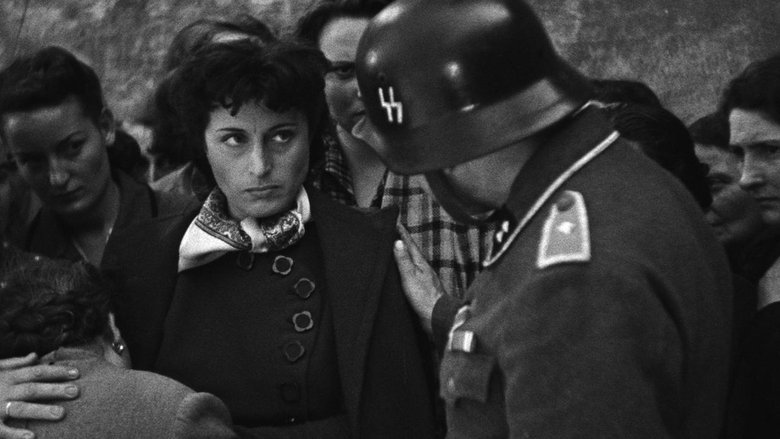
Rossellini's use of real locations, a key tenet of neorealism, was partly a necessity due to the destruction of film studios, but it became a powerful stylistic choice. The camera captures the authentic texture of the city, from the crowded tenements where Pina lives to the cold, oppressive headquarters of the Gestapo, making the environment an integral part of the narrative.
The Priest's Cassock
Don Pietro's clerical clothing symbolizes the moral authority and sanctuary that the Church represents amidst the chaos of war. It allows him a degree of freedom of movement and initially shields him from suspicion, enabling him to aid the Resistance by transporting messages and weapons. Ultimately, however, the cassock offers no protection from the Nazis' brutality, demonstrating that in this conflict, even sacred symbols are violated, and moral conviction is a greater shield than any uniform.
Don Pietro uses his status as a priest to move through the city and hide weapons. In the Nazi headquarters, Major Bergmann directly challenges the priest's faith and duty, trying to frame the resistance as antithetical to religion. Don Pietro's unwavering resolve, even as he faces execution, affirms that his actions are an extension of his faith, not a contradiction of it.
Philosophical Questions
What is the nature of true faith and morality in times of extreme crisis?
The film explores this question primarily through the character of Don Pietro. When confronted by Major Bergmann, who labels the atheist Manfredi as the priest's "enemy," Don Pietro counters that anyone fighting for justice walks in the "path of God." This suggests a philosophical stance that true morality is defined by actions for justice and liberty, not by adherence to religious dogma. The film posits that in the face of absolute evil, like the Nazi regime, ideological differences (Catholic vs. Communist) become secondary to a shared humanistic duty to resist. Don Pietro's martyrdom is the ultimate expression of this lived faith, a sacrifice made for a cause he deems holy regardless of its political label.
Can the human spirit triumph even in physical defeat?
"Rome, Open City" repeatedly answers this question in the affirmative. Both Giorgio Manfredi and Don Pietro are captured and killed, representing a tactical defeat for the Resistance cell. However, their refusal to betray their cause under torture and in the face of death is portrayed as a profound moral and spiritual victory. Manfredi's silence breaks his torturers' belief in their own superiority, while Don Pietro's peaceful acceptance of death demonstrates a strength the Nazis cannot comprehend. The film argues that true victory lies not in survival, but in the unwavering commitment to one's principles, an act that preserves human dignity and inspires future generations, as symbolized by the children at the end.
Is political ideology or shared humanity the more powerful unifying force?
The film champions shared humanity. The central alliance is between a communist (Manfredi) and a priest (Don Pietro). Their collaboration is not based on a shared political vision for the future but on an immediate, shared human imperative to fight oppression and protect the innocent. The struggles of Pina and Francesco, their desire to marry and build a family, ground the political conflict in everyday human aspirations. The film suggests that it is these fundamental human bonds—love, community, and the desire for freedom—that truly unite people, providing a stronger foundation for resistance than any single political ideology.
Core Meaning
The core meaning of "Rome, Open City" is a powerful testament to the resilience of the human spirit in the face of brutal oppression. Director Roberto Rossellini, who began working on the film while the war was still ongoing in parts of Italy, aimed to capture the raw, immediate reality of the Nazi occupation. The film's message is fundamentally one of moral and political unity; it depicts communists and Catholics, intellectuals and working-class citizens, all bound together in a common struggle for freedom and justice. Rossellini stated, "For me, neorealism is above all a moral position." The film argues that in the crucible of conflict, ideological differences can be set aside for a greater human cause. It is a profound exploration of sacrifice, highlighting that even in defeat and death, the fight for one's principles constitutes a victory for humanity. The film serves as both a historical document and a timeless exploration of humanity's capacity for both betrayal and heroic self-sacrifice.