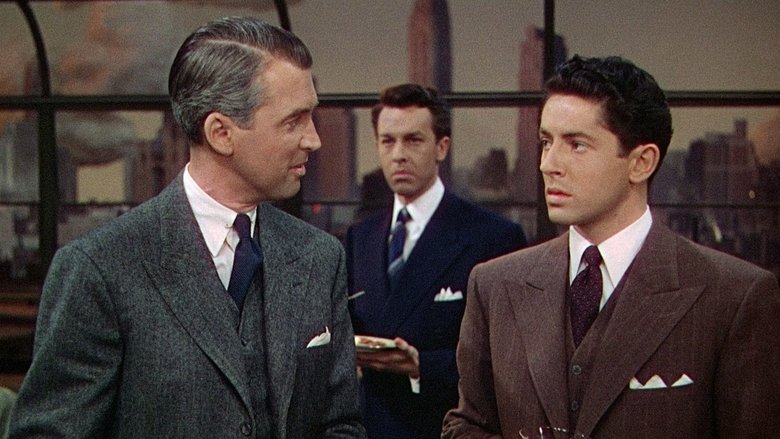
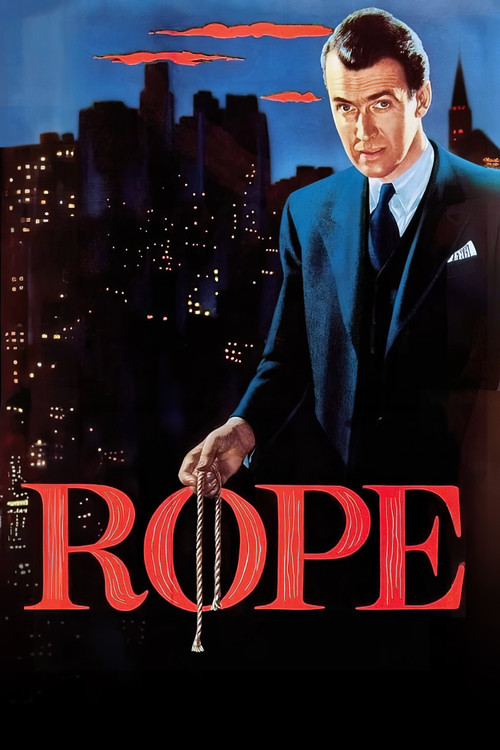
The central twist of "Rope" is not a late-film revelation, but rather the premise itself: the audience witnesses the murder of David Kentley in the opening scene and knows his body is hidden in the chest throughout the subsequent dinner party. The suspense, therefore, is not a "whodunit" but a "will-they-get-away-with-it." The true spoiler lies in the unraveling of the murderers' perfect crime and the role their former mentor, Rupert Cadell, plays in their downfall.
Rupert's suspicion is a slow burn. Initially, he engages in the same glib, intellectual sparring as Brandon. However, several key moments escalate his concern. Phillip's extreme nervousness, his denial of ever having strangled a chicken (a story Brandon told), and the fact that Rupert is accidentally given David Kentley's hat (with the initials D.K. inside) upon leaving are all crucial clues. This prompts Rupert to return to the apartment under the pretense of having left his cigarette case.
The climax unfolds as Rupert, now openly suspicious, verbally corners Brandon and Phillip. His methodical deconstruction of the evening's inconsistencies and his pointed questions drive Phillip to a breaking point. The final reveal occurs when Rupert, having disarmed a hysterical Phillip, lifts the lid of the chest and discovers David's body. In this moment, the film's philosophical core is laid bare. Rupert, horrified and ashamed of his own intellectual influence, delivers a powerful monologue condemning their actions. He disavows the very ideas he once championed, stating, "tonight you've made me ashamed of every concept I ever had of superior or inferior beings." The film ends with Rupert firing Brandon's gun out the window to summon the police, leaving the three men to wait in silence for the inevitable consequences. The "perfect crime" is undone not by a brilliant detective, but by human nature: Phillip's guilt and Brandon's hubris, which led him to invite the one person intelligent enough to see through his charade.