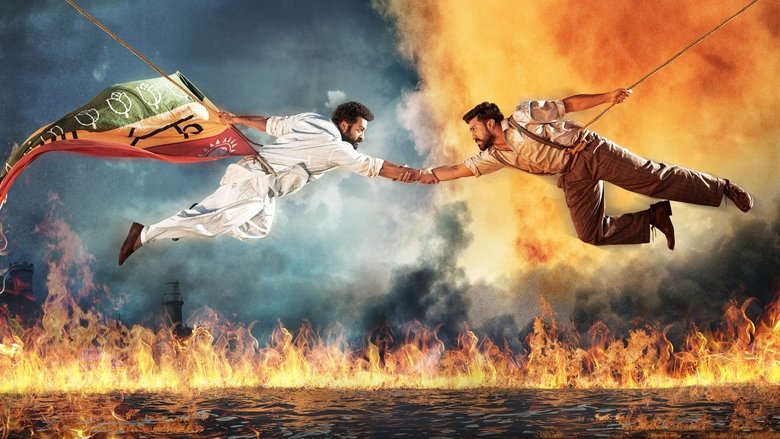
The film's biggest twist is Raju's backstory. Initially painted as a traitor to his people, flashbacks reveal his father was a revolutionary who made him promise to arm every person in their village. Raju joined the police solely to access the armory. The second half twists again when Bheem, unaware of this, attacks the palace. Raju arrests Bheem to keep his cover but is heartbroken. The climax involves Raju sacrificing his cover to save Bheem, getting captured, and having his legs broken. Bheem, now enlightened by Sita about Raju's true sacrifice, breaks him out of prison. Raju, perched on Bheem's shoulders (combining their strengths), fights through the forest. Raju finds a bow and arrow from a shrine, transforming into the deity Rama, and they obliterate the British forces. They return to the village with the guns, fulfilling the vow.
రౌద్రం రణం రుధిరం
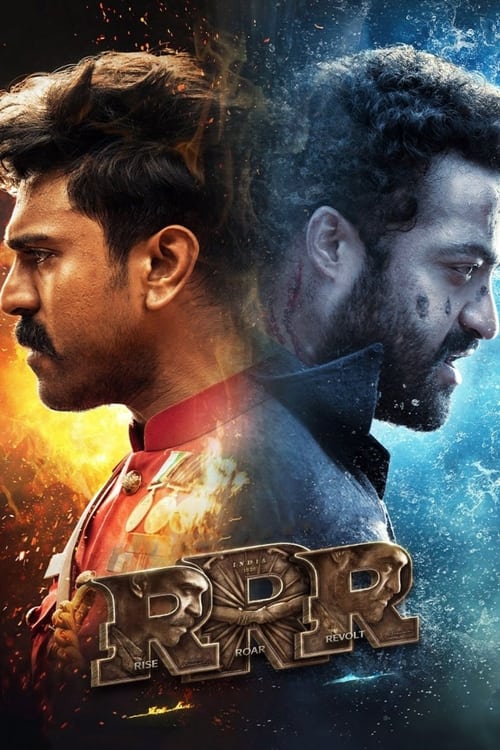
"Rise, Roar, Revolt."
Director: S. S. Rajamouli
Cast: N.T. Rama Rao Jr., Ram Charan, Olivia Morris, Ray Stevenson, Alison Doody
RRR — Ending Explained
⚠️ Spoiler Analysis
Alternative Interpretations
The Queer Theory Reading: Many Western critics and LGBTQ+ audiences interpreted the intense, tactile, and emotionally vulnerable friendship between Raju and Bheem as a queer romance, despite the director's intent of portraying platonic brotherhood.
The Nationalist Propaganda Reading: Some critics view the film's climax, where Raju literally becomes a Hindu god to save the day, as aligning with the current political climate of Hindutva in India, marginalized other religious contributions to the freedom struggle.
The Caste Dynamic: A critique exists that the upper-caste Raju (Kshatriya archetype) is shown as the 'brain' and leader who must 'civilize' or educate the tribal Bheem (Gond), who is depicted as the 'brawn' or noble savage, reinforcing traditional caste hierarchies.
Explore More About This Movie
Dive deeper into specific aspects of the movie with our detailed analysis pages